Better Said Than Done’s first online
storytelling show this past week was a blast, and we keep the
momentum going this coming Saturday!
Join us from the comfort of your own home as eight new storytellers make their first appearances on our virtual stage. Jessica Robinson hosts. Most of the performers will be wearing pants. (No guarantees!) Tickets and details here.
We’re continuing our pay-what-you-can ticket plan for online access on a sliding scale. Contributions of $15 per person – the usual ticket price – are suggested, with a minimum contribution of $5. The proceeds will be shared between the show’s performers and Better Said Than Done, helping our storytellers and our community stay afloat.
We are also sticking with the same
general theme, “Come As You Are.” In this time when so many
things are curtailed, we’re letting our storytellers bring you tales
as wide-ranging as possible. The wonderful line-up this time features
Noa Baum, Alton Chung, Dustin Fisher, Bonnie Gardner, Megan Hicks,
Desarray-Tamar Joachim, Len Kruger, and Cyndi Wish! Stories are
intended for a mature audience.
Be sure to join us Saturday, April 25th at 9:00 P.M. Eastern time as Better Said Than Done takes another bold step into the digital storytelling frontier. Tickets and details here. (Note: ticket sales end at 5 P.M., so be sure to get them early.)
And mark your calendars now for our May 8th show, featuring Geraldine Buckley, Rachael Harrington, Miriam Nadel, Beth Ohlsson, Mo Reynolds, Antonio Rocha, Margarita Rozenfeld, Sufian Zhemukhov, and host Nick Baskerville!
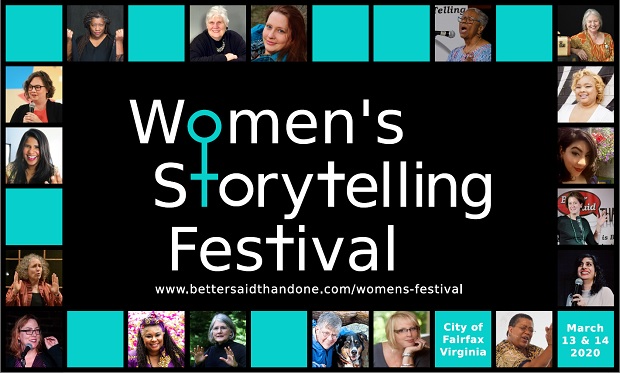
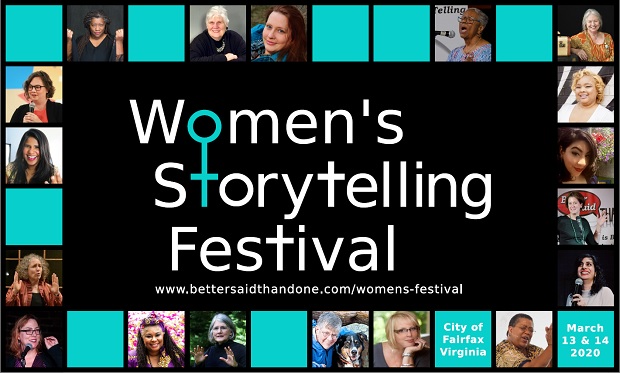
A month has passed since we hosted the Women’s Storytelling Festival, a first of its kind with a line-up exclusively of women, including hosts, emcees, and storytellers.
The festival, was held in the City of Fairfax, Virginia, prior to restrictions on public gatherings due to COVID-19. While we had a smaller audience than anticipated, they were enthusiastic. Those who came, had many wonderful things to say about the performances and about the festival going forward, giving people one last gathering before we all closed our doors.
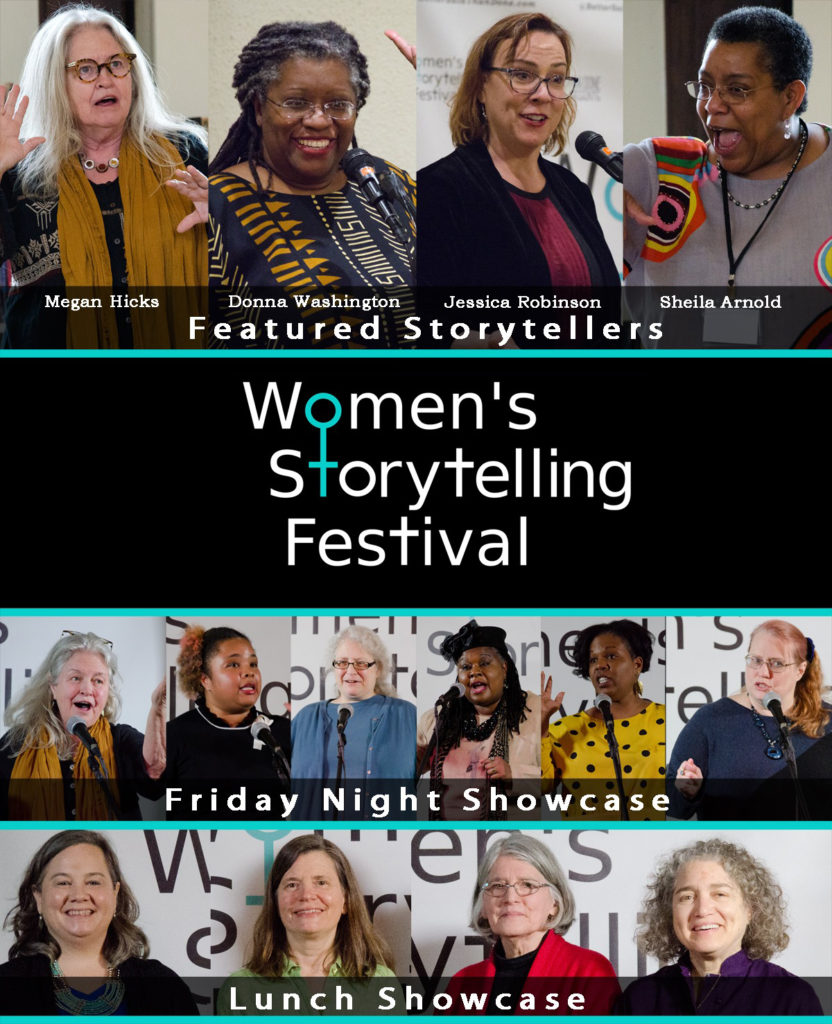
The festival kicked off on Friday, March 13. Sarah Snyder hosted the evening’s showcase show at The Auld Shebeen. Storytellers Stephanie Garibaldi, Arthuretta Holmes-Martin, Miriam Nadel, Shawna Renee, and Diana Veiga did a great job representing the storytellers of Better Said Than Done and the greater DC area. On Saturday, our four featured storytellers – Sheila Arnold, Megan Hicks, Jessica Robinson, and Donna Washington – each performed in solos sessions and paired sessions, and, finally, all four shared the stage for the finale, all at under the Colonial-style roof of The Old Town Hall. At lunch, there was a story swap – hosted by Miriam Nadel – at The Old Town Hall, as well as two showcase shows at The Auld Shebeen. Hosted by Catherine Calvin, the lunch shows included wonderful stories by Fanny Crawford, Jane Dorfman, Meghann Shutt, and Sarah Snyder.
To mitigate the fact that many people couldn’t attend, Better Said Than Done shared the 9 hours of video from the festival with anyone who purchased a ticket, whether or not they made it to the event.
We extend a special thank to our show hosts and emcees: Catherine Calvin, Miriam Nadel, Giselle Ruzany, and Sarah Snyder.
We would also like to share our appreciation for those who volunteered their time to ensure the festival ran smoothly – Nick Baskerville, Barbara Fornoff, David Foxworth, Bonnie Gardner, Ellie Klein, and Kate Moran – and to our Festival Committee who helped plan the event: Sheila Arnold, City of Fairfax Representative Megan DuBois, Miriam Nadel, Bart Robinson, Jessica Robinson, Jack Scheer, Mary Supley, Bill Weech, Zach Wilks, and Cyndi Wish.
Finally, we thank all who attended the festival and our regular audience. We look forward to many more Women’s Storytelling Festivals! Look for information, including a call for storytellers, volunteer opportunities, and sponsorship details, for next year.
Please join us (virtually) this Thursday as Better Said Than Done hosts its first live online storytelling show!
As the old saying says, the show must go on! We’re eager to connect with our cherished Better Said Than Done community, and to do that we’re taking to the Zoom stage. And while this is done out of necessity, we’re looking at it as an exciting opportunity to stretch ourselves and our storytelling skills.
To address the current economic crisis, we’re offering pay-what-you-can tickets for online access on a sliding scale. Contributions of $15 per person – the usual ticket price – are suggested, with a minimum contribution at $5.
Proceeds from each show will be split with the storytellers from that show. Contributions are encouraged to help support the performers and Better Said Than Done, as both arts organizations and artists are struggling during this time.
The show’s theme is “Come As You Are,” a nod to our dressed-down present. It features a great group of amazing storytellers: Natalie Amini, Sheila Arnold, Nick Baskerville, Robin Gelfenbien, Jessica Robinson, Jack Scheer, Meghann Shutt, Sarah Snyder and Donna Washington! Some have already ventured into live online ‘telling, while others will make their virtual debut with this performance.
So join us Thursday, April 16th at 9:00 P.M. for a Better Said Than Done like no other. Tickets and details here.
On April 25th, join host and Better Said Than Done founder Jessica Robinson and storytellers Noa Baum, Alton Chung, Dustin Fisher, Bonnie Gardner, Megan Hicks, Desarray-Tamar Joachim, Len Kruger, and Cyndi Wish.
Did you miss out on attending the inaugural Women’s Storytelling Festival in early March, in the City of Fairfax, VA? Here’s the good news, you can watch 9 hours of stories from the festival online, until April 6, 2020.
The last live-and-in-person storytelling event I, and Better Said Than Done, produced – and the last in-person live event we’ll be seeing before June – was the Women’s Storytelling Festival. I performed approximately 1 hour and 45 minutes of stories – shared across 4 different stories. I was lucky to share the stage with 3 other amazing, featured storytellers – Megan Hicks, Sheila Arnold, and Donna Washington, who all made me laugh and cry and feel awestruck by their company. The 9 other storytellers who joined the festival for our 2 showcase shows – Diana Veiga, Miriam H. Nadel, Arthuretta Holmes-Martin, Shawna Renee, Stephanie Chapman Garibaldi, Meghann Shutt, Sarah Snyder, Jane Ogburn Dorfman, and Fanny Crawford – were all equally inspiring of awe and, in some cases, aww. The volunteers were wonderful, and the emcees did a fantastic job as well. (Many blog posts of gratitude to come!)
Producing and being part of this Better Said Than Done festival was truly one of the greatest joys in my creative life. I was only saddened by the fact that not enough people got to experience the wonderful stories performed by all.
This is the great gift of our time – that we can share in experiences together, even if we can’t be there in person. Thanks to having captured all but the Story Swap (which I heard was wonderful) on video, YOU can now join in watching, listening to, and experiencing these stories.
Out of respect to all who participated, videos will only be available online until April 6th. We’re suggesting a $20 contribution to help cover the cost of the video and the festival but, understanding that others’ livelihoods have also been impacted, pay what you are able. Just do it soon so you don’t miss out on this once in a lifetime event.
Shawna Renee will be joining us at the Women’s Storytelling Festival for the Friday night, March 13th, kick-off storytelling show at The Auld Shebeen, in Fairfax, VA.
Shawna Renee is an award winning broadcaster, writer and storyteller. As a radio personality, she’s produced and hosted shows for Radio One, CBS Radio, SiriusXM and Voice of America. Shawna is best known for her work as host and executive producer of Cocoa Mode, a program she created in 2007 after recognizing the need for programming dedicated to exploring the role of women of color in areas of social justice, community building and entrepreneurship. Shawna Renee has taken her passion for storytelling and transformed it into a powerful tool for healing and community building as the Co-Founder and Creative Director of Say It, Out Loud, an urban storytelling collective that produces pop-up storytelling events all over the country. She also facilitates workshops and retreats to help students access the power of storytelling to heal and connect communities of color. Shawna is a Moth Story Slam Winner and has been featured on a number of storytelling podcasts and stage shows.
Shawna currently lives in Washington, DC with her husband and son. Find out more about Shawna here.
Come see Shawna perform, along with 17 other female storytellers, at the Women’s Storytelling Festival in the City of Fairfax, March 13 and 14, 2020. Details here.
Natalie Amini is a DC area native and the DC Regional Producer for The Moth. When she is not helping DC area locals find their stories on stage, she works as a Housing Counselor in Adams Morgan, helping DC locals buy affordable homes in the District.
Natalie is performing in the Women’s Storytelling Festival‘s two lunch time show producers’ storytelling shows at the Auld Shebeen on Saturday, March 14, 2020.
In talking about The Moth in DC, Natalie added, “The Moth is true stories, told live and without notes. We celebrate the ability of true, personal storytelling to illuminate both the diversity and commonality of human experience.Through live shows, storytelling workshops, a podcast, Peabody Award-winning Radio Hour, and New York Times Best Selling books, The Moth brings the power of personal storytelling to millions of people each year—creating community and building empathy around the world. The StorySLAMS I produce in DC are Community-focused, openmic storytelling competitions where anyone can share a five-minute story on the night’s theme. These ten lucky audience members, picked at random, vie for the chance to be crowned the night’s StorySLAM champion.”
When asked how she got into storytelling, Natalie responded, “I got into storytelling completely on accident! Come see the show, and I’ll share the story with you.” She continued, explaining her style of storytelling. “My storytelling style is conversational. I find that it helps me connect with the audience on a more personal level. Like we are friends hanging out in a living room.”
I asked Natalie what she loves about storytelling. She answered, ” I love that the storytelling audiences and the community as a whole, are incredibly supportive. I love that everyone has a story, which is why I am so passionate about continuing my work to create diverse and inclusive spaces with in the storytelling world. “
She continued, “While producing for The Moth, I regularly hang out at the front of the stage to help encourage first timers or answer any questions our audience members may have. One night, a young man was at the front on the stage enthusiastically filling out an anonymous audience participation slip, that our hosts read from the stage. I playfully teased that since he was using the front and back of the slip, he should probably tell a story. He said he didn’t have anything prepared and assured him that was ok, and that my first moth story was completely unprepared and unexpected. He decided to put his name in and was pick to tell a story later that night. I was nervous for him, like all first timers, but knew he’d be fine. Our audiences are always warm and supportive. On our releases, there is an option to use a stage name. He put “Oscar the Mexican”. So the host reads his name, almost with hesitation. The audience applauds, and you see him walking down the ramp from the very end of the theatre. The host says keep it going for “Oscar, and a majority white crowd of over 340 people start chanting. OSCAR! OSCAR! OSCAR! He steps up on the stage, and transforms. Filled with an energy and magnetism, he tells his story and wins the night! That was his first time on stage, but I doubt it will be his last. That is the power of storytelling.”
Regarding the Women’s Storytelling Festival, Natalie added, “I wanted to be a part of this festival because it’s so important to provide opportunities for women to share their voices and experiences. I wanted to be a part of that magic by sharing my own story and supporting others share theirs. “
Come see Natalie perform, along with 17 other female storytellers, at the Women’s Storytelling Festival in the City of Fairfax, March 13 and 14, 2020. Details here.
Since 2003, Sheila Arnold has been a full-time storyteller, traveling through the United States and sharing a variety of stories – “whatever fits in her mouth” – as well as doing Historic Character Presentations and Christian Monologues. At her core, Ms. Sheila, as she is commonly called, is a Professional Imaginator with a passion, vision and ministry of healing hearts, unifying communities and reminding people to share their stories. Ms. Sheila is one of the featured storytellers in the inaugural Women’s Storytelling Festival, March 13 and 14, in the City of Fairfax, VA.
When I asked her to describe her storytelling style, she said, “I engage audiences often through conversation, questions, my way of storytelling, including things that are in the venue as well as in life around us, and through song. I love every kind of story, and I tell what I like, although I feel called to especially tell stories of faith and stories of justice.”
Ms. Sheila began her storytelling career on a slightly smaller scale. “I got into storytelling through my son, who is now 33 years old, and by doing storytelling at his day cares and schools.” Explaining how she got hooked, she continued, “I get to talk in front of people, who want to hear me and they applaud. LOL. I also love it when my stories connect to others and make them have to stop me and say, “That reminds me of a story…”, or it brings enlightenment, education or encouragement.”
When I asked her why she wanted to be involved in the inaugural Women’s Storytelling Festival, she replied, “Because Jessica Robinson (That’s Me!) asked me if I would support her in doing a Women’s Storytelling Festival and should she do it. I said yes, and she asked me, “really?” and I said yes! I believe that women’s voices in the world of storytelling need to be heard and acknowledged, just as “women.” Nice to be in the majority for once.”
In talking about the power of storytelling, Ms. Sheila said, “I told the story about me learning about African Americans having patents on inventions while I was in high school and how that made me so angry, and how a teacher took that anger and helped me and my classmates learn about Black History. After that telling, at two different venues, I have had (a) a man walk up to me and say, “I remember you as a student, but your name was _____”, and he told me how he had worked with this young lady through her anger in high school as well, (b) a woman who had not known that African-Americans had invented so many things and now was convicted that there was more to learn, and (c) two women that completely had to think how little they knew about what it was like to study history and not see yourself – good conversations. All because of one story. That’s the kind of thing I love.”
Ms. Sheila added, “I am so glad to be hanging out with some of my friends on the stage – people whom I love and respect. I love that Jessica has encouraged so many to come and showcase, including one of the persons who have taken my storytelling class – Jay Johnson. This type of storytelling festival is going to lead the way for how future storytelling festivals will be. Waiting for year 2 already.” (No pressure!)
Ms. Sheila will be sharing the stage with 17 other female storytellers at the Women’s Storytelling Festival in the City of Fairfax, March 13 and 14, 2020. Details here.
Donna Washington is a professional author, storyteller, and multicultural folklorist who has been sharing stories for more than thirty years. She describes herself as “an extremely animated storyteller who uses vocal pyrotechnics (lots of sound effects and voices), has an elastic face, and employs enthusiastic gesture. I’ve been called a Walking Disney Movie and told I was better than television.”
Donna’s path to storytelling was serendipitous. “I was in my third year at Northwestern University when I was cast in a play where I had to pretend I was a storyteller. There was a class on storytelling that went with the play. I made the transition at that point, but I was the only one who didn’t know. I have been a professional storyteller since I graduated from university. It is the only job I have ever had as a grown-up person.”
When I asked Donna what she loves about storytelling, she replied, “storytelling is a powerful tool. It can make huge changes in society for good or ill. I love how storytelling can move us and change us. It can bring us together united in common purpose. Story is about our emotions, desires, and hopes. It can also be about the things we fear or hate. It is the oldest art form. When we sing, we are telling a story. When we draw, we are telling a story. When we make music, we are telling a story. I love the fact that story is at the heart of everything we do. This is why it is powerful. This is why it moves us.”
Donna told me a moving experience she had that encapsulates the power of sharing stories. She performed at an elementary school, where she did four shows over the span of the day. As she was leaving, one of the teachers pulled her aside to tell her about one particular student. This girl, who was struggling with her reading, had seen Donna’s performance early in the day. The teacher said, “she is in third grade, and she reads in a dull monotone voice. When she came to me after hearing the storytelling, she read a sentence about a dog, stopped, looked at the sentence and looked up at me. She said, ‘I didn’t do that right.’ She reread it with expression. Then she nodded. ‘That’s how it should sound.’ She read through the story, and for the first time, she went back and emphasized words and feelings, and used the text to tell her how she was supposed to sound. In one hour you have done more to help her understand reading that anyone has ever been able to do since she started school!” Donna said it was all she could do to keep from crying herself.
I asked Donna why she wanted to be a part of the Women’s Storytelling Festival. She answered, “I was interested in participating when I first heard about it, but when I found out who else had been invited, I was excited. The group of women who will be telling at this gathering is exceptional. I am honored to be amongst them. At every other festival I’ve ever been to, I have either been part of or saw in the program a set called – Strong Women. The coolest thing about this festival? Every single set could have that moniker. Who wouldn’t love that?”
You can check out examples of Donna’s storytelling here.
Donna will be taking the stage with 17 other female storytellers at the Women’s Storytelling Festival in the City of Fairfax, March 13 and 14, 2020. Details here.
An integral part of the Women’s Storytelling Festival will be the emcees for each event. Six storytellers from our Better Said Than Done community have stepped up to take on those duties. Each one a gifted and engaging teller in her own right, I asked what drew them to storytelling in the first place.
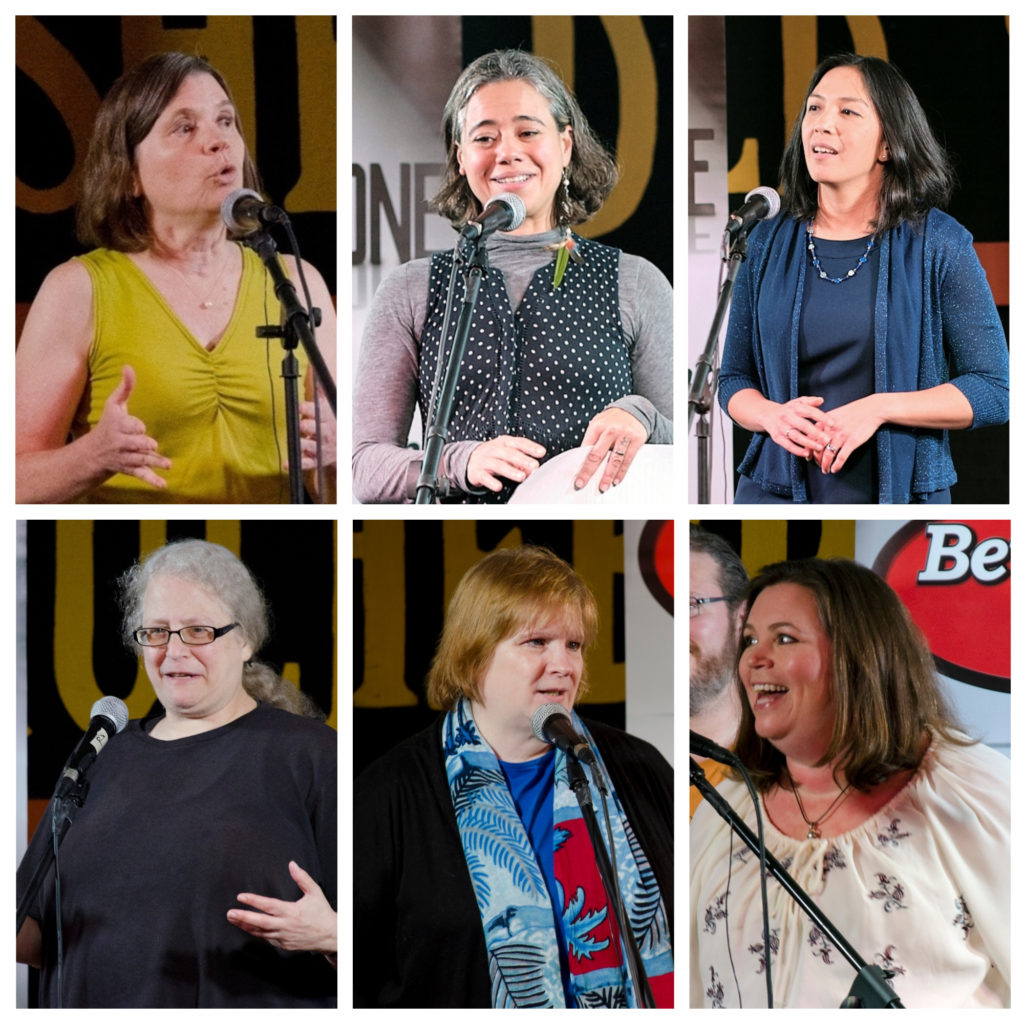
Top: Sarah Snyder, Giselle Ruzany, Andrea Young Bottom: Miriam Nadel, Sandra Hull, Catherine Calvin
For Sarah Snyder, being on stage was something she liked, but she didn’t see acting as a viable path. Storytelling gave an outlet for that desire. “Also, my grandfather and father were preachers, and I come from Irish heritage, so it’s in my DNA; I can’t help myself.”
Sarah’s journey has has taken her from live storytelling to published author. Her memoir, Plant Trees, Carry Sheep, tells the tale of her “two years living in Scotland at this crazy, beautiful spiritual retreat, where I experience depression and love, resentment and relief, frustration and letting go… you know, life!”
Giselle
Ruzany’s path to the storytelling stage came through her graduate
work. “As part of my Ph.D. studies in expressive arts therapy, I
was supposed to choose an art form I was not familiar with…
storytelling was a new art form for me a year and a half ago, so I
entered the journey, and do not think I will be ever the same.”
The power of storytelling is something Giselle Ruzany finds incredibly moving. “Storytelling is very healing and can transform the worst moments in our lives into a clever and entertaining journey. It makes these experiences just human and relatable.”
Motherhood is what moved Andrea Young to become a teller. She says that “after becoming a parent, I valued storytelling more and wanted to be more involved.”
A veteran emcee in other settings, Andrea is eager to take on this role for the festival. “I am most excited about being an emcee for this amazing festival because the connections we will make here will take us all on many exciting, unknown paths together!”
Miriam Nadel first encountered the concept of our style of storytelling at a friend’s wedding. “Everyone else was a friend of the groom, while I had known the bride for years. People kept asking me where I knew the groom from – was it volleyball or bridge or storytelling? So when I saw an announcement for a storytelling festival… the idea clicked and I knew I had to go.”
Miriam finds the sheer diversity among storytellers wonderful. “I love the variety of stories people tell. Even with a common theme, all tellers take things in their own direction.”
Sandra Hull gives out little glass hearts to people she meets, and a friend suggested this practice would make a great TED Talk. “I scoffed at the idea… Then the universe intervened by placing an announcement of a BSTD storytelling workshop… in my LinkedIn feed. I was hooked.”
Through
storytelling, Sandra has found a new avenue of human connection. “I
realized that even the most personal experience I might tell about
ultimately revolves around some universal truth. Hey, I belong!”
Catherine Calvin first delved into storytelling as a means to help her career. “I attended two workshops, intending to use [storytelling] strictly for business but after much encouragement, I finally got up the courage to take the stage.”
Catherine believes anyone with an interest should give storytelling a try. “There may be some people sitting in the audience who think ‘I could never do that’ and I used to be one of them. Storytellers are an extremely supportive bunch and your own experiences are every bit as valid as anyone else’s.”
The Women’s Storytelling Festival takes place on March 13 and 14, 2020 in the City of Fairfax. Details here.
Maryam Zaringhalam is a molecular biologist by training who now works in the world of science policy, advocacy, and communication. Her personal mission is to ensure that everyone—no matter who they are—can benefit from and participate in the fruits of science. She is a Senior Producer for the science-inspired storytelling show The Story Collider, is a Leadership Team Member of 500 Women Scientists, and has written for Slate, Undark, and The Washington Post.
The Story Collider is a nonprofit storytelling organization dedicated to sharing true, personal stories about science—both through live shows that occur in 16 cities around the world and through a weekly podcast. The Story Collider believes that science is a part of everyone’s lives, and so everyone—whether they’re a scientist or not—has a story to tell about how science has impacted them. Those stories, whether heartbreaking or hilarious, have the power to transform the way we think about science—and to whom it belongs.
Story Collider Dec. 2019 Dupont Circle
I asked Maryam how she got interested in storytelling. Maryam replied, “I’ve always believed that science not communicated is science not done. In graduate school, I wanted to push myself to communicate about my work to the public. The only problem: I had severe stage fright. The first time I gave a talk in a popular science lecture series, I got so nervous I cried while trying to talk about natural selection. So, I was pretty nervous when the opportunity came up to tell a story for The Story Collider’s New York show. But Erin Barker, our Artistic Director, and Ben Lillie, one of our co-founders, really empowered me to get up there and share. It was the first time I was able to connect with an audience around my experiences—and it gave me this powerful template to share not only my science, but who I am as a scientist, through stories.”
Maryam continued, “Storytelling gives me an outlet to explore my feelings about something—it helps me make sense of who I am today, like therapy in public. I sometimes get fixated on events and will tell them over and over to friends or strangers. So storytelling has given me a tool to think about why that event is meaningful and to fit it into how I’m changing as a person—my arc, if you will. That’s also why I so appreciate people sharing their stories with me. I feel like they’re offering me a little window into who they are at their core. That’s a great honor! “
When discussing her passion for her work in producing The Story Collider shows, Maryam added, “There is such an immense power in holding a microphone and choosing who to share that mic with. As a producer, I have the great privilege in passing the microphone on to people whose stories might otherwise be overlooked or erased, and to pass the microphone over to people who have never felt like science is for them. Fostering that sense of ownership and identity with science is really motivates me as a producer—and has me always on the hunt for stories waiting to be told on our stage!”
Come see Maryam perform, along with 17 other female storytellers, at the Women’s Storytelling Festival in the City of Fairfax, March 13 and 14, 2020. Details here.