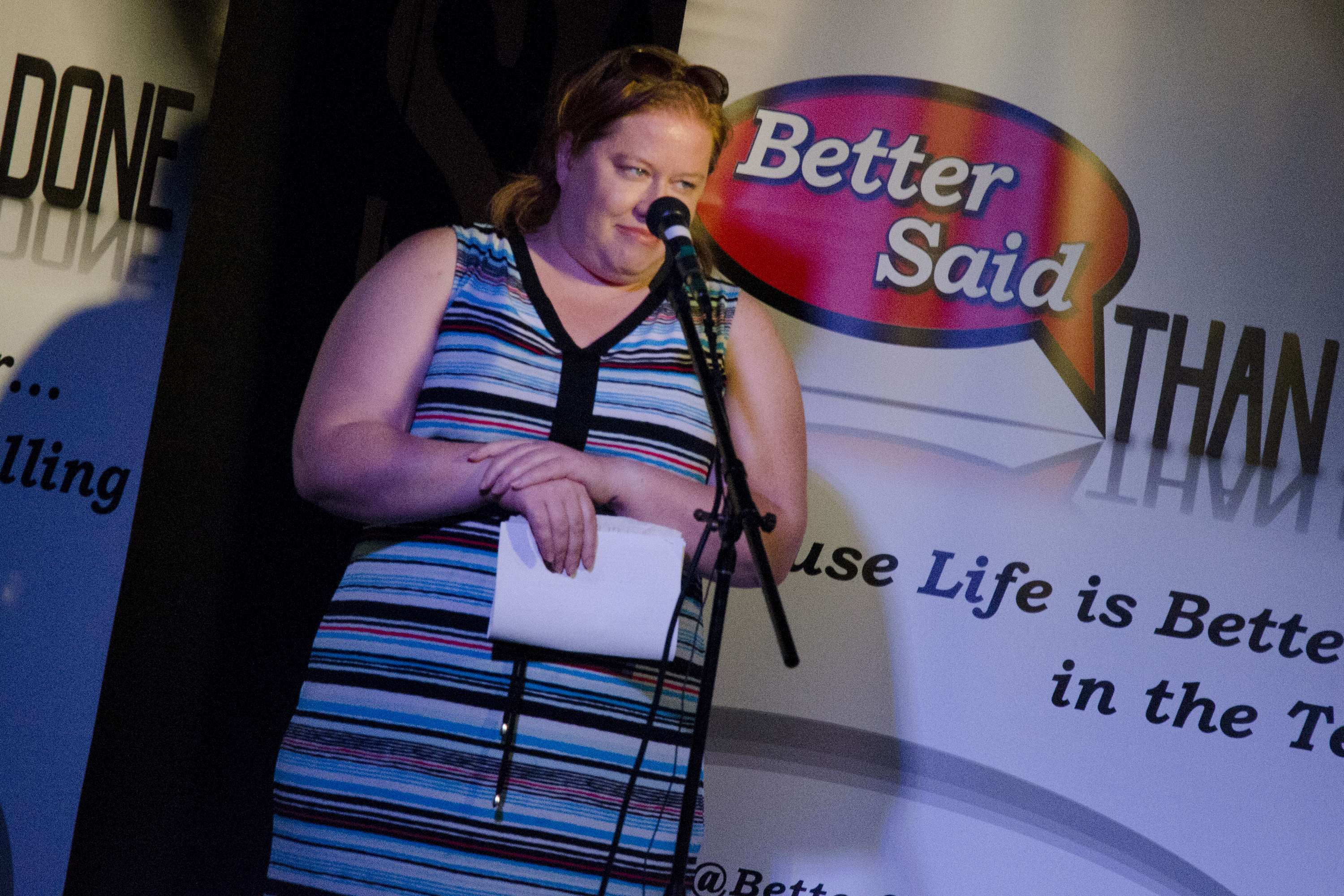
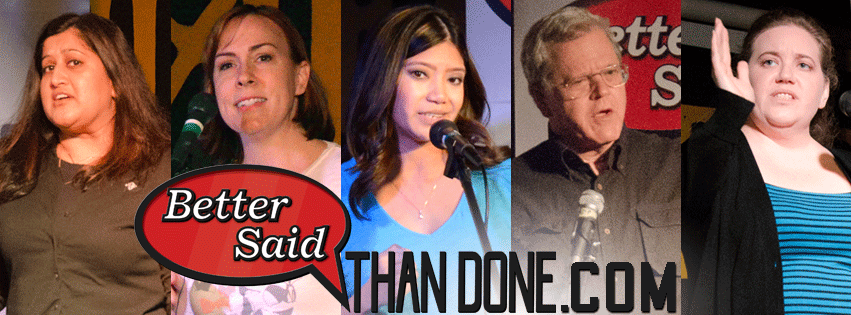
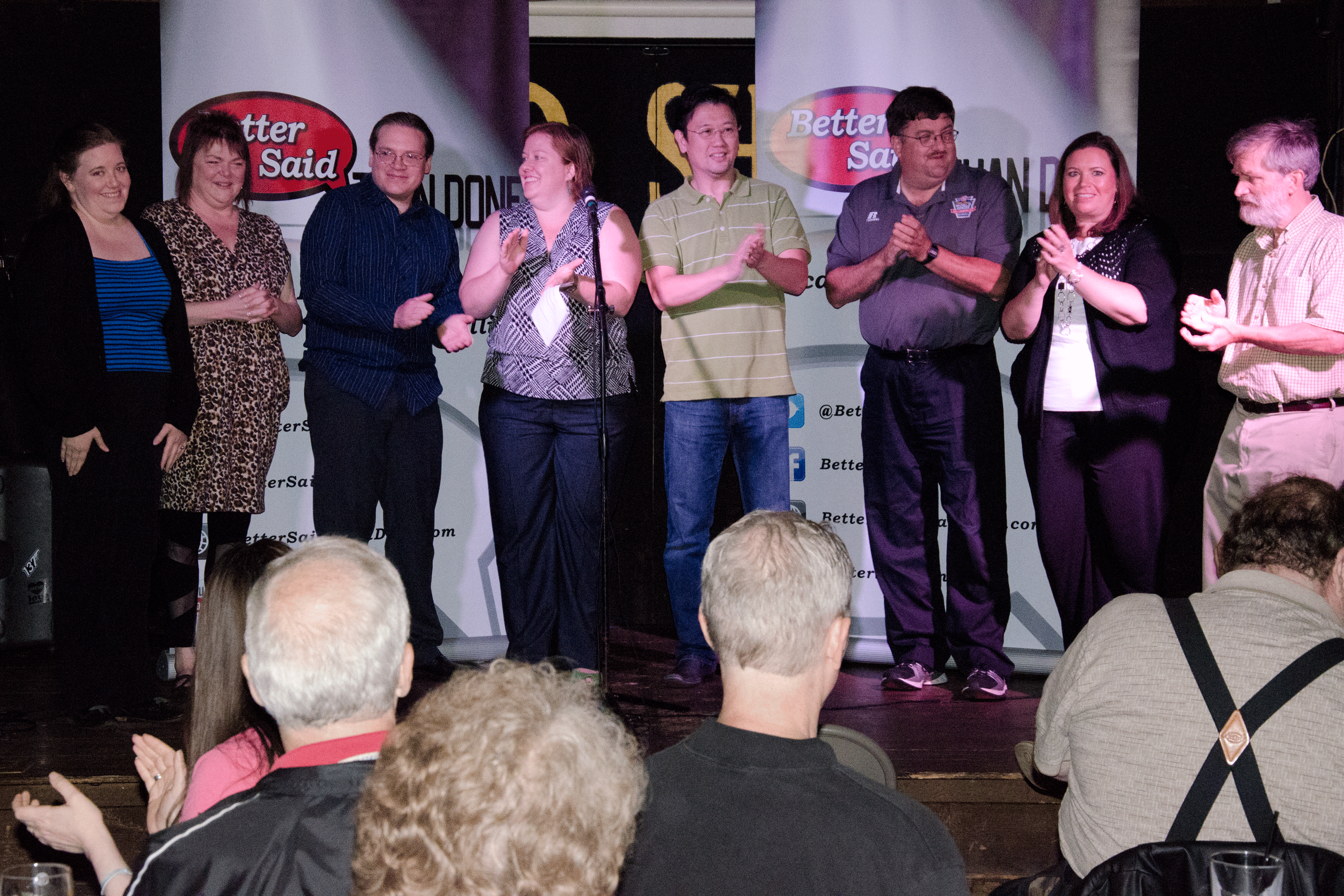
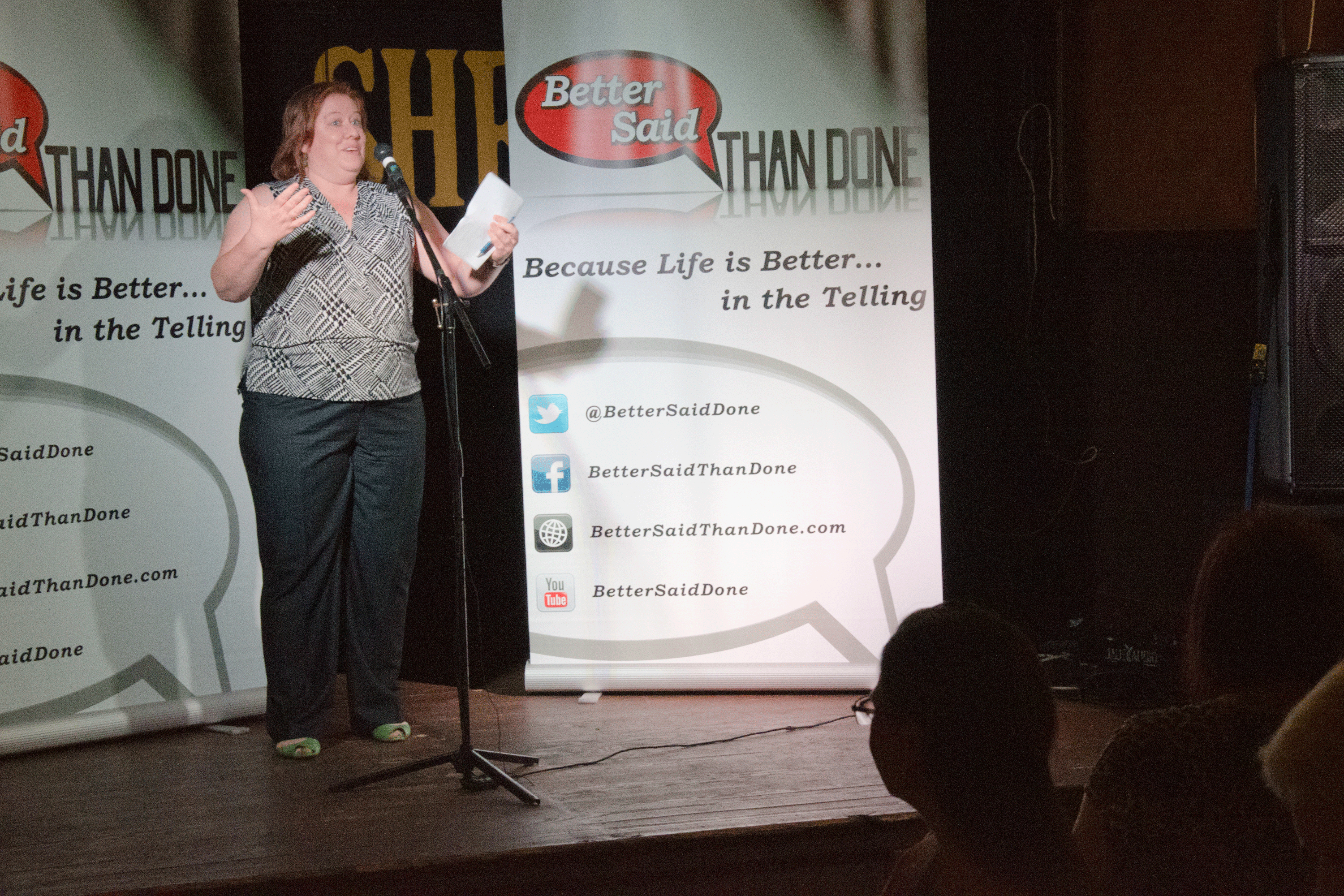
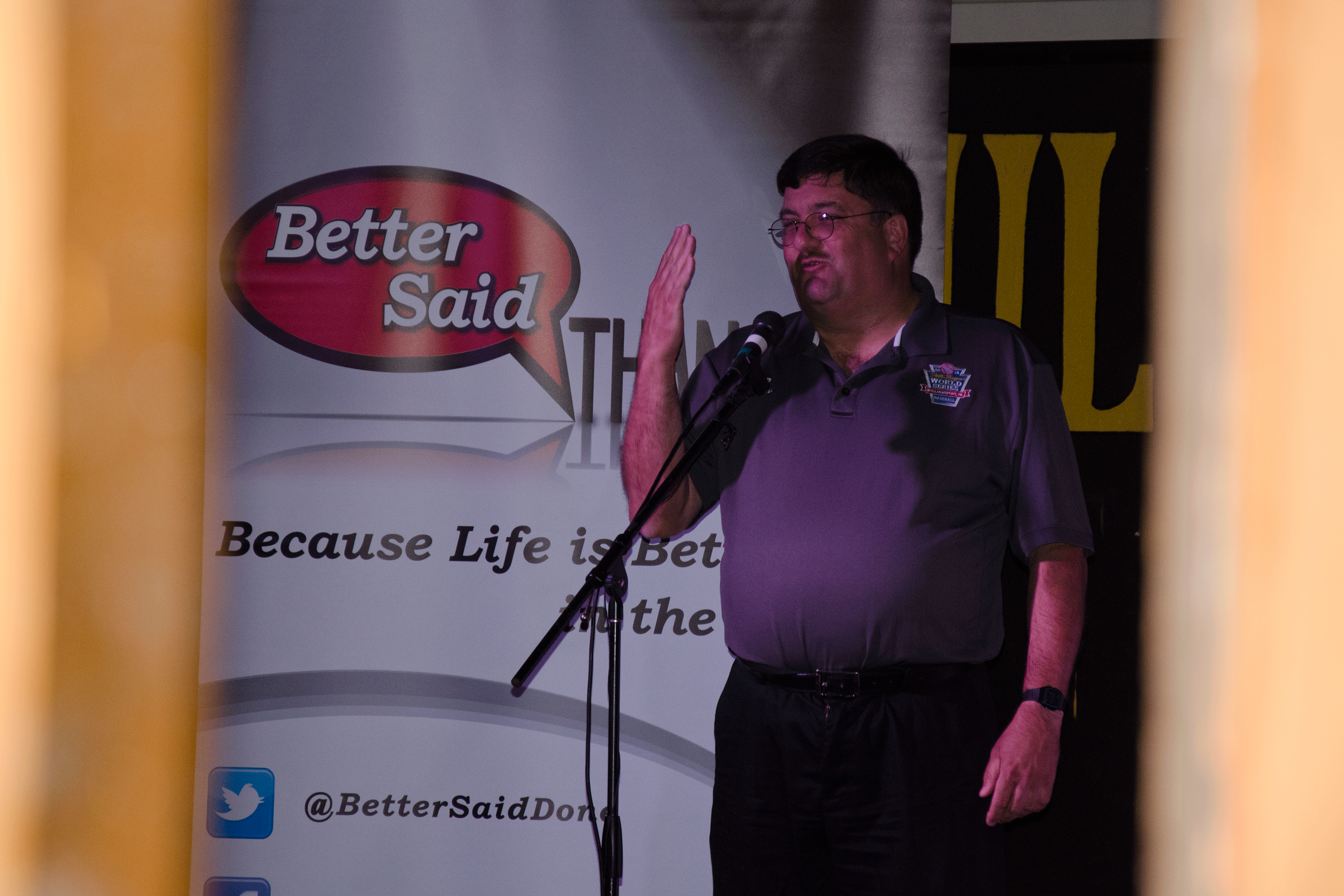
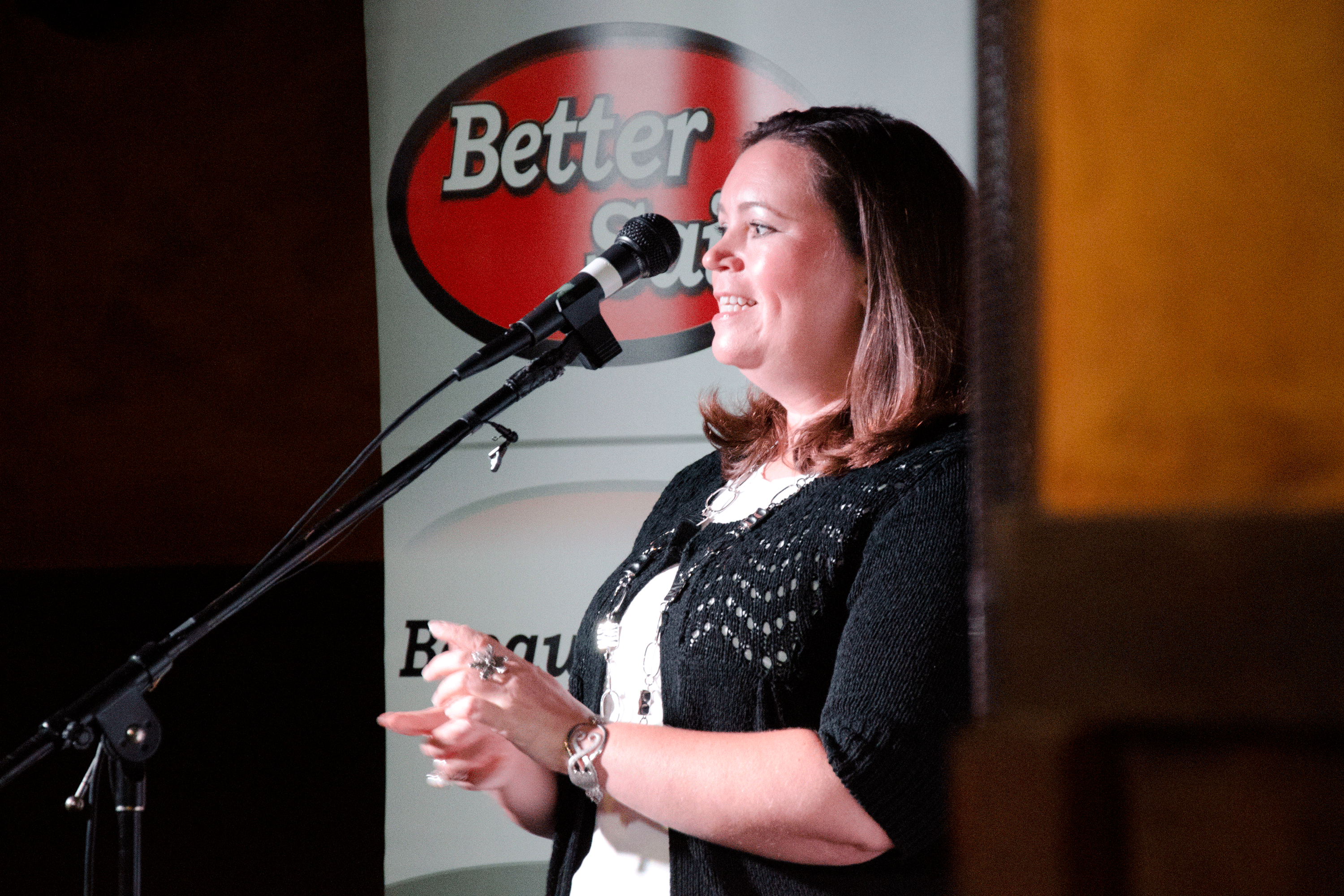
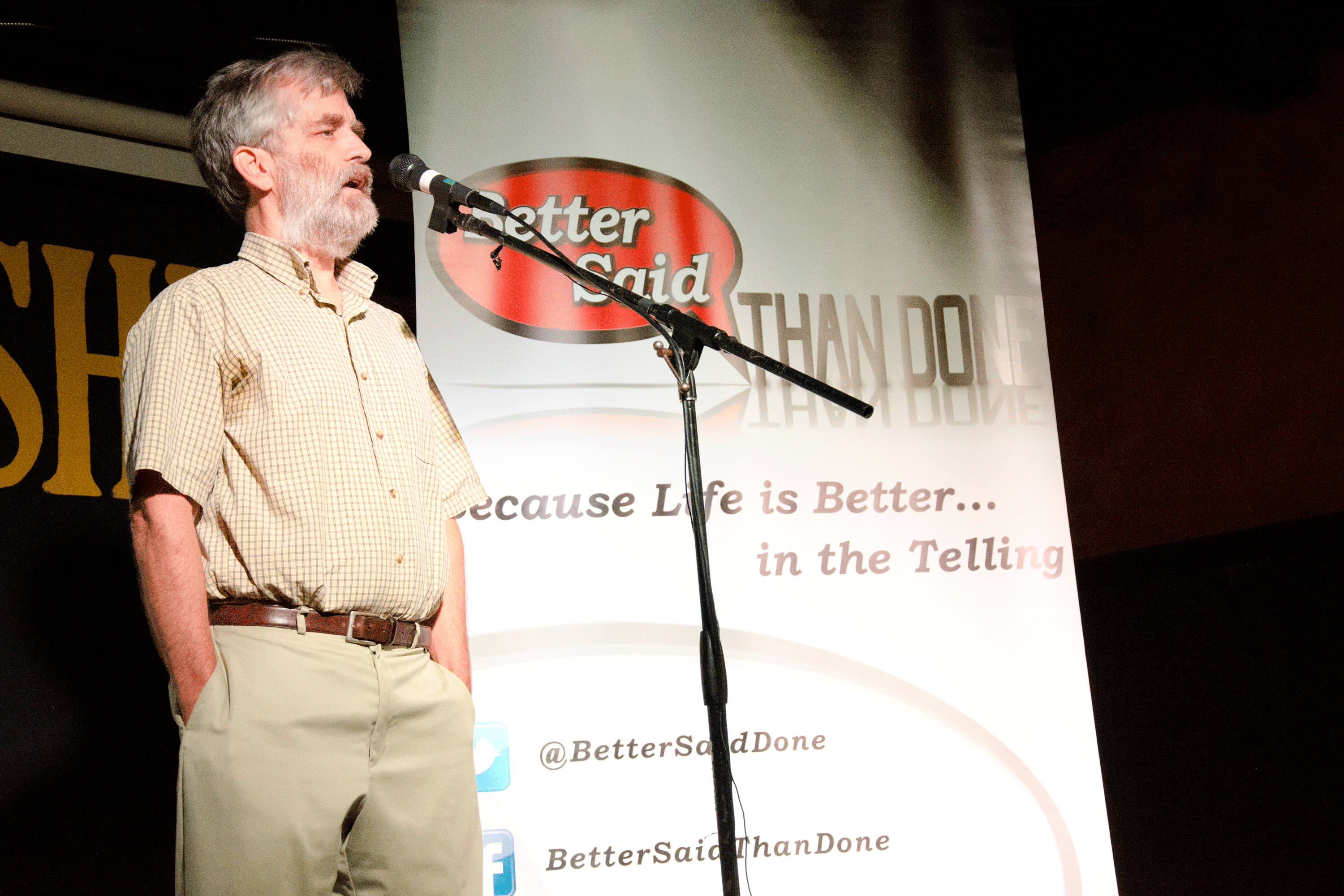
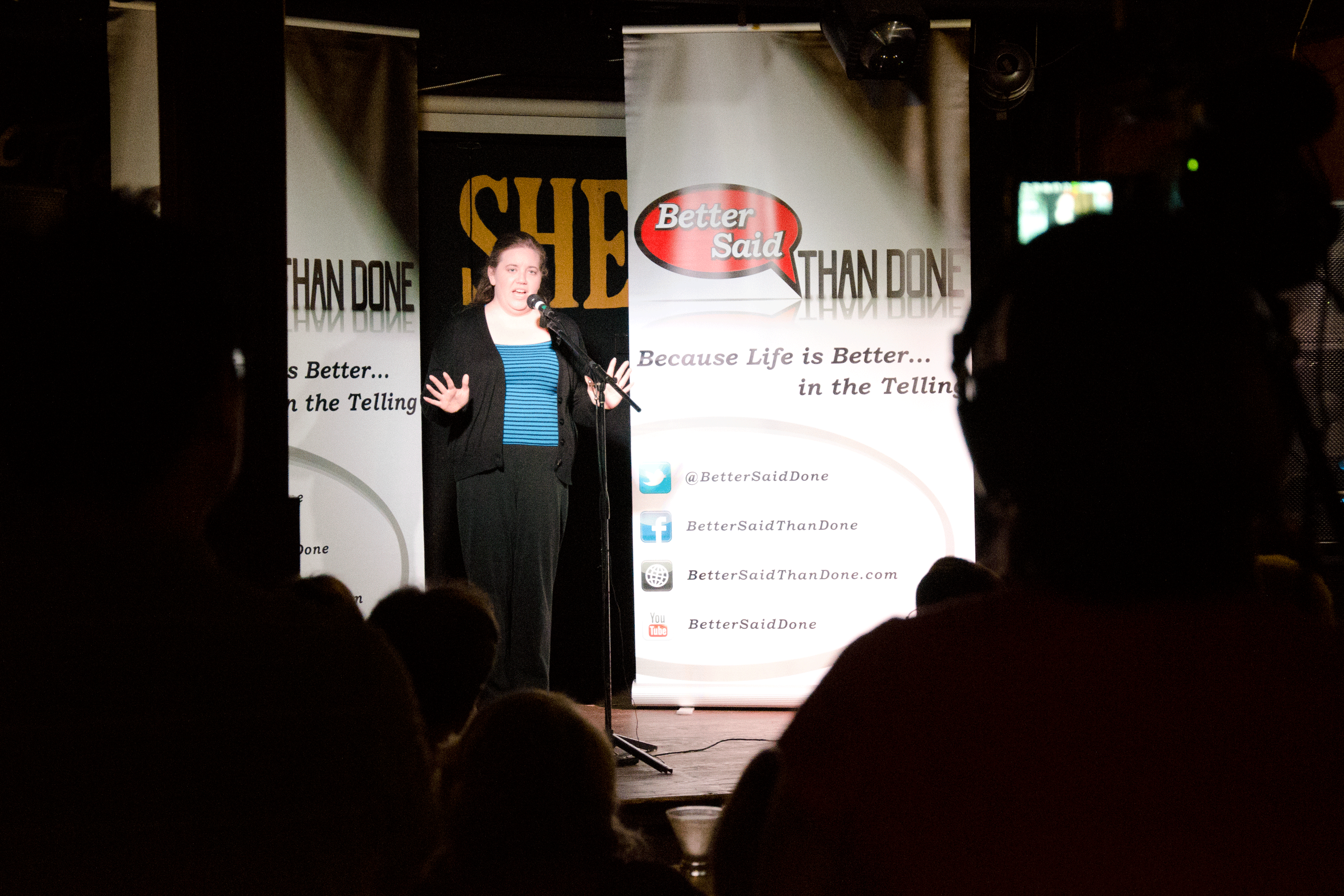
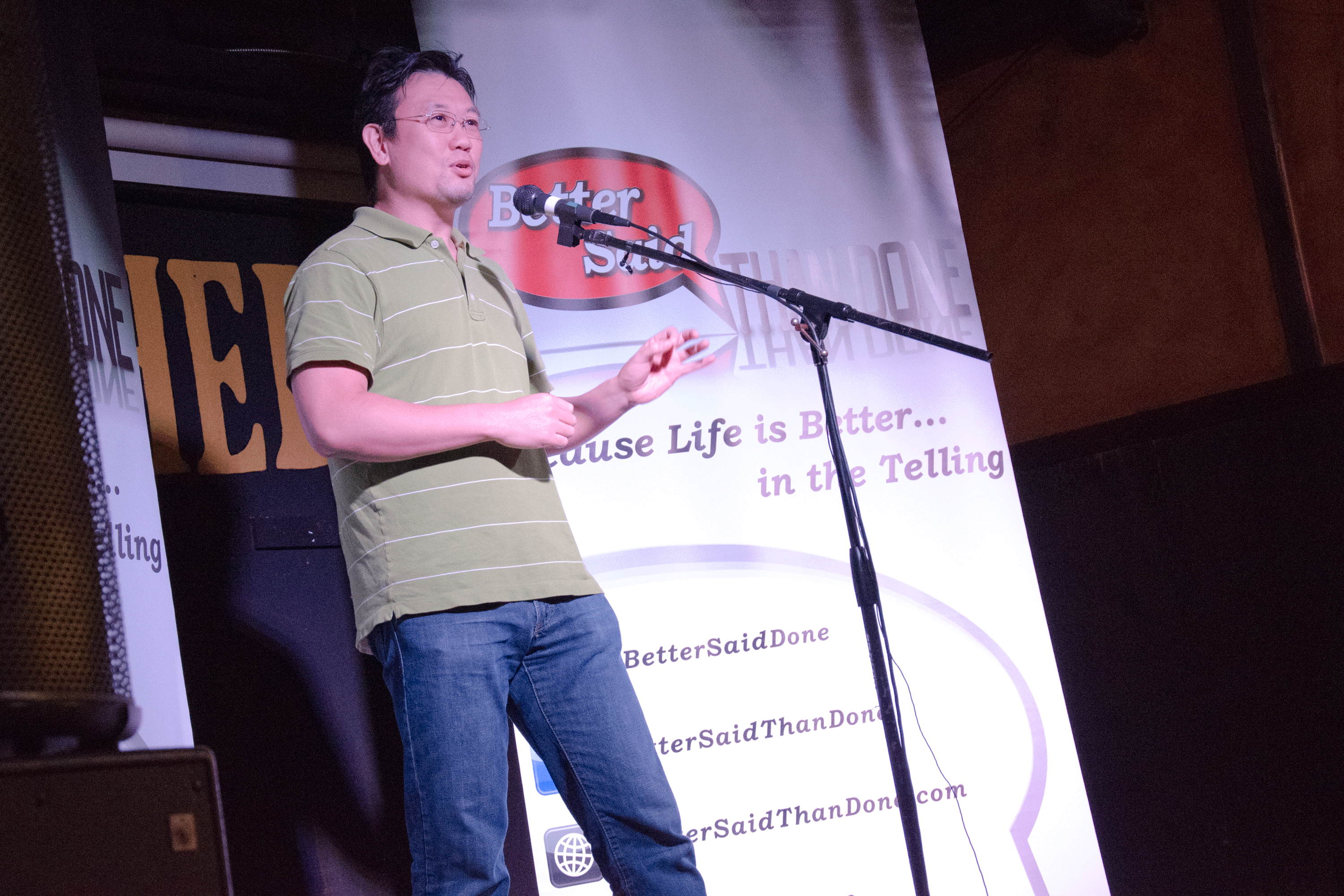
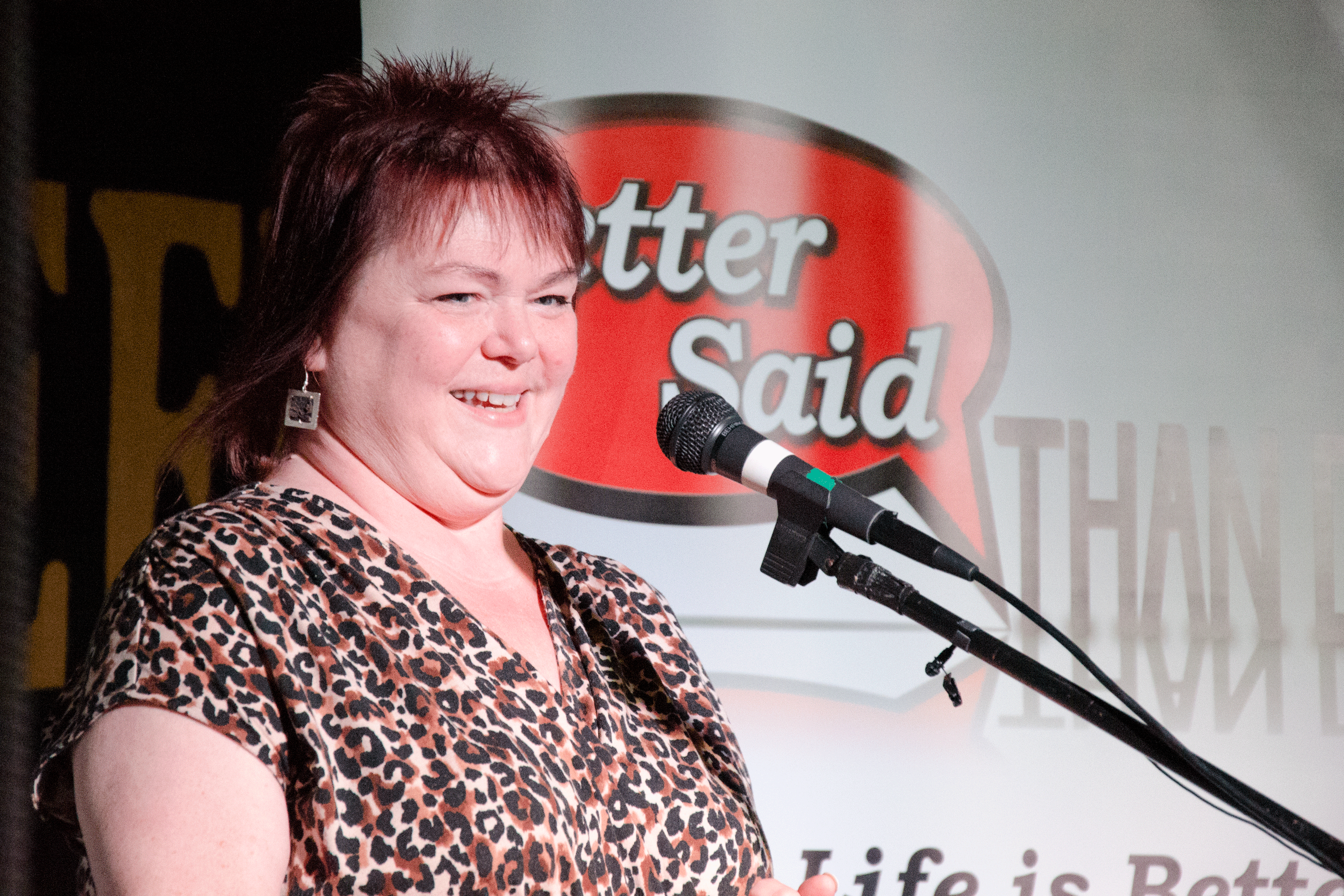
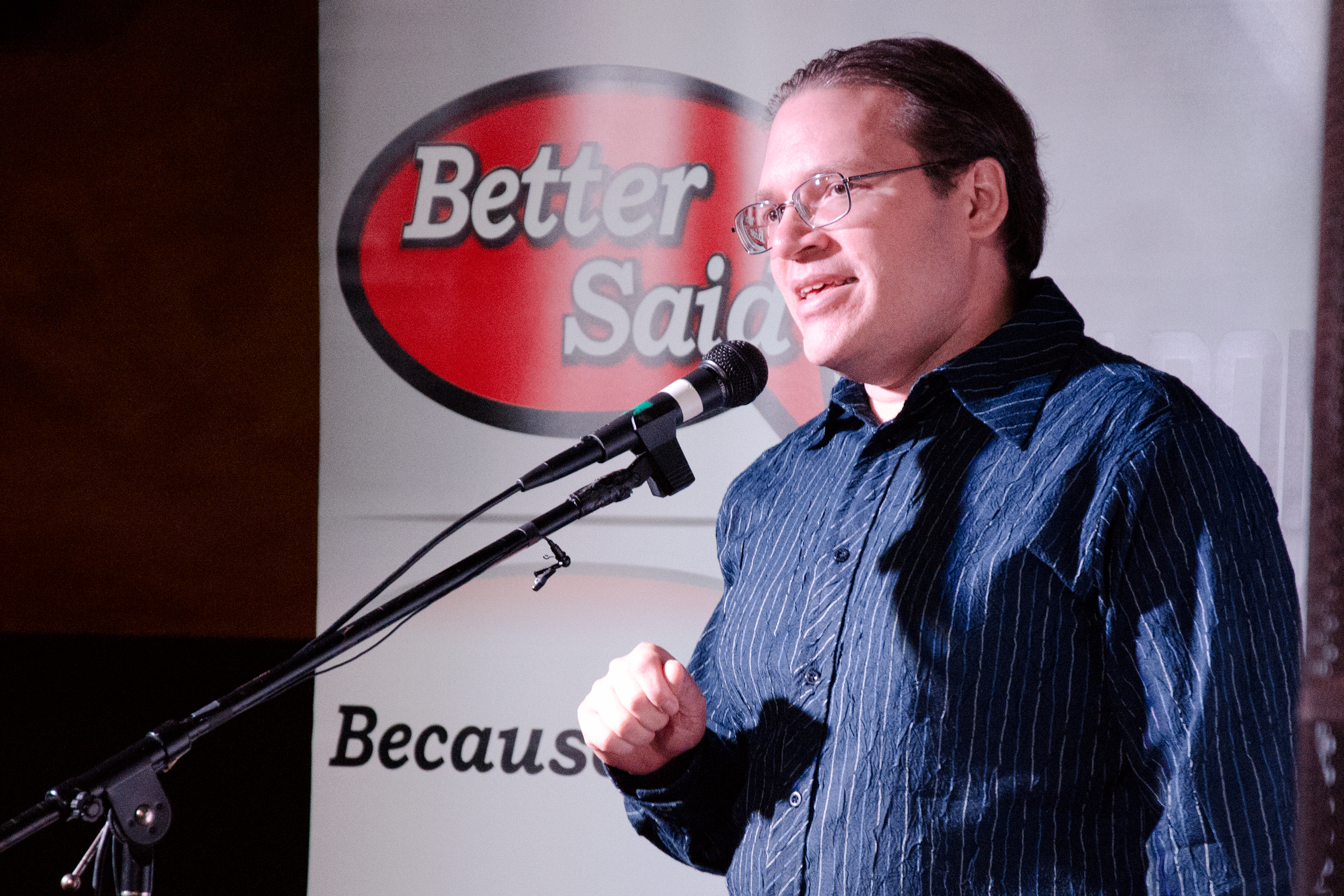
This past July, the lovely Better Said Than Done storytellers got screwed – and then told us all about it! In “Screwed: stories of getting screwed up, being screwed over and just plain screwy tales,” the Better Said Than Done storytelling troupe let it all hang out.
Anna Marie Trester, storytelling workshop leader, hosted the show at the Auld Shebeen in Fairfax. She started the night off with a story of how being a linguist sometimes leads to clarity issues.
First time storyteller, and storytelling workshop graduate, Sandra Hull, shared her tale of a high school bully and her chance at revenge.
Jack Scheer waited to take the stage for the very first time.
This first timer brought us back to that oh so awful moment in childhood – when your parents disappoint your expectations.
Kathy Stershic, our third first time storyteller of the night, also a graduate of our storytelling workshops, told of the ultimate screw over in life – being a homeowner.
Ritija Gupta had no one to blame but herself when she signed up for a triathlon that she was very clearly not prepared for.
Richard Barr revealed a scam that has been under our noses all along – the US educational system.
We got to experience being dragged forcibly from the comforts of Northern Virginia to the not quite so comforting plains of Nebraska with storytelling workshop leader Mary Supley Foxworth.
And Jessica Piscitelli Robinson brought down the house – the house class level – by talking about actual screwing, or, at least, trying to get screwed.
How each storyteller approaches each month’s theme is always part of the surprise and fun. We are always looking to grow our pool of talented storytellers and there are so many of you out there.
We have a half day storytelling workshop this Saturday, the 8th, to help you prepare a story, and a 3 week workshop starting next Tuesday. Sign up today and join us on stage tomorrow. Read about our storytelling workshops here.
There is no August show, but you can catch Better Said Than Done storytelling shows twice in September. Check out our storytelling show schedule here.
Ira Glass related the adage, “Great stories happen to those who can tell them.” At Better Said Than Done, we believe that everyone has a story to tell, and we will teach you how to tell a great one!
Our workshop, Take the Stage: storytelling for performance, delves into the elements, tools, and skills of storytelling critical to developing and performing an engaging true, personal story on stage. Sign up now to get started next week! (August 11, 18, 25, in Reston, address provided upon paid registration)
We will cover character development and story structure; methods to enhance your story with drama, humor, and more; and performance tips and techniques. Throughout the three weeks, each participant will work on developing and fine-tuning one story, using what we discuss each session to revise it for the next, and, ultimately, for the stage.
Spotlight on You: telling the story of your life
11 AM-3:30 PM, August 8 (Arlington) or October 11 (Reston)
A half-day workshop teaching structure, character building, and how to win over the audience. For storytellers of all levels. $75
Take the Stage: storytelling for performance
7-9 PM, August 4, 11, and 18 or October 7, 14, and 21
Three-week series of classes delving into the elements, tools, and skills of storytelling critical to developing and performing an engaging true, personal story on stage. $199, Reston
Your Business Story: crafting your company tale
11 AM-3:30 PM, September 18
A half-day workshop focused on how to write a compelling story to use as content for a website, brochure, elevator pitch, or more. $75, Reston
Better Said Than Done also offers one-on-one storytelling coaching and onsite storytelling seminars customized for your group. For more details, contact us at jessica@bettersaidthandone.com.
I sometimes hear this from would-be storytellers when I mention an upcoming storytelling workshop, such as Spotlight on You, which I am going to be teaching on August 8. “Oh Anna, I really want to come, but I just don’t have anything to talk about – interesting things just don’t happen to me”
Having done storytelling for a good number of years now, I can recognize that familiar voice as the voice of the inner critic – familiar not just to me but to anyone who undertakes any sort of creative endeavor (undergoes change or takes any kind of risk). And of course that voice is wrong for oh so many reasons, as I will now consider, but in my experience, it never really helps to argue with the inner critic, but instead to reassure it, so I give you:
“You know how to do this!”
Perhaps it helps to take a step back here to think about what storytelling is and why it matters before proceeding. I see storytelling as one of the most important tools available to us for learning about who we are and how we think about human beings.
Until you externalize it, you probably don’t even recognize the processes of meaning-making that go on with even your most mundane everyday moments:
the details that you (and only you) would notice
the ways that you connect events and experiences with other things that have happened
the ideas that run through your mind about what might happen next
…. what it all means and why: what this says about you
So that means that storytelling is not really about telling epically fantastical stories, storytelling is really about doing the hard work to recognize, capture, and convey your perspective. So if you were going to argue with the inner critic, you could say “there is always going to be something to talk about because I am always going to have a unique take on things, a unique way of expressing this take”
….and “I know how to do this!”
I was reminded of this fact recently when the challenge of producing a story in a day presented itself to me. Now for those of you who are career procrastinators, I am not saying that the takeaway message here is that you SHOULD try to write a story in a day. Instead what I am saying is that experiencing the entire story process condensed in this way was a powerful reminder for me of the “I know how to do this” because there simply wasn’t time to indulge the “I have nothing to talk about,” or it’s cousin: “is this idea really going to be enough for a story?”
This was the schedule that I gave myself
10-noon: find a story (let’s call this phase A)
noon – 2: draft it (phase B)
2-4: practice it (phase C)
4-6: memorize it (phase D)
7pm: perform it (phase E
Phase A was of course marked by the usual sturm and drang, but it had a time limit because I knew that Phase B would take me 2 hours.
So, I pulled out all of my brainstorm-y story finding tools:
My Rory’s story cubes
The word document where I list all of my story ideas (which somehow never ends up being the source but somehow it gives me comfort to see it)
I quickly called up some of my friends who have been through this with me before: “can you remember what we were talking about last week when I said ‘oh, that would make a good story?’”
And then I finally sat down to just do some free-writing on a theme (spoiler alert: this is where the idea almost ALWAYS comes from). I started with the theme of the show, and free-associated from there – anything and everything that it made me think of: funny, serious, images, objects, memories: and that was where I found one: a memory that fit and which I found that I had at least one paragraph about, which told me that I could do more.
Phase C is where the fun really begins because it is now all about remembering details, connecting them with other ideas, sketching out a scene, finding the very best words, tinkering with structure, realizing what ideas can stay and which are not needed for this story. In short, they are play!
Phase D might not be the most fun, but I assure you that having a bit more time than two hours helps, and it also really helps to have a gentle audience. And if I can guarantee you one thing about a BSTD workshop, it is that you will find a great group of folks to learn with!
…and WE WILL HELP YOU DO THIS!!!
If you are looking for an opportunity to be creative, playful, social, come join us on August 8th for Spotlight on You. Spotlight on You: Telling the story of your life
$75
A half-day workshop where you will learn structure, character building, and how to win the audience over, through our teacher’s method of storytelling coaching. For storytellers of all levels. Students should come with an idea for a story and will leave with a story ready to tell.
To register for upcoming workshops Click Here
Our next show is just 8 days away, and our storytellers might be a little hot under the collar as they take the stage for:
Screwed: stories of being screwed over, getting screwed up, or that are just plain screwy
Saturday, July 25, 2015
7:00 PM (Doors open at 6:00 PM)
The Auld Shebeen – downstairs
3971 Chain Bridge Road, Fairfax, Virginia 22030
$10 per person (Buy your tickets now or at the door.)
The talented line-up will share their tales of embarrassment, eccentricities, and exasperation. Storytellers include Richard Barr, Ritija Gupta, Liezel Munson, Mary Supley Foxworth, first-time tellers Sandra Hull, Jack Scheer, and Kathy Stershic, and host Jessica Piscitelli Robinson.
Full menu is available. Seating is first come, first served.
And mark your calendar for our upcoming shows:
Choose Your Own Adventure
You, the audience, will choose what direction the stories take in this special show!
August 29, 7:00 PM, The Auld Shebeen, 3971 Chain Bridge Road, Fairfax, Virginia (downstairs), $10 per person
Where There’s Smoke, There’s Fire
fundraiser for Friends of Reston
September 19, 8:00 PM, Nature House, 11450 Glade Drive, Reston, Virginia, $15 per person
Six Degrees of Kevin Bacon
presented in conjunction with Fall for the Book
September 30, 7:00 PM, The Auld Shebeen, 3971 Chain Bridge Road, Fairfax, Virginia (downstairs), free
A Night at the Improv, Part 2
Bringing improv and storytelling to the stage together!
October 24, 7:00 PM, The Auld Shebeen, 3971 Chain Bridge Road, Fairfax, Virginia (downstairs), $10 per person
Overheard: stories of eavesdropping and things you weren’t supposed to hear
November 28, 7:00 PM, The Auld Shebeen, 3971 Chain Bridge Road, Fairfax, Virginia (downstairs), $10 per person
Michael Zhuang joined us on stage for our June 2015 show, I Coulda Died: stories about precarious situations. In this edition of Video Extras, Michael will share the story behind the story of how he escaped harm while he made history.
Michael has been performing as a storyteller for three years. “It was actually my business,” he explains. “I started a wealth management practice eight years ago and, belatedly, I realized my English was not up to par and I was socially awkward. I either had to overcome my weaknesses or see my business fail. What better way to overcome my weakness than telling stories in front of an audience!” Last year, Michael started Storyfest Short Slam, a bi-monthly short story contest held in Silver Spring, Maryland. The next Storyfest Short Slam will be on Monday, September 14, 2015.
Mary:Do you have a routine process for developing a story to perform?
Michael: Whenever I have a story seed, I ask myself why I want to tell that story? What changed during that story? Because, without change, I would merely be telling an anecdote, not a story. Once I have a story arc, I try to move information around to create suspense; the way to do that is to reveal the minimal information necessary to move the story forward, thus maximizing suspense. Once this is done, I try to insert humor into the story. I still write out my stories. In the past, I would memorize it word by word. Now I don’t since rote memory takes away from emotional authenticity. I now believe what the audience receives from me is not just words, but my emotional states. In fact, emotional authenticity is far more important than smart wording.
Mary:Besides your rebellious spirit, what motivated you to get involved with the 1989 Democracy Movement?
Michael:I truly believed in freedom and that democracy was right for China.
Mary:The Democracy Movement started in April; were you involved from the beginning? Did you participate in the hunger strike at any point?
Michael:I was involved from the beginning to the end. I did participate in the hunger strike for 6 days.
Mary:You described the Democracy Movement as seeking freedom of speech, freedom of assembly, and freedom to elect representatives. At the time of the protests, how hopeful were you and the other leaders that the Movement might achieve these goals?
Michael:I simplified our calls a bit. There was quite a bit of anti-corruption in our demand. Also, we purposely did not call for free elections because we did not think that was possible; we did believe our demands would lay a necessary foundation for eventual free elections. We were aware that there was a liberal wing within the communist party who were open-minded to political reform. We were mistaken that Deng Xiaoping (the paramount leader) was open-minded since he himself started the economic reform and had liberalized the society in many aspects from Mao’s time.
Mary:Given that communications within China were suspended, how much did you know of what happened on June 4th while you were making the week-long journey to your parents’ home? Were you able to be in touch with others involved in the Movement during that journey home or later?
Michael:I left on the evening the June 4th. As I traveled south, I realized people knew less and less about what truly happened in Beijing. The government had, by the time, total control of the media, and the Movement was portrayed as a lawless and violent riot. I was not able to get in touch with others involved in the Movement.
Mary:I have vivid memories of watching the June Fourth Massacre in Tiananmen Square on TV and talking about it at school. To you, did it feel at the time like you were making history?
Michael:Yes, I had the feeling I was making history.
Mary:During the 7 days it took you to get to your parents’ home, were there people who let you stay in their homes or who fed you? Did they or any of the people who gave you rides know that you had been involved in the protests in Tiananmen Square?
Michael:All the time, especially in Beijing, when people knew what truly happened. They did their best to protect me: taking me around army checkpoints on a bicycle, train captains let us ride for free, etc. As I traveled south, people didn’t know what happened, but they were willing to listen and help. So I told my story a thousand times on my way home. There were regional protests all over the country, though not as massive as that in Tiananmen.
Mary:Before you arrived on their doorstep, how aware were your parents and grandmother of your level of involvement in the Democracy Movement and protests?
Michael:They were aware and very worried. Because I would send updates to my dad in postcards to his office address, all of his colleagues knew that I was involved. Of course, after the crackdown, to them, I went dark and they had no way to know if I was alive or dead.
Mary:What did you do between 1989 and when you came to America in 1992?
Michael:Long story. I was called back to my university to undergo a re-education session. I went back after getting assurance from my professors that this was being done to protect us (and themselves). I was able to graduate but was assigned a job nobody wanted. At the time, there was no free job market, so all graduates got assigned jobs from the government. I used that time to start a business, study really hard, and apply for U.S. colleges.
Mary:What was the adjustment to American life like for you?
Michael:I fell in love right away. I spoke good enough English before I came here.
Mary:Your grandmother told you at the port of departure to, “Go! Go! Go, make a good life for yourself.” Do you feel that you have accomplished your American Dream?
Michael:I believe I have. My grandma was born in 1911, the year the last Chinese empire collapsed. Then China went through 38 year of wars and 30 years of extreme communism. For my grandma’s generation, the only way to live a good life was to leave China.
Mary:Do you still have hopes that you will see expanded freedoms in China during your lifetime?
Michael:I do believe expanded freedom is happening in China, much due to technology and economic forces. I am less optimistic about democracy. The country has a long, long, long history of being a paternalistic authoritarian state. People are still very conditioned by their history. The recent economic success actually makes people less willing to try something new and better. On the other hand, technology and economic forces have created virtual public fora and free movements of capital and labor. All of these are bringing about an incremental degree of freedom.
Looking for something fun to do in DC this summer and love Better Said Than Done storytelling? Well, there are a lot of Better Said Than Done regulars, as we like to call ’em, with shows in the Capital Fringe Fest – so check them out!
Cara Foran in “District of Cara”
Cara Foran moved to DC at 18 planning to become ambassador to France (specifically Paris) and marry someone with a summer home. Spend an hour with her to hear what went wrong (everything) and what has unexpectedly gone right. Buy Tickets Here
Derek Hills in “Ambien Date Night”
Suffering from insomnia, lonely government economist Connie gets hooked on Ambien. When she discovers she’s been dating the local food truck guy in her sleep, she must battle her edgy alter-ego to regain control of her life. Buy Tickets Here Adam Ruben in “I Feel Funny”
Stand-up comedian Adam Ruben’s hilarious new one-man show explores the pitfalls of a career in comedy, from horrific open mic nights to ill-conceived road gigs to sobbing, offended cafeteria ladies. Buy Tickets Here
Ellouise Schoettler in “The Hello Girls”
Women were sworn into the Signal Corp. They served in harm’s way near battlefields in France. General John Pershing called them “switchboard soldiers”. Doughboys dubbed them “Hello Girls.” History forgot these veterans. This is their story. Buy Tickets Here
Mike Baireuther, Mike Kane, Pierce McManus and Stephanie Garibaldi in “Shit Stories”
Don’t believe true stories about shit can be thought-provoking, witty and enlightening? Then you haven’t heard our shit stories. This hilarious, adults-only show’s the shit everyone will be talking about, so don’t miss it. Shit’ll never be the same again. Buy Tickets Here
Better Said Than Done storytellers entertained the packed audience at The Auld Shebeen in Fairfax during our most recent night of storytelling. In “I Coulda Died: stories of precarious situations,” the storytellers shared true, personal stories of facing down death!
It’s never the same to watch the videos as it is to sit in the audience and experience the pure terror (in the case of this show) along with the crowd. But if you did miss our latest storytelling show, here’s your chance to watch some of the terrific storytellers in action!
One of our storytelling workshop leaders, Anna Marie Trester, started the night of true, personal storytelling off with a pile of heart pounding bull. Watch here.
Graduate of our Spotlight on You storytelling workshop, Bill Grella, took us white water rafting. Watch Bill’s first storytelling performance here.
One of our storytelling workshop leaders, Anna Marie Trester, hosted last Saturday night’s storytelling show, “I Coulda Died: stories about precarious situations.” And oh boy, were there some scary stories! Scary good, that is!
Anna started the night of true, personal storytelling off on the right foot with her tale of heart pounding drama in Wales. It was better than an episode of Outlander.
First time storyteller, and graduate of our Spotlight on You storytelling workshop, Bill Grella took us on a harrowing journey on the high seas, or, kind of.
Catherine Calvin, an old pro with her second storytelling appearance, took the audience on a sailing trip down the Potomac, which, of course, did not turn out to be as smooth sailing as you might think.
Another first time storytelling workshop graduate, and another Bill, Bill Burton, raised the hairs on the backs of our necks with his true story about a grizzly bear.
The audience and storytellers took a quick break to get some more pints from the great staff at The Auld Shebeen before Mary Supley Foxworth took us once again into deep, dark, troubled waters.
Michael Zhuang described what it was like being a rebel in China – something you might imagine to be quite precarious.
First timer to our stage, Cheri George, gave us a story so shocking it could have been made up by Stephen King – only it was all true!
And if Cheri’s story wasn’t enough to give you nightmares, our final storyteller of the night, David Supley Foxworth, refused to take us to Africa, even though his doctors insisted!
My blood is racing remembering these harrowing tales of life on the edge. Of course, July’s storytelling show is going to make everyone’s blood boil.
Join Better Said Than Done storytellers on July 25th for “Screwed: stories of being screwed over, getting screwed up, or that are just plain screwy.”
We welcome summer and all its blockbusters with this edition of Video Extras, featuring Mike Kane and his story about Star Wars. More specifically, Mike’s story, from our May 2015 show, The Mamas and the Papas: stories about moms, dads, and kids, is about taking his girls to an “epic” Star Wars parade. Watch the video below and then dive into Mike’s bag of storytelling and Jedi mind tricks.
Mary:What’s your process for developing a story to perform?
Mike: Typically, I find myself telling them to friends — not like I’m rehearsing them, but just telling them a story of what happened to me last weekend or, “the time that BLANK happened.” Once I’ve found myself telling it a fifth, maybe sixth time, it occurs to me that the story is entertaining enough to tell on stage. Then I start to work through the story on my own, crafting it, trying to make it tighter and tighter until the time of the performance.
Mary:What did you do to prepare to tell this story?
Mike:I kind of knew as we were driving home from the event that very day that this was a performance story. Obviously, we returned home and my wife asked me, “How was it?” As I was telling her what happened, I was sure this was something I wanted to perform. After that, it was a matter of a creating voices for the characters and editing out the fat in the story. I’ve told this story on stage in longer iterations before. I’ve trimmed it each time.
Mary:Were there any details you had to cut — either for time or they just didn’t fit the narrative — that you’d like to share?
Mike:At one point, Darth Vader removed his helmet during the lecture. When I told this beat in previous iterations, I realized that, as I described the man under the helmet, it sounded mean and judgmental. I find that stories about my kids don’t afford that sort of commentary. There was an innocence about this story that I liked…it was the simple misunderstanding of what the event was that made the situation funny. My judgments on what type of people would host an event like this are somewhat irrelevant, so I cut it.
Mary:Were there any moments when you performed the story that got a different reaction than you anticipated?
Mike:Not in this story. In fact, I love this story so much because it always does get the exact intended reactions. I have stories where moments that I think are hysterical get zero laughs and it leaves me scratching my head. Or it feels tight when I go through it in my head, but as I perform it, it feels like I’m rambling. In this one, I feel like the heart comes through where it’s supposed to. The laughs come at the appropriate time. And the irony seems to be realized as intended.
Mary:When was the first time you saw Star Wars?
Mike:My father took me out of kindergarten on the day Return of the Jedi was released. We went and saw a matinée together. It’s one of my favorite childhood memories. The other vivid memory I have is when my oldest daughter was five, I introduced her to Star Wars on DVD. We got less than 15 minutes through it before she wandered off. In her defense, it does feel like a slow burn by today’s standards.
Mary:On a scale of 1 (you’ve seen it once) to 10 (you’re a super-fan), how much do you like Star Wars?
Mike:I’m by no means a fanatic. Star Wars played a huge role in my childhood. I saw all of the movies countless times, collected the action figures, et cetera. But as I started to get older and my tastes matured, I’ve become less of a fan. Certainly the nostalgia of the original trilogy makes them seem more impactful than they really were.
Mary:Based on my observation of my friends, former co-workers, and ex-boyfriends, it seems that many men in their 30s or 40s wanted to be Han Solo when they were younger. Why do you think that is?
Mike:Do they? I was always more of a fan of Luke Skywalker. I think his archetype rings truer to young boys. I guess Han Solo’s archetype is more suited for a grown man. He’s kind of the drifter cowboy who has no roots, but when push comes to shove, can’t leave town if injustice happens to good people. He’s the space age version of Shane.
Mary:Ewoks — love them or hate them?
Mike:Totally love. The cool thing to say here is “hate”. But if you’re my age, you were five when Return of the Jedi came out. And if the Ewoks didn’t capture your heart, you don’t have a pulse.
Mary:What’s your opinion of Episodes 1-3?
Mike:They sucked. In fact, going back to the, “Are you a fanatic?” question, I think, had those movies really been done correctly, they could have recaptured the hearts of my generation and turned me into a lifelong fanatic. But they were so bad, I pretty much quit on the franchise. I never even saw the third one.
Mary:Are you looking forward to the new Star Wars movie?
Mike:YES! Early indications are that the movie was done RIGHT! So psyched!! (Now I sound like a fanatic again.)
Mary:Yes. Yes, you do. Moving on…When was the last time you dressed up in costume?
Mike:When I was like 10. Nothing rubs me the wrong way more than adult functions where people dress up. A lot of adults I know throw themed parties and you’re supposed to dress up as your favorite character or something. You’ll have to tell me how it was, because I’m not going.
My wife helps my girls with elaborate Halloween costumes. I love watching them get all decked out in their fairy gear or their princess costumes. That’s a whole different kettle of fish there.
Mary:What’s your nerdiest hobby or interest?
Mike:Fantasy football is pretty lame. But I do it…
Mary:When choosing one-day activities for your family, what’s the typical balance between your interests and your daughters’?
Mike:99.9% their interests. The other .1% lands us at costume lectures at the public library.
Our next storytelling show will have you on the edge of your seat! You’ll find yourself wondering what dangers lurk around the corner as you hear tales of facing uncertainty and confronting mortality.
I Coulda Died: stories about precarious situations
Saturday, June 27, 2015
7:00 PM (Doors open at 6:00 PM)
The Auld Shebeen – downstairs
3971 Chain Bridge Road, Fairfax, Virginia 22030
$10 per person (Buy your tickets now or at the door.)
Heating up the stage with their stories of dicey situations will be Catherine Calvin, Cheri George, David Supley Foxworth, Mary Supley Foxworth, Michael Zhuang, first-time tellers Bill Burton and Bill Grella, and host Anna Marie Trester.
Full menu is available. Seating is first come, first served.
Stay with us throughout the summer at our upcoming shows!
Screwed: stories of getting screwed up, screwed over, or screwed in
July 25, 7:00 PM, The Auld Shebeen, 3971 Chain Bridge Road, Fairfax, Virginia (downstairs), $10 per person
Choose Your Own Adventure
You, the audience, will choose what direction the stories take in this special show!
August 29, 7:00 PM, The Auld Shebeen, 3971 Chain Bridge Road, Fairfax, Virginia (downstairs), $10 per person
Where There’s Smoke, There’s Fire
fundraiser for Friends of Reston
September 19, 8:00 PM, Nature House, 11450 Glade Drive, Reston, Virginia, $15 per person
Six Degrees of Kevin Bacon
presented in conjunction with Fall for the Book
September 30, The Auld Shebeen, 3971 Chain Bridge Road, Fairfax, Virginia (downstairs), additional details to be announced


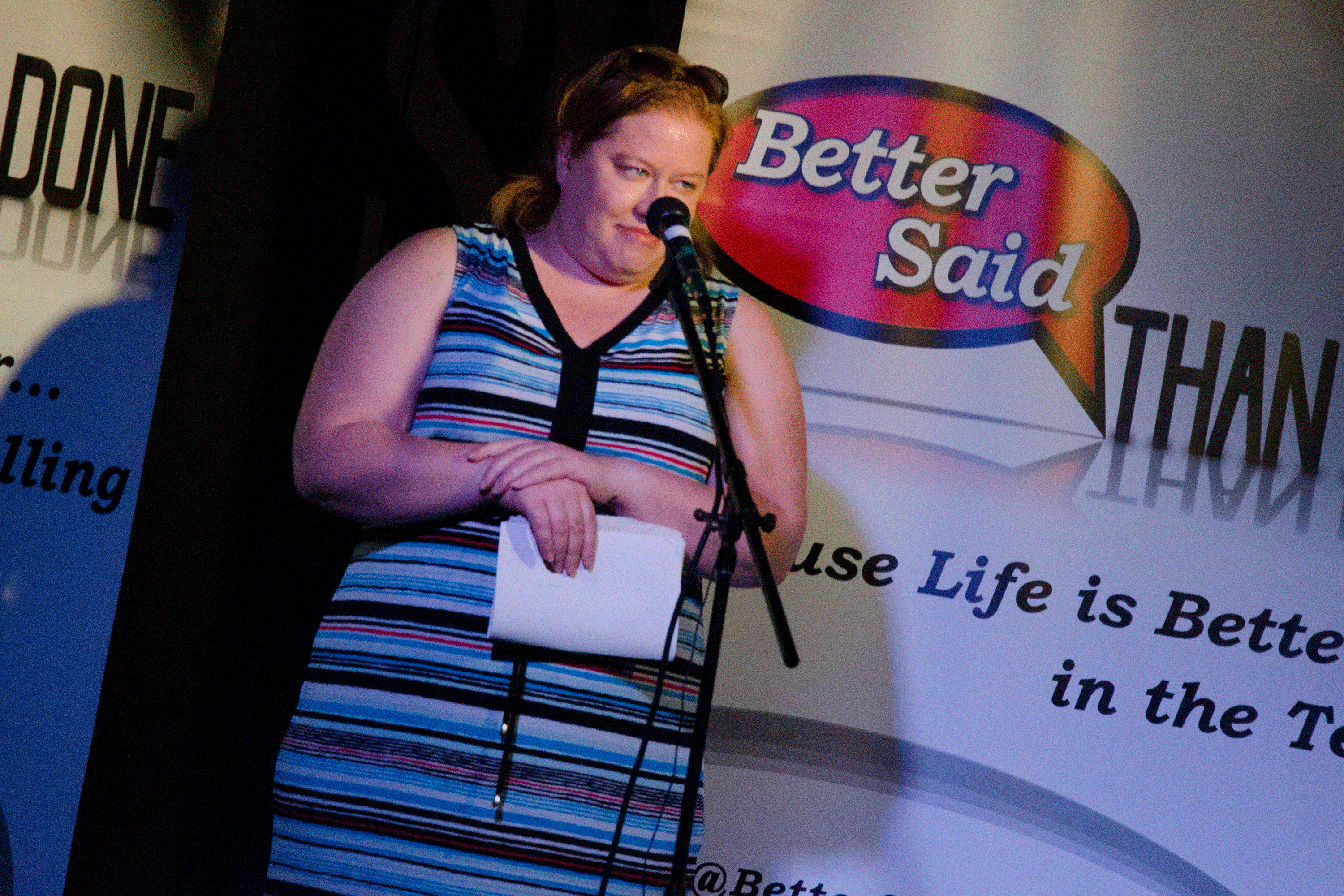 Anna Marie Trester, storytelling workshop leader, hosted the show at the Auld Shebeen in Fairfax. She started the night off with a story of how being a linguist sometimes leads to clarity issues.
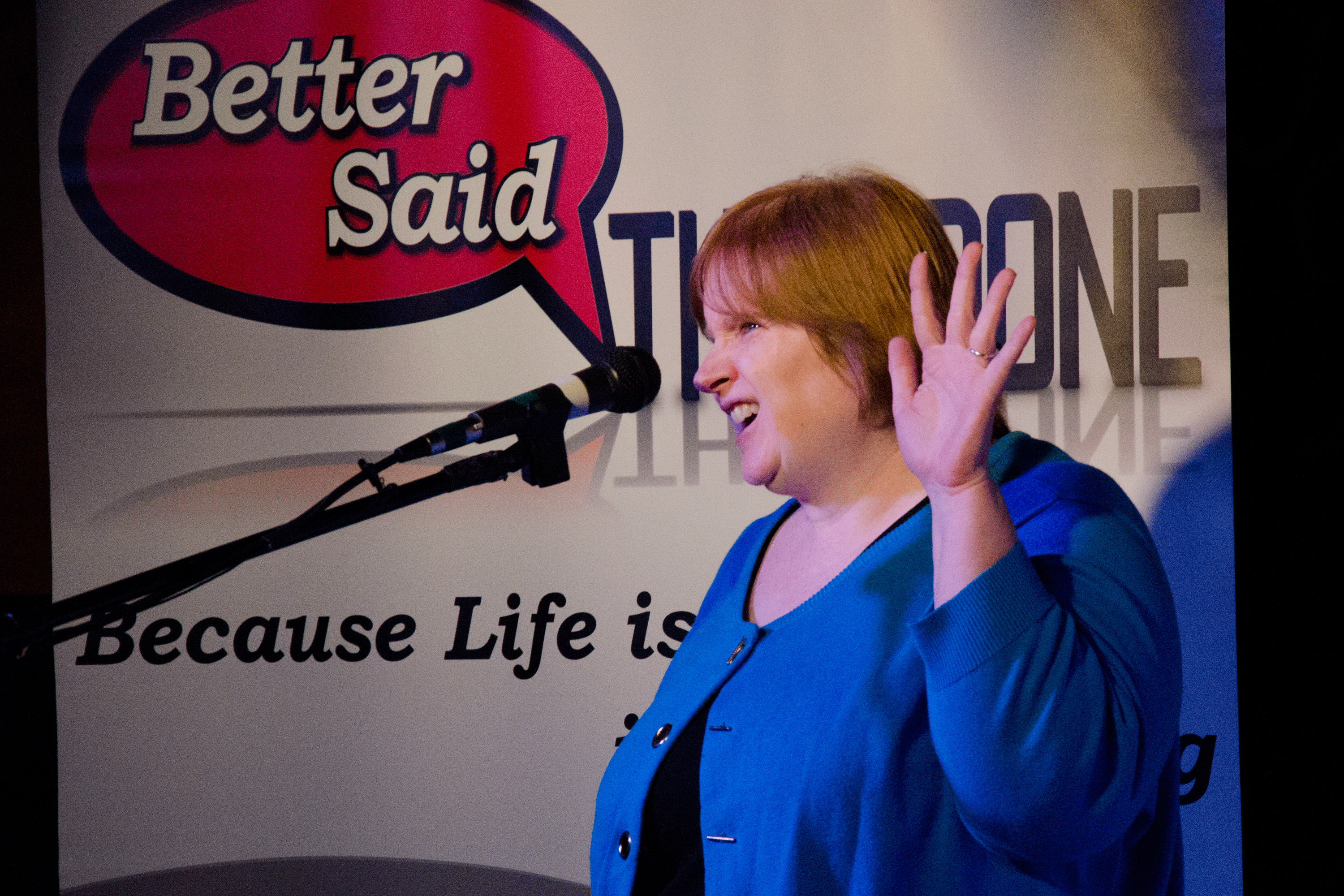 First time storyteller, and storytelling workshop graduate, Sandra Hull, shared her tale of a high school bully and her chance at revenge.
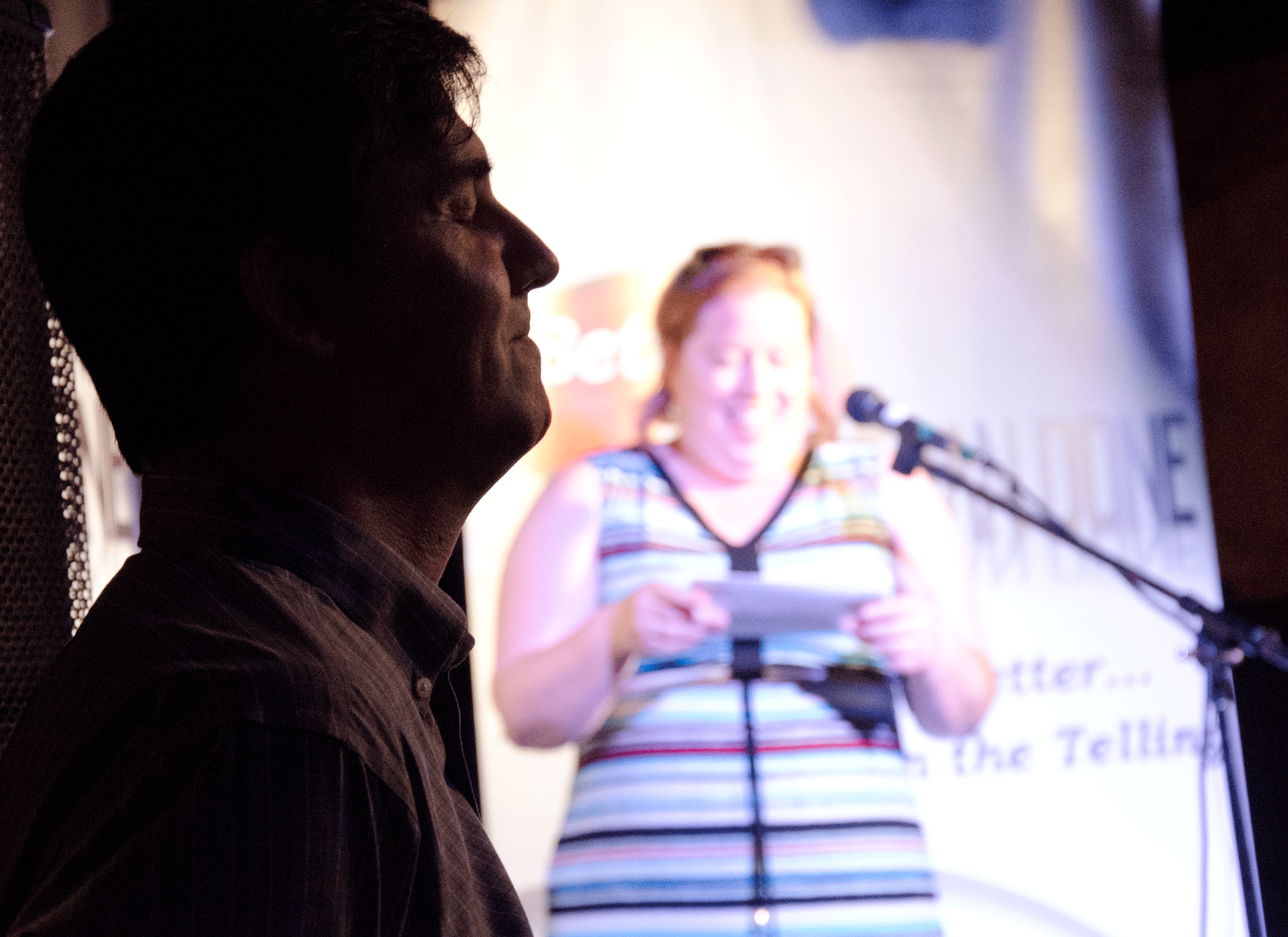 Jack Scheer waited to take the stage for the very first time.
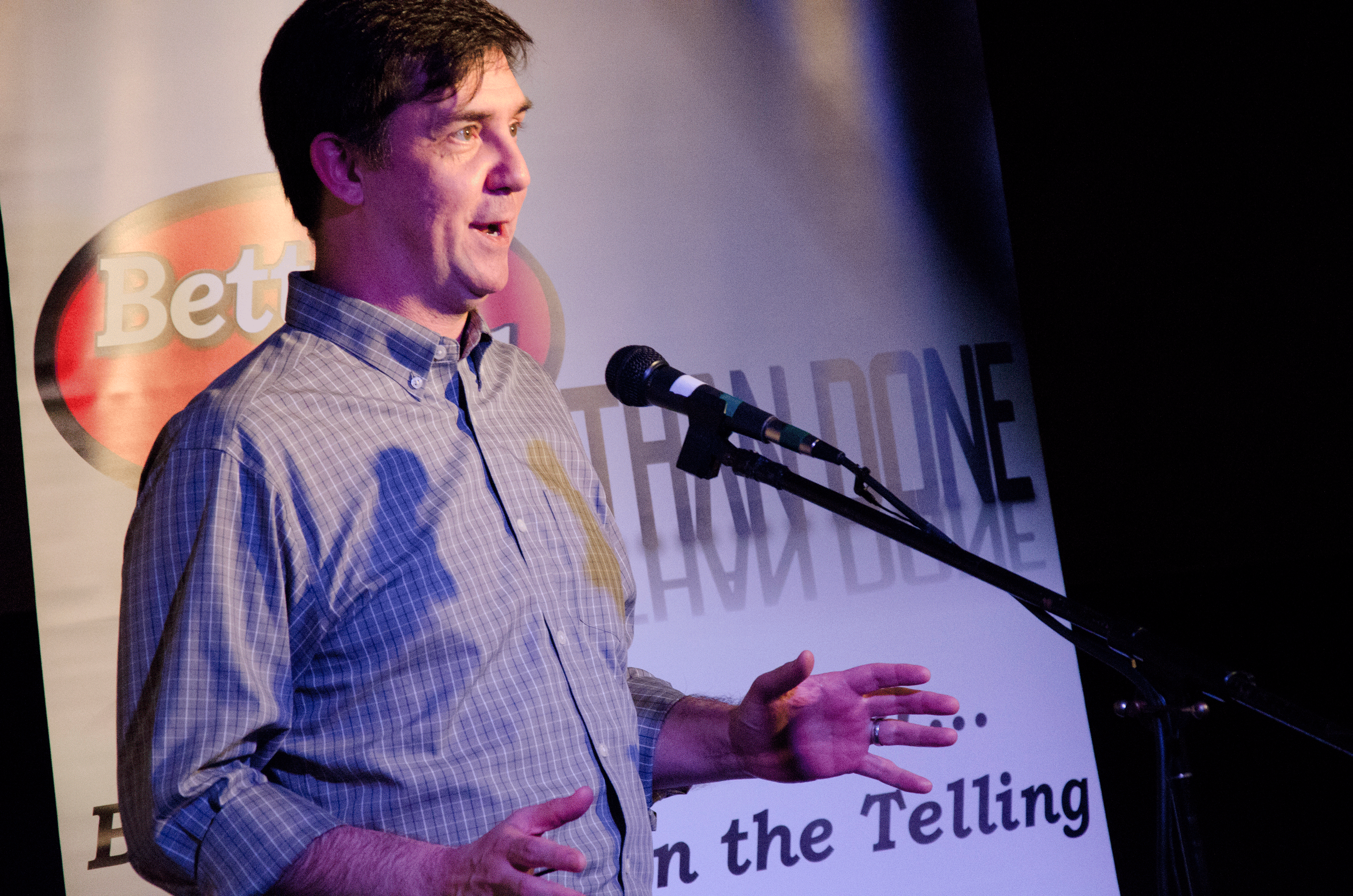 This first timer brought us back to that oh so awful moment in childhood – when your parents disappoint your expectations.
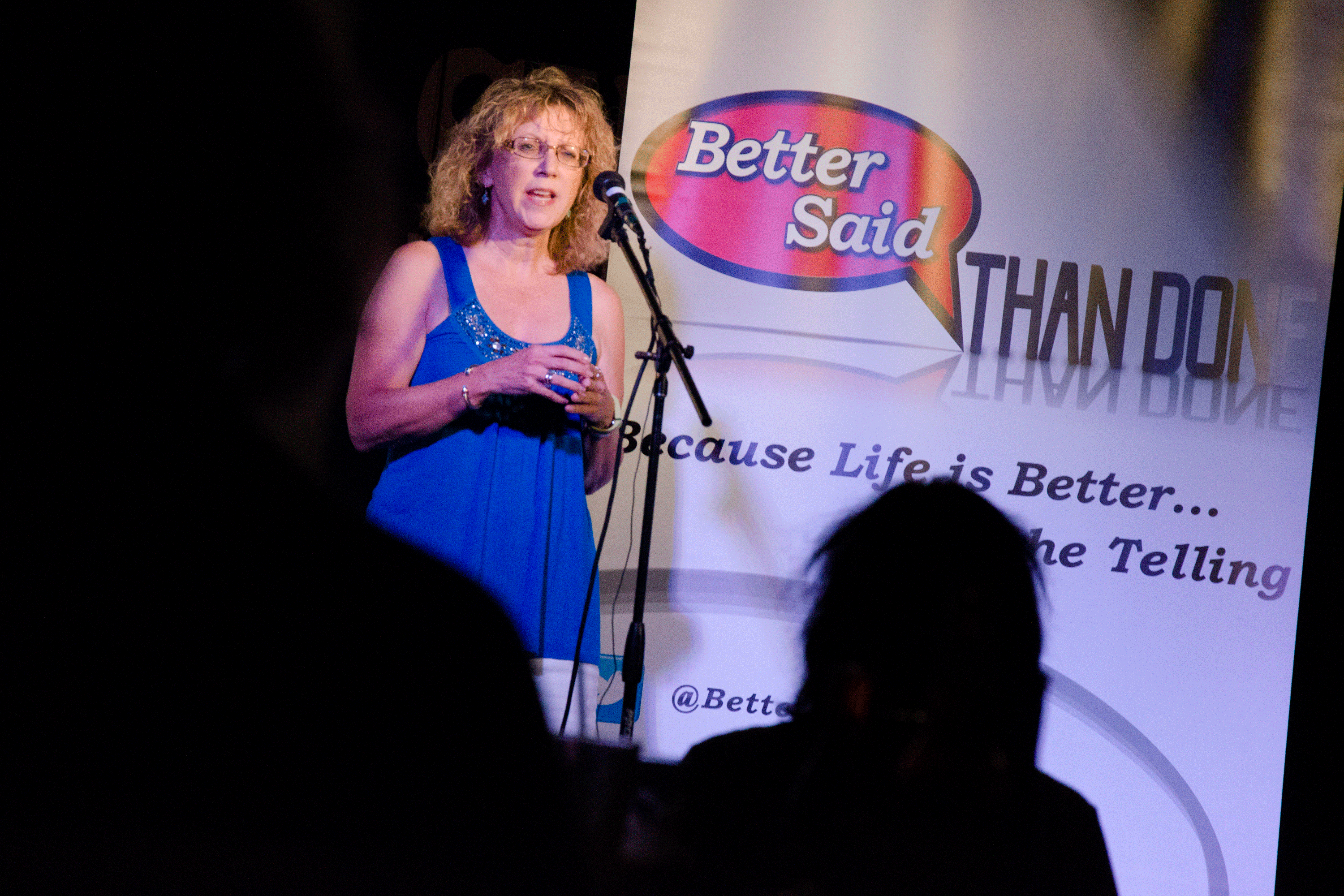 Kathy Stershic, our third first time storyteller of the night, also a graduate of our storytelling workshops, told of the ultimate screw over in life – being a homeowner.
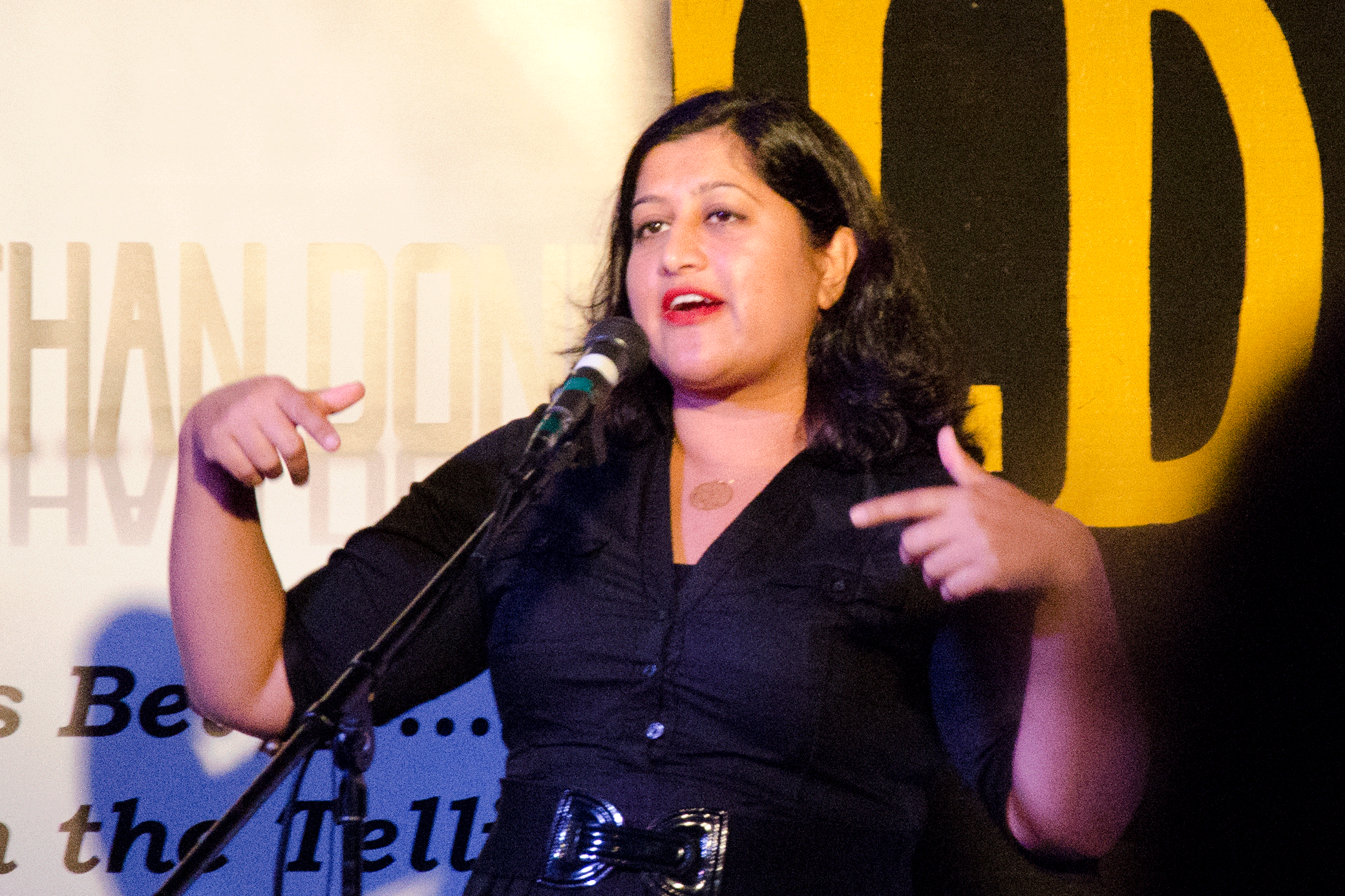 Ritija Gupta had no one to blame but herself when she signed up for a triathlon that she was very clearly not prepared for.
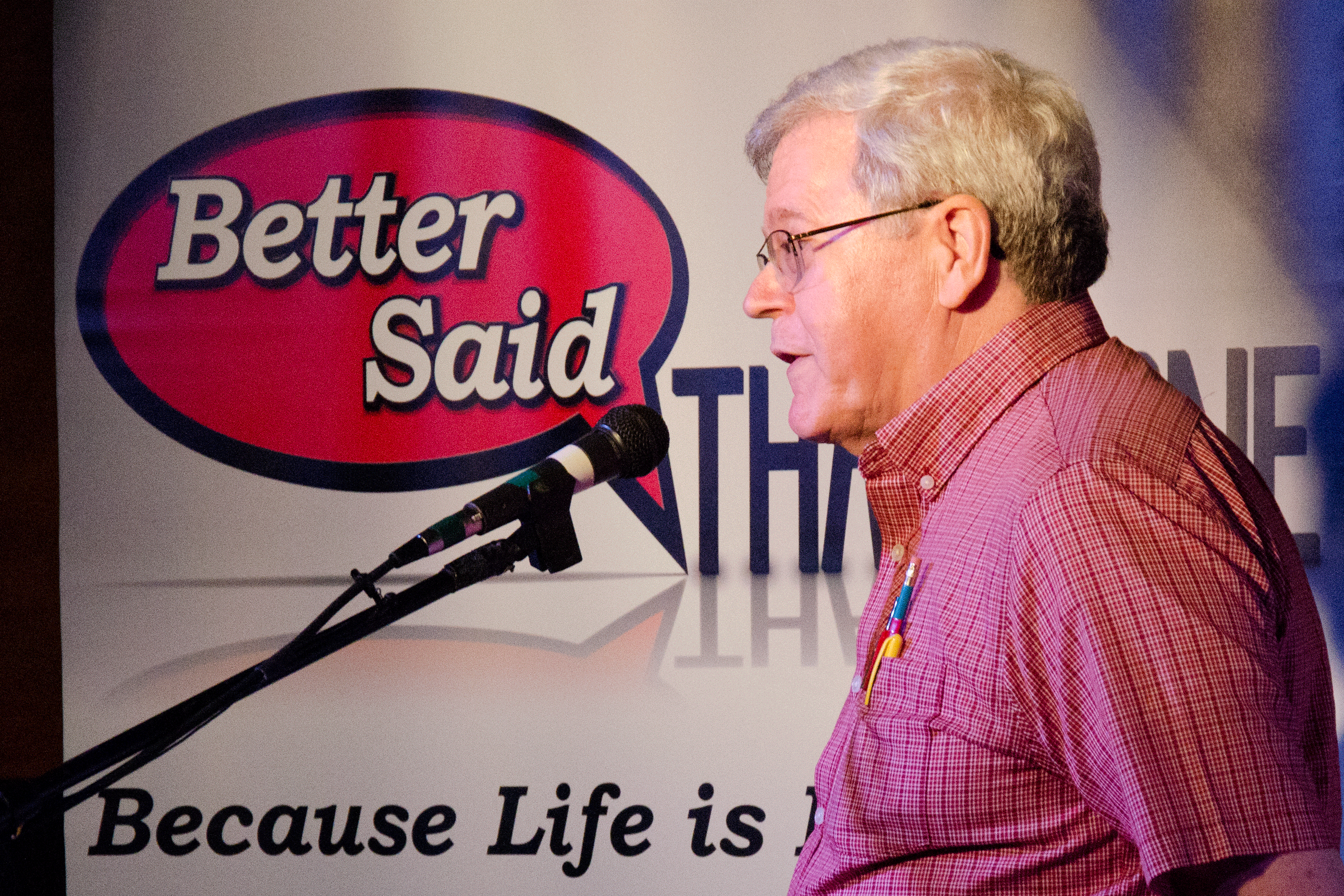 Richard Barr revealed a scam that has been under our noses all along – the US educational system.
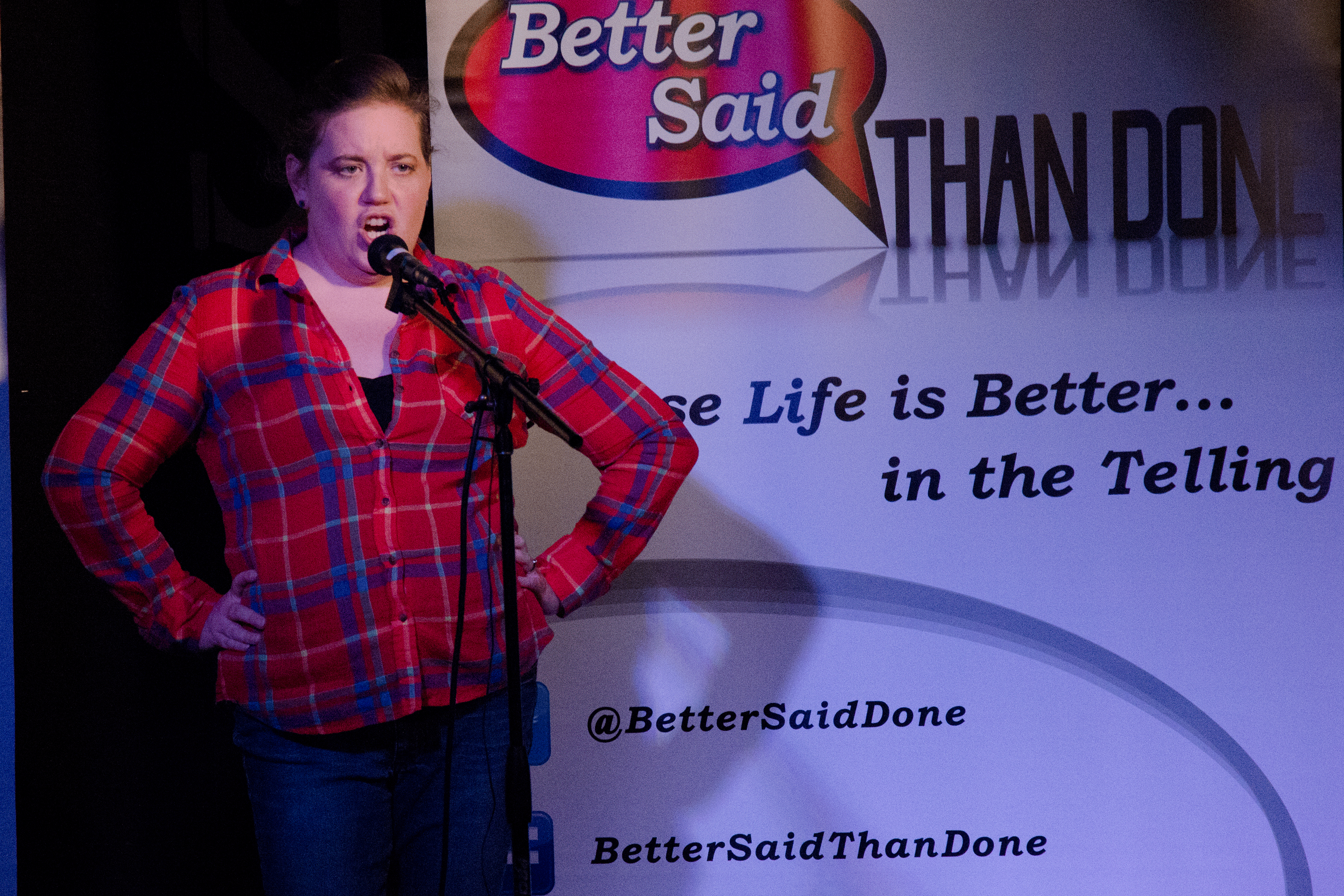 We got to experience being dragged forcibly from the comforts of Northern Virginia to the not quite so comforting plains of Nebraska with storytelling workshop leader Mary Supley Foxworth.
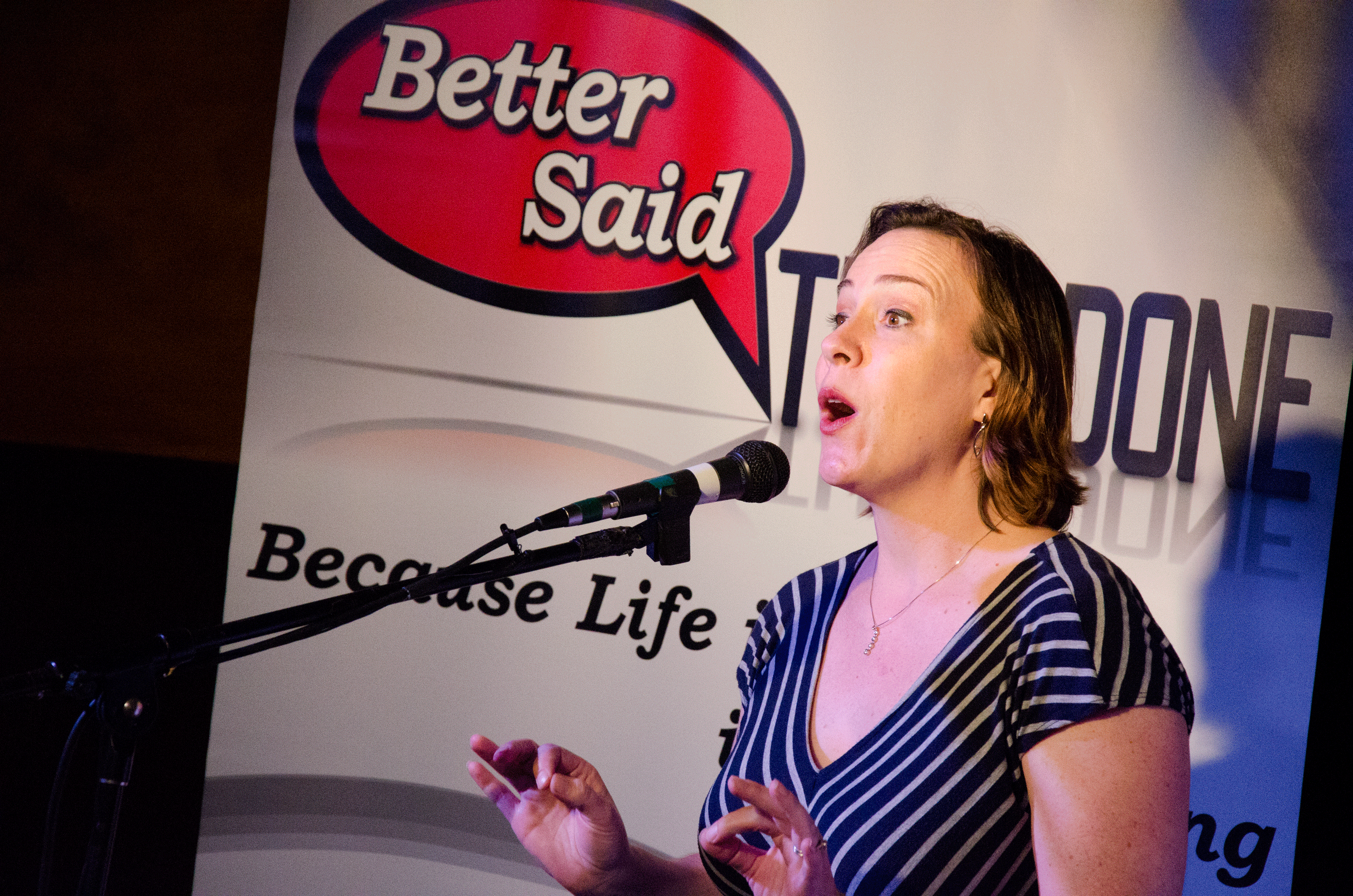 And Jessica Piscitelli Robinson brought down the house – the house class level – by talking about actual screwing, or, at least, trying to get screwed.
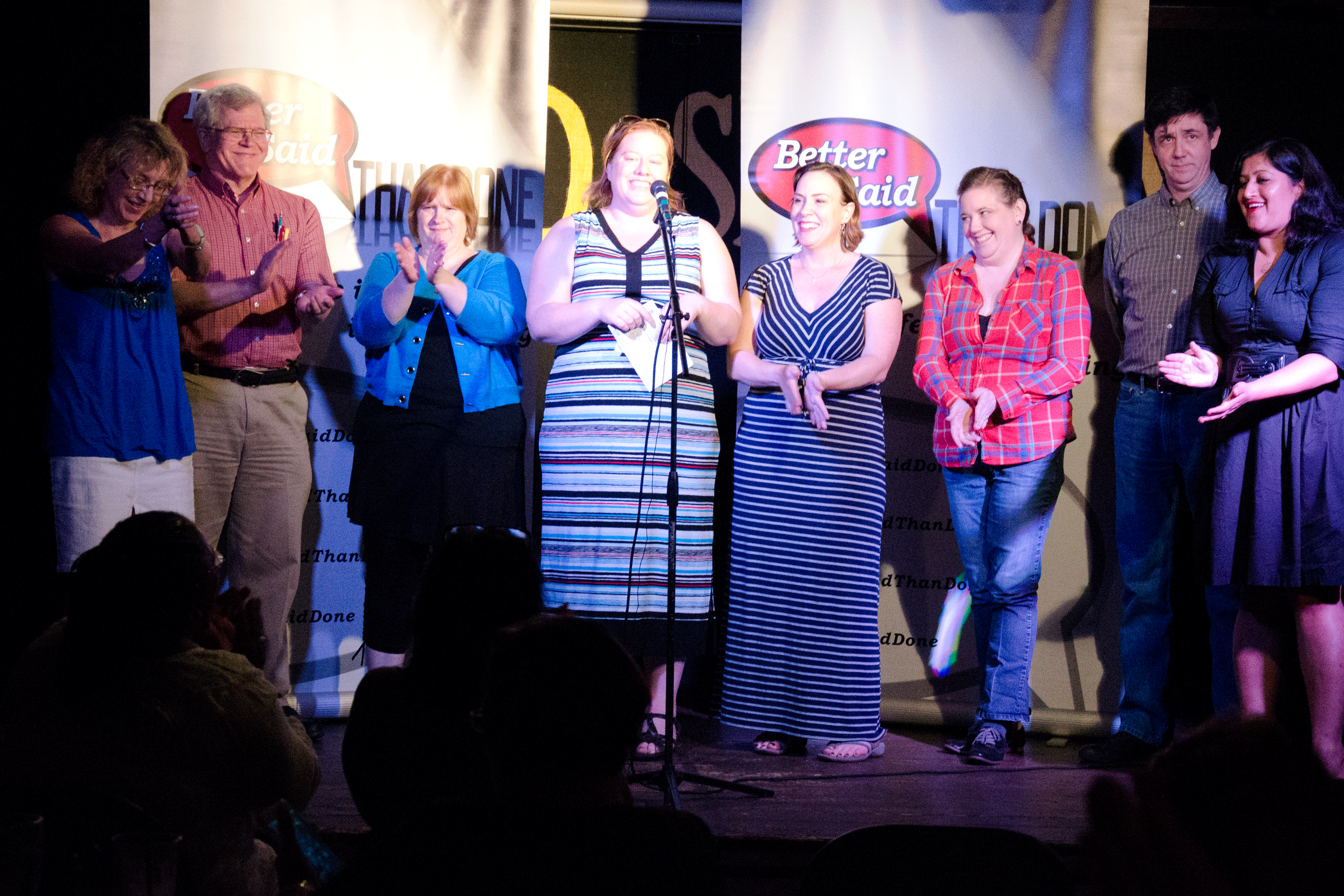 How each storyteller approaches each month’s theme is always part of the surprise and fun. We are always looking to grow our pool of talented storytellers and there are so many of you out there.