Happy New Year! I know that’s like soooo one week ago, but since this is my first post of 2016, I think I’m still allowed to say that.
Speaking of firsts, we have our first storytelling workshops starting next week and our first storytelling show in just a few weeks, so make sure to check your calendar and make the necessary arrangements.
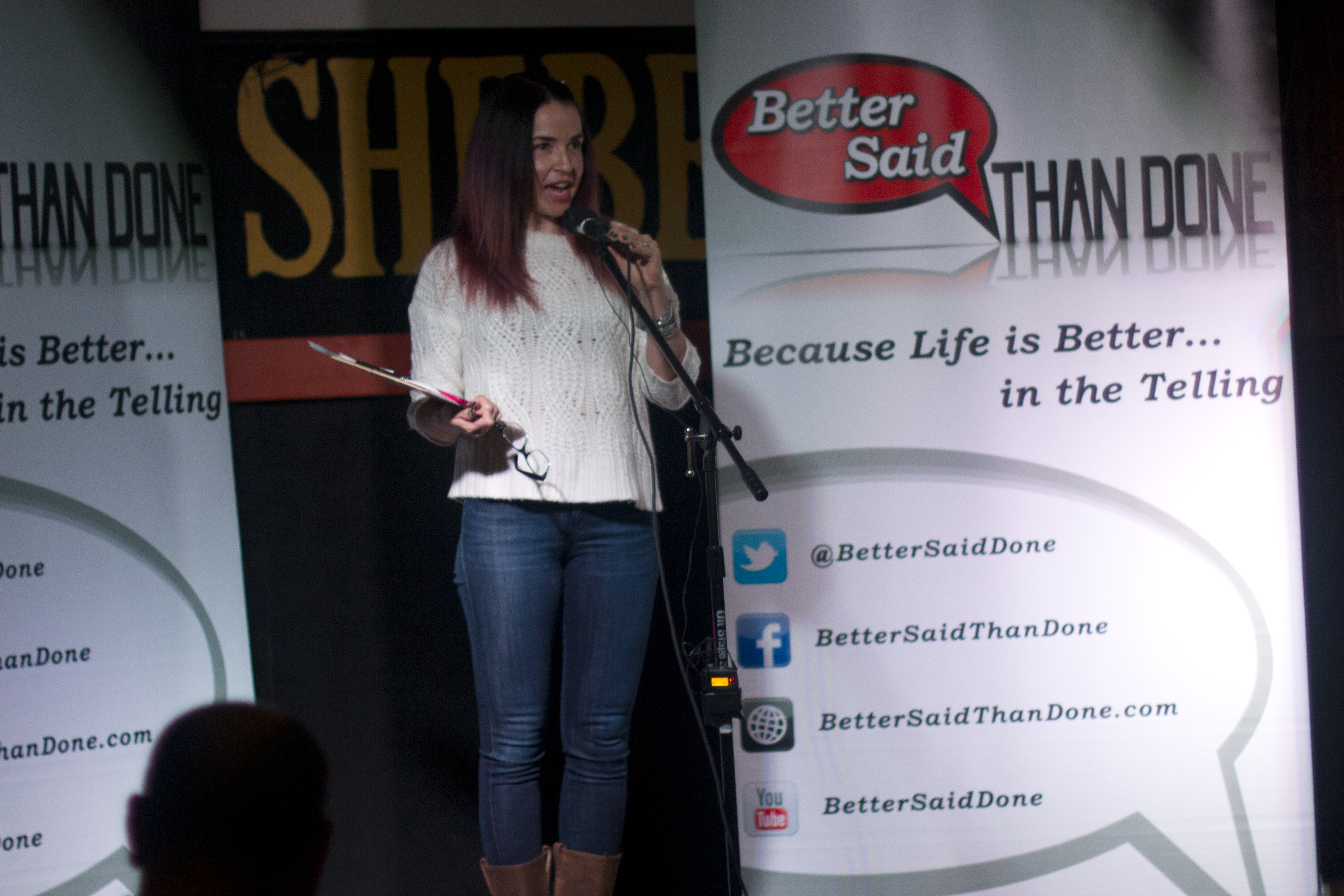
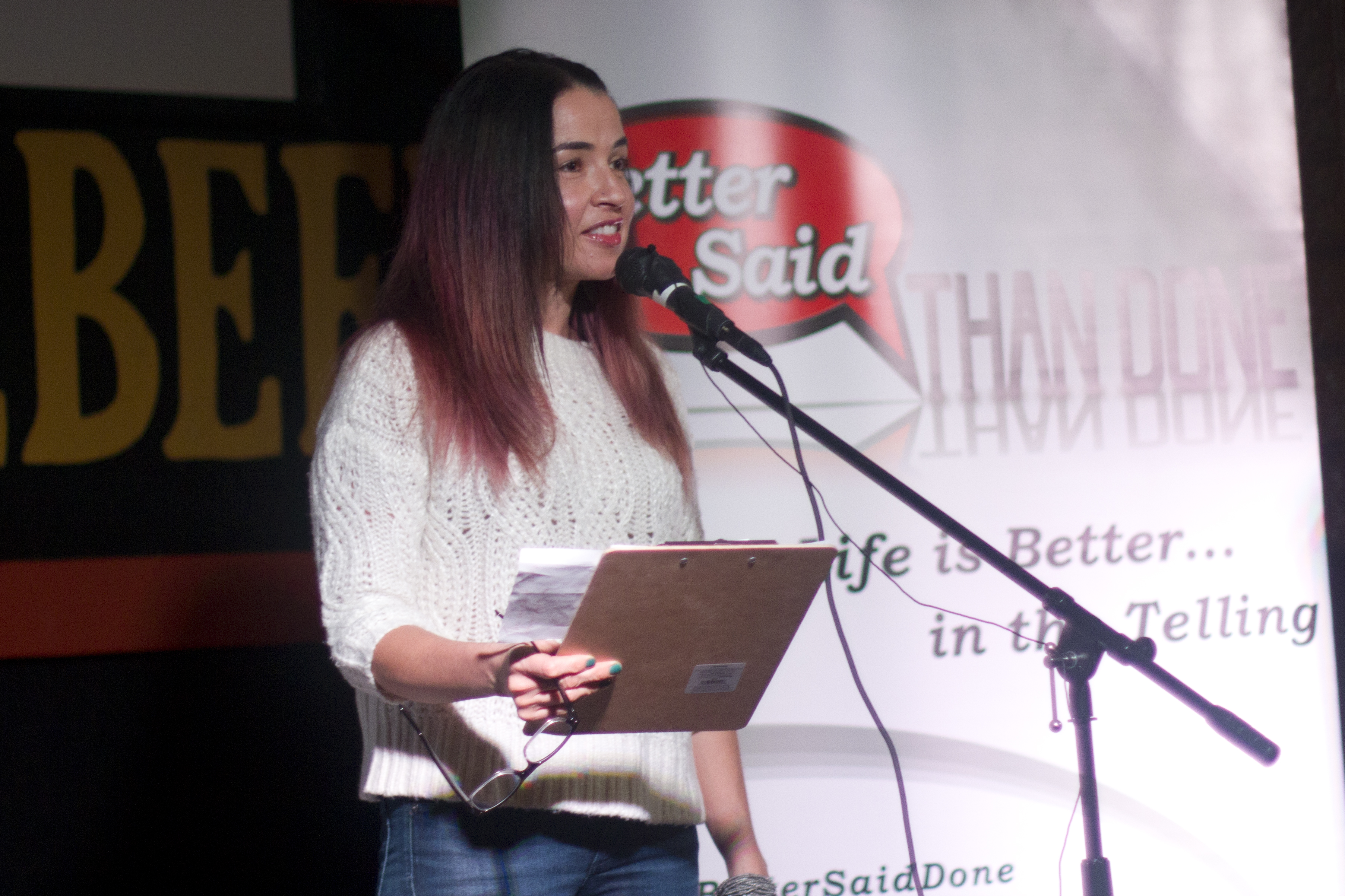
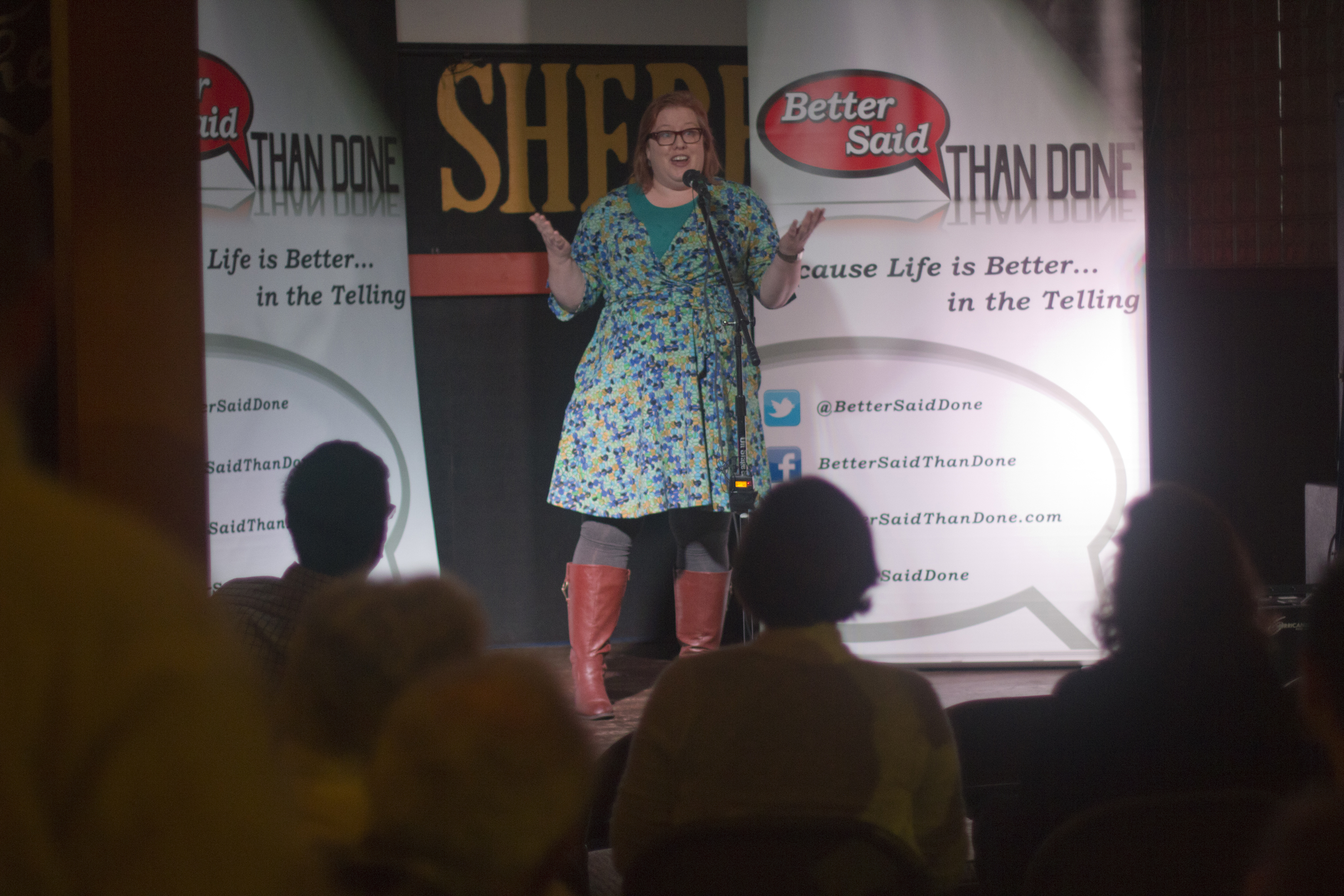
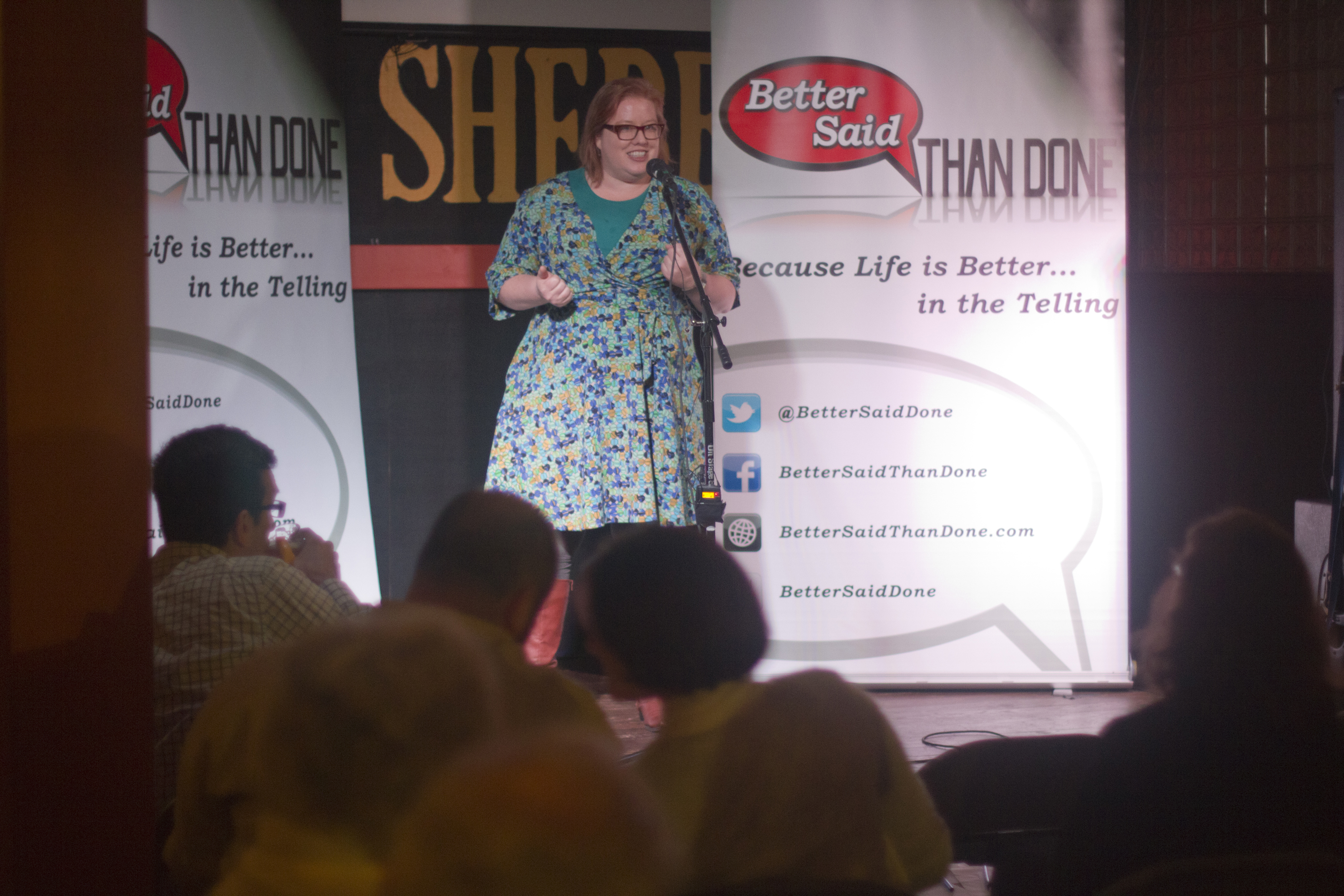
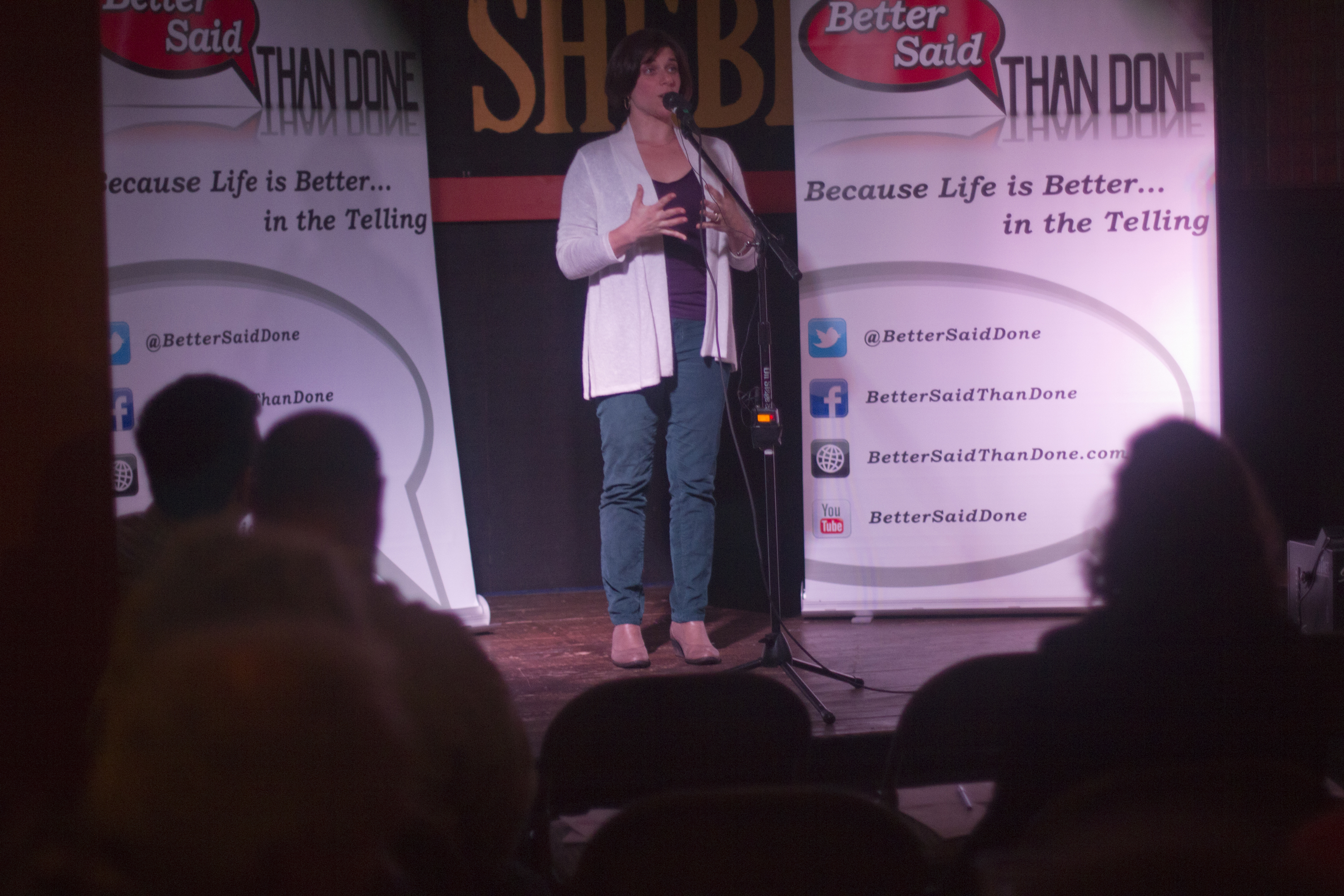
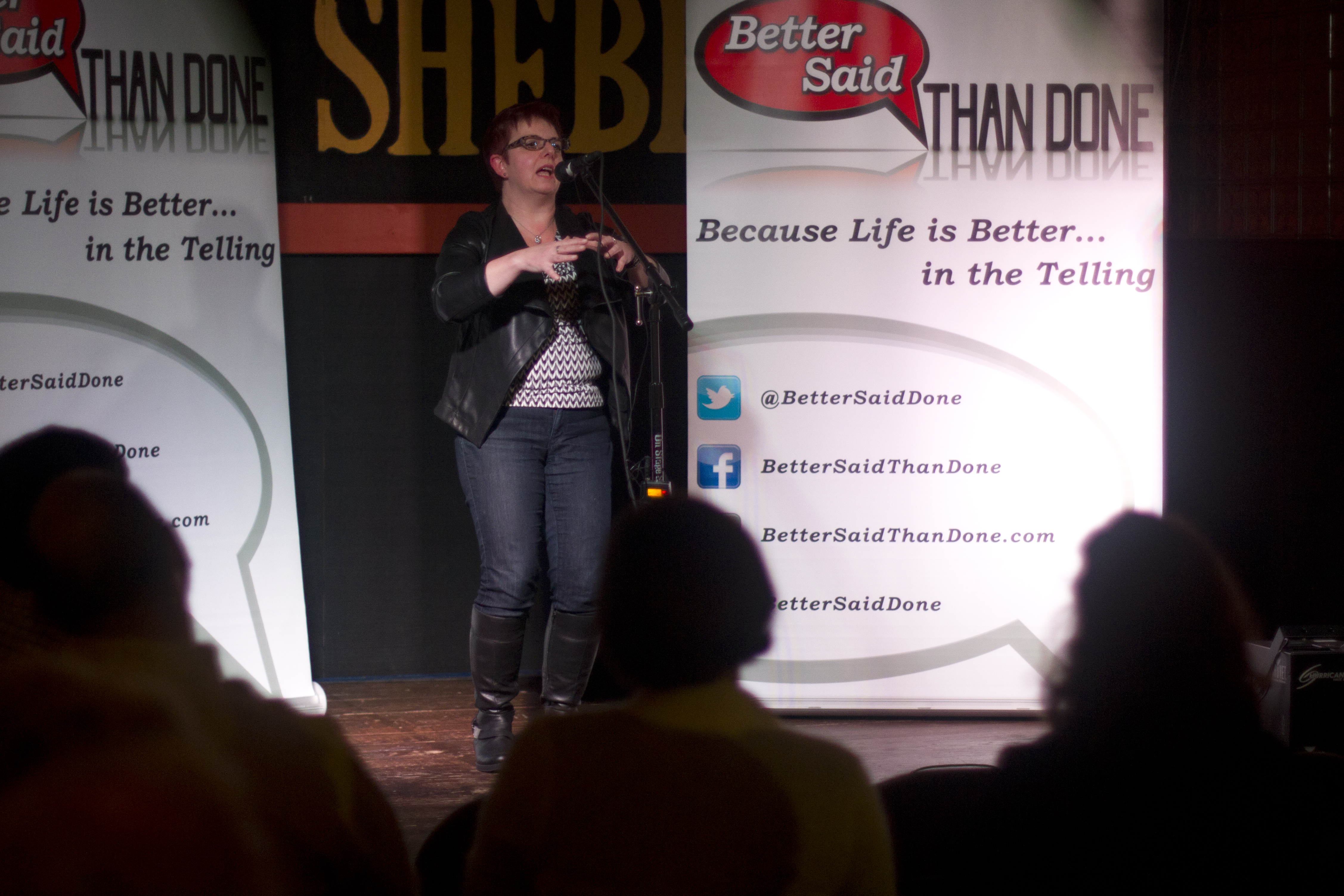
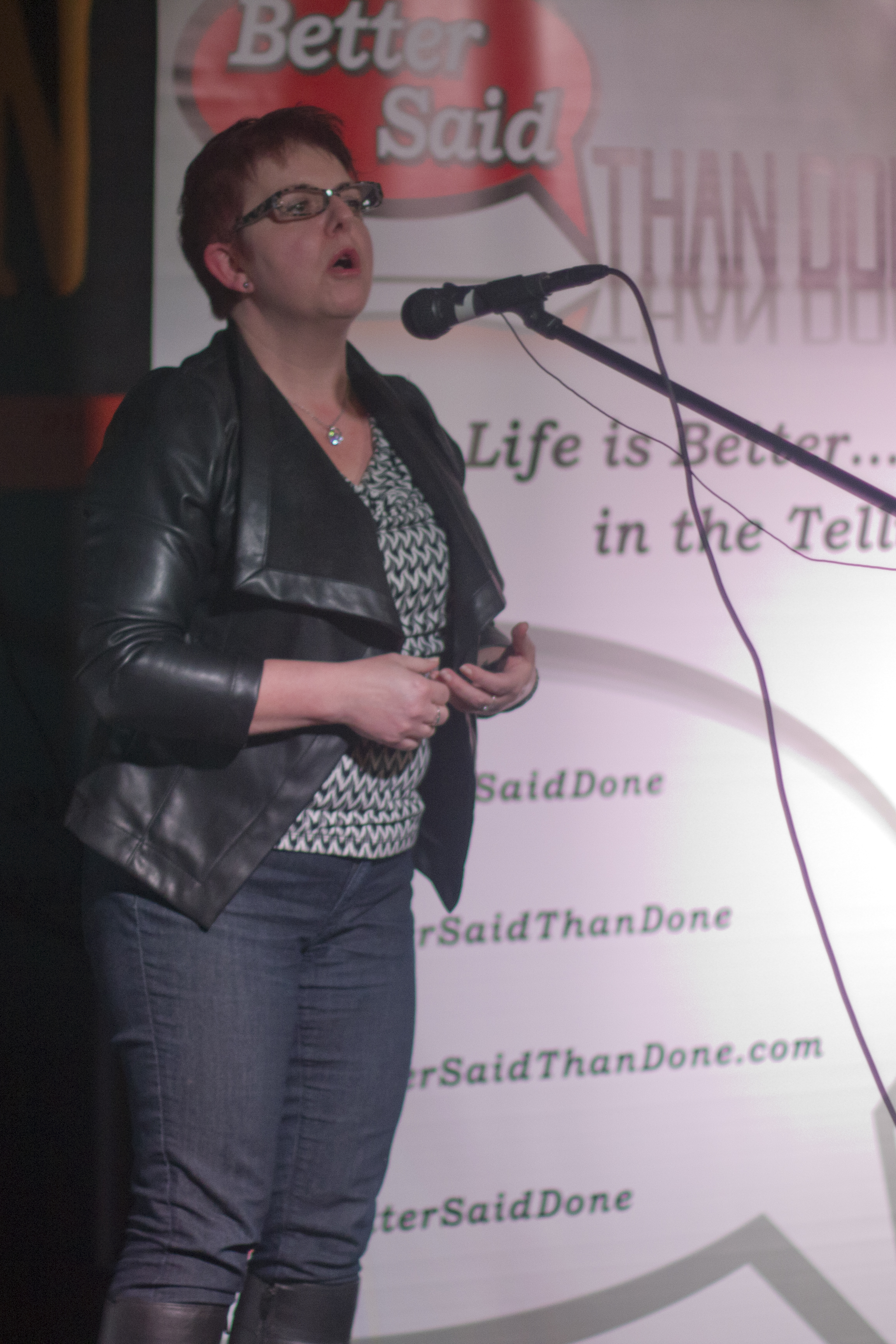
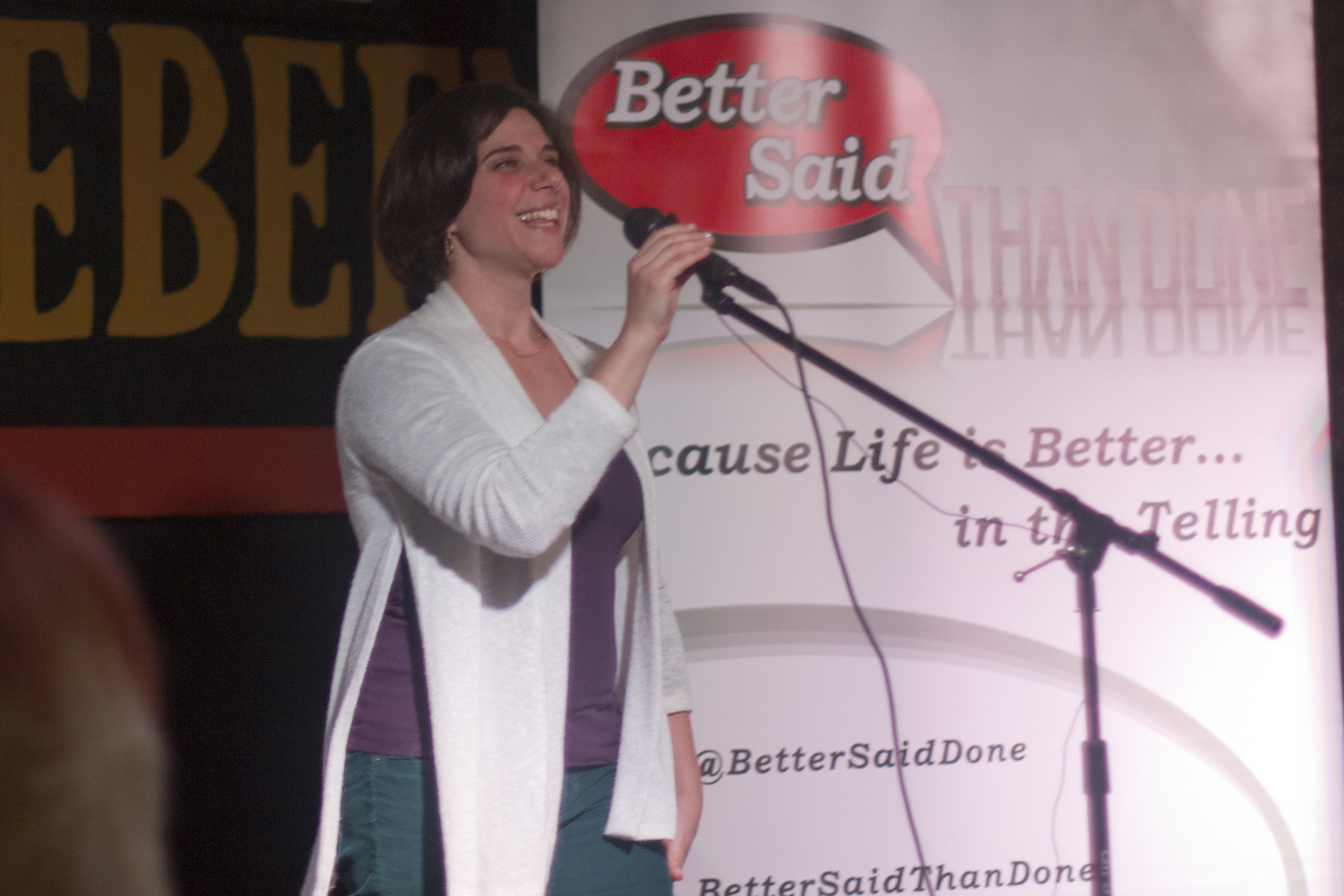
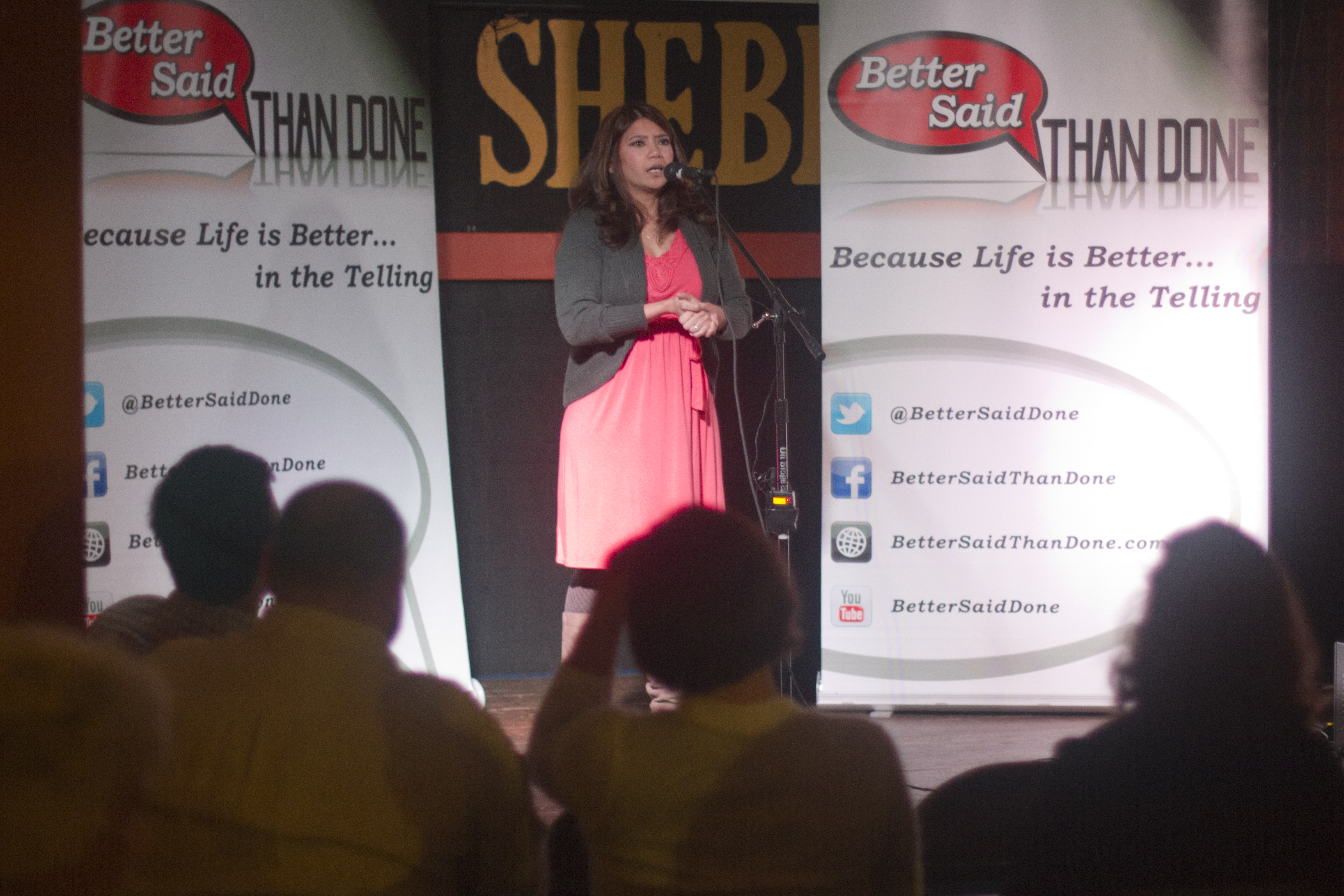
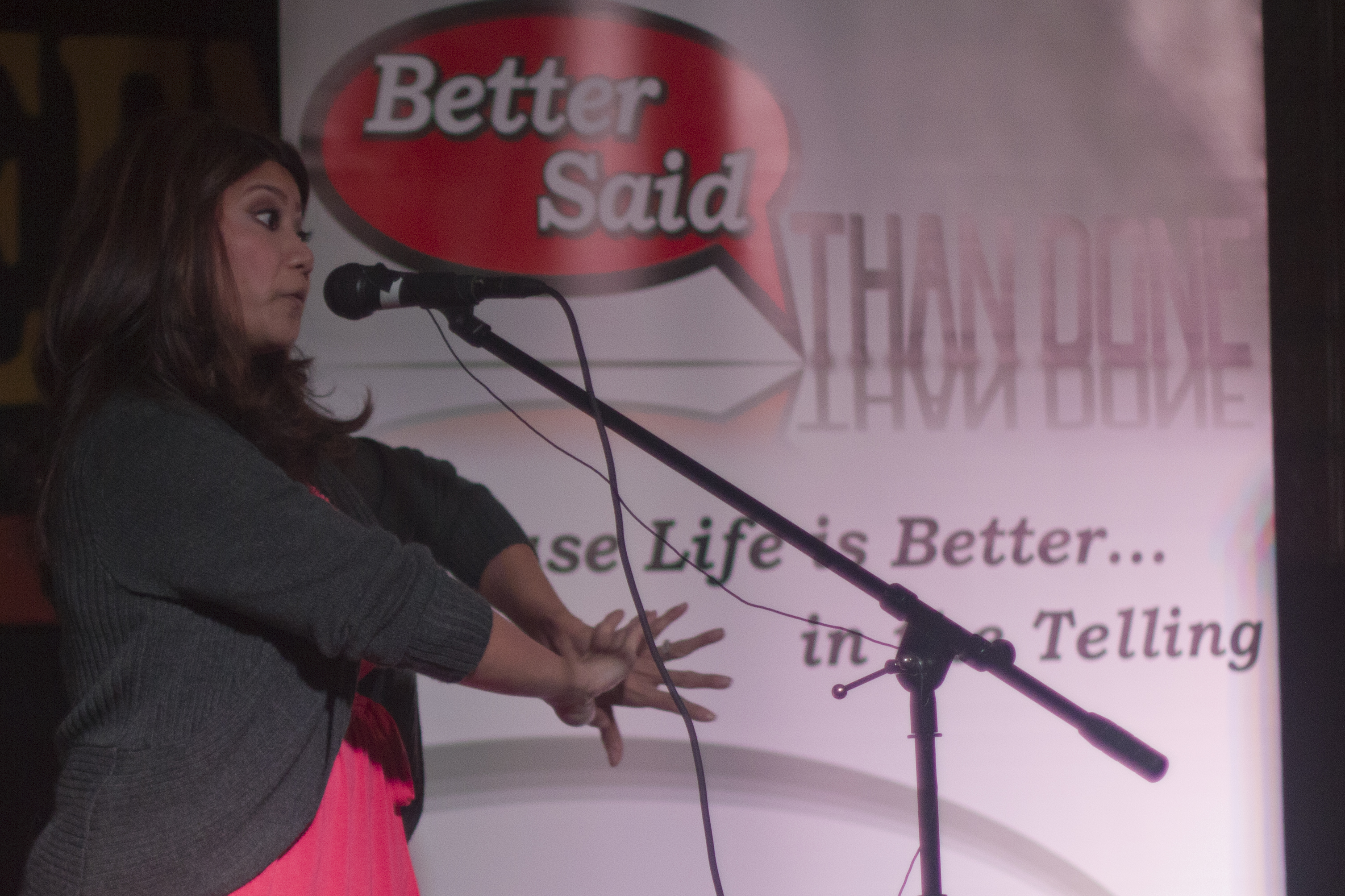
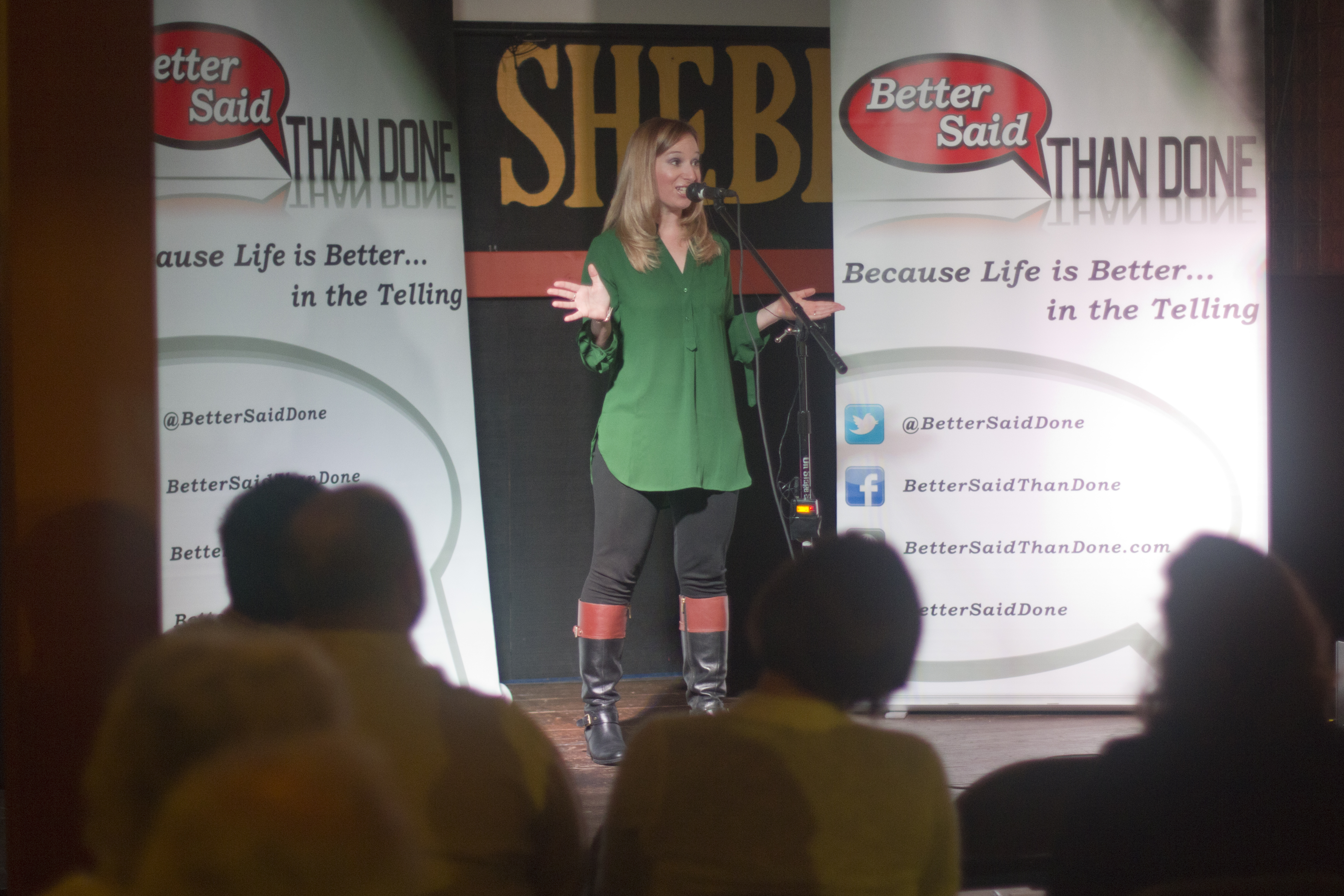
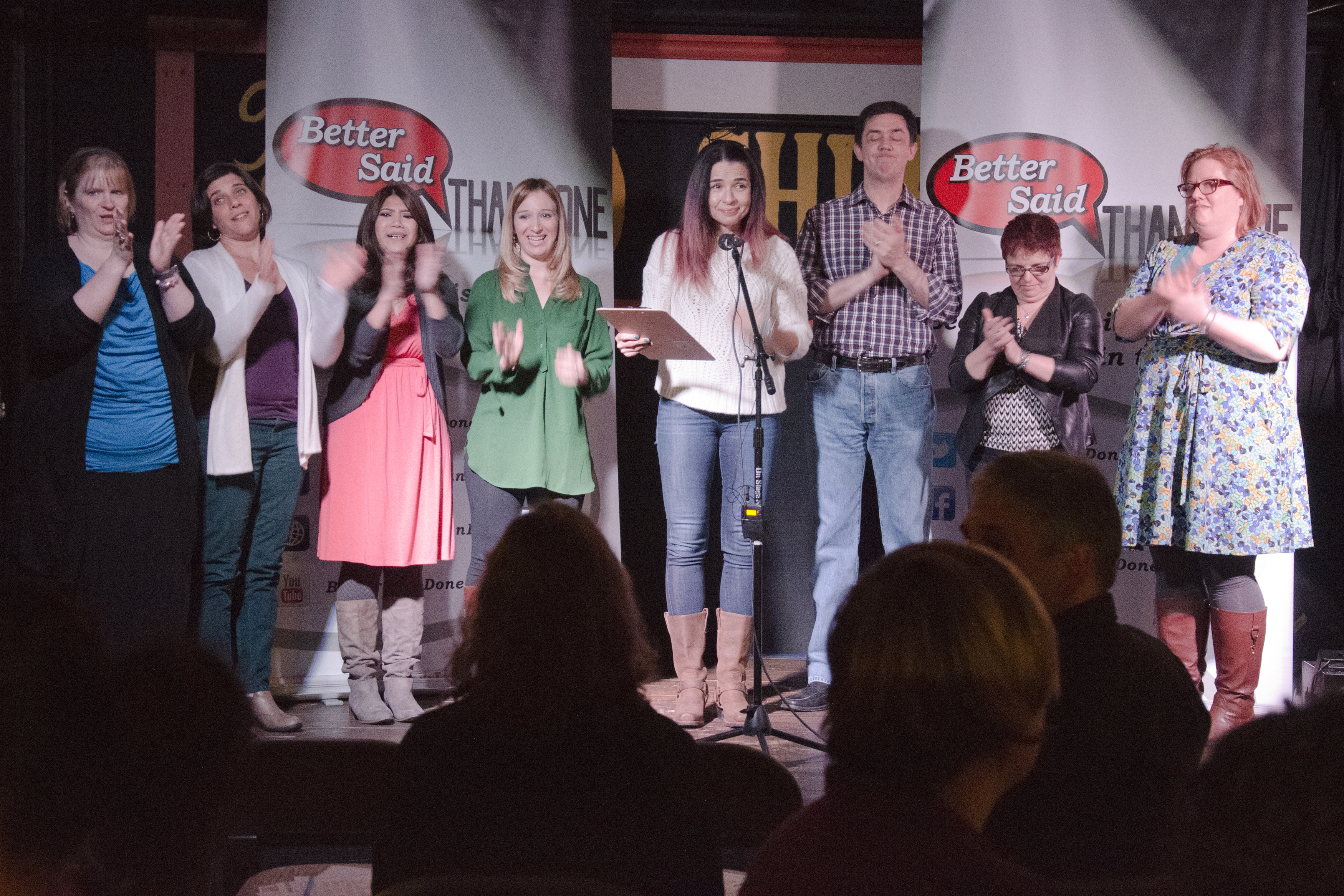
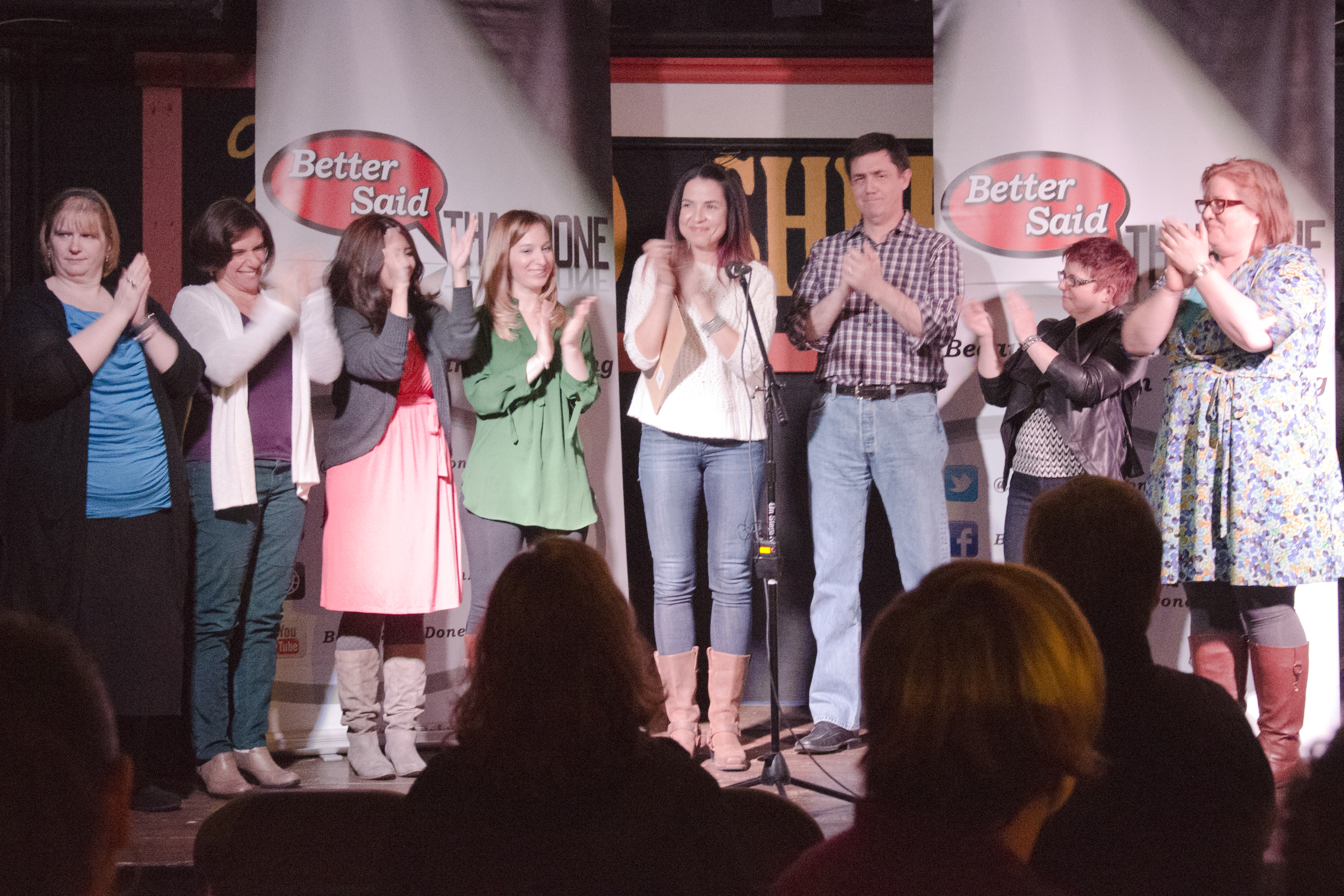
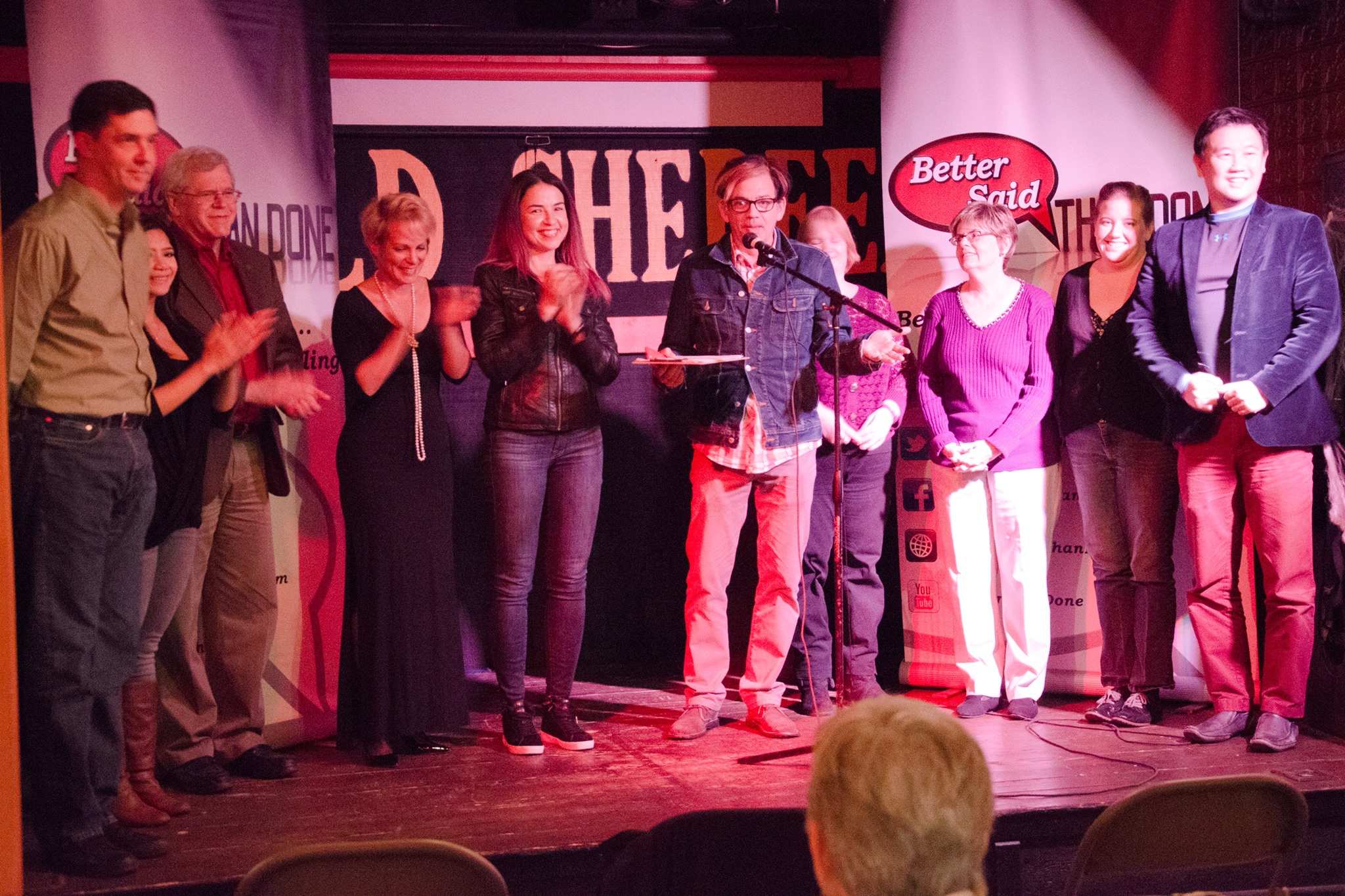
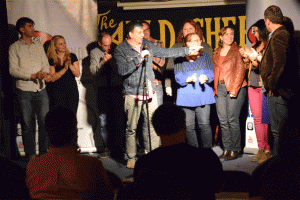
But first – again with the firsts! – a look back at the last show of 2015. It was a good year for storytelling and we went out on a high note. Now, as is traditional, I am posting photos from the show first (Man – that word!) and then the videos will follow. Problem is, I was at home having contractions the night of the last show – which fortunately led to a baby a few hours later – so I can’t actually describe what you’re seeing in these photos since I haven’t watched the videos yet! However, I can imagine that what you are looking at is a series of photos of awesome storytellers telling their finest final story of 2015 at an amazing storytelling show at The Auld Shebeen in Fairfax, VA. Truly, that is not even stretching my imagination.
Special thanks to photographer Russ Munson. You may recognize his name as the husband of one of our storytellers OR you might know him by his pen name Wilden Turk! Check out his book here.
Enjoy this look back and then look forward to watching the videos soon. I know I do!
Host Kathy Baird Westfall was joined by storytellers Mattie Cohan,Sandra Hull, Alison Hughes, Liezel Munson, Jack Scheer, Anna Marie Trester, and first time storyteller Ellie Klein. Continue reading →
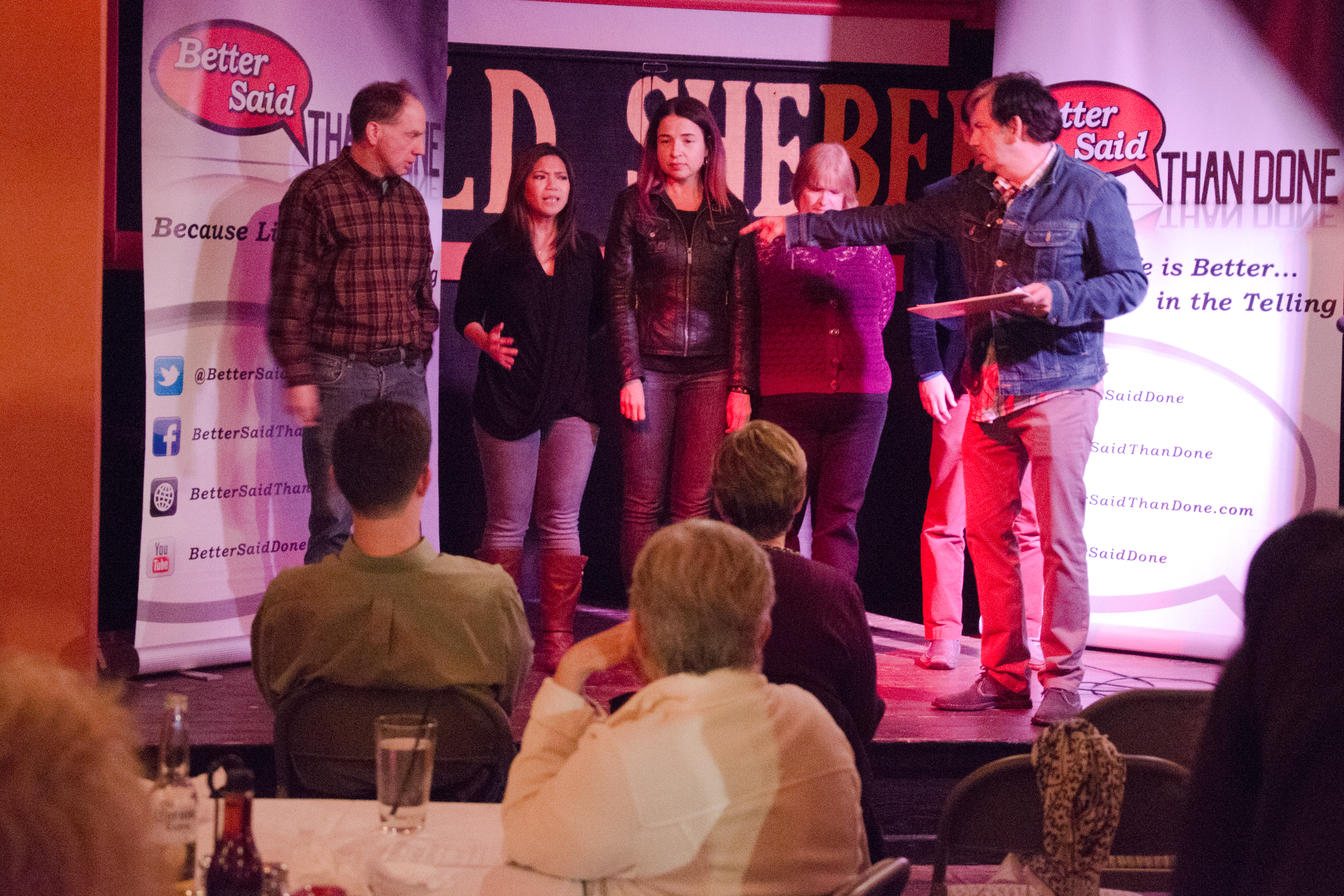
For our monthly shows, the storytellers carefully and thoughtfully craft and rehearse their stories. They may look back at journals or photos to be reminded of details from long ago, write and re-write, pull out a thesaurus, edit, re-work a joke, add in a reference, and practice, practice, practice. But, for A Night at the Storytelling Improv, The Sequel, we threw all of that out the window in favor of improvised stories.
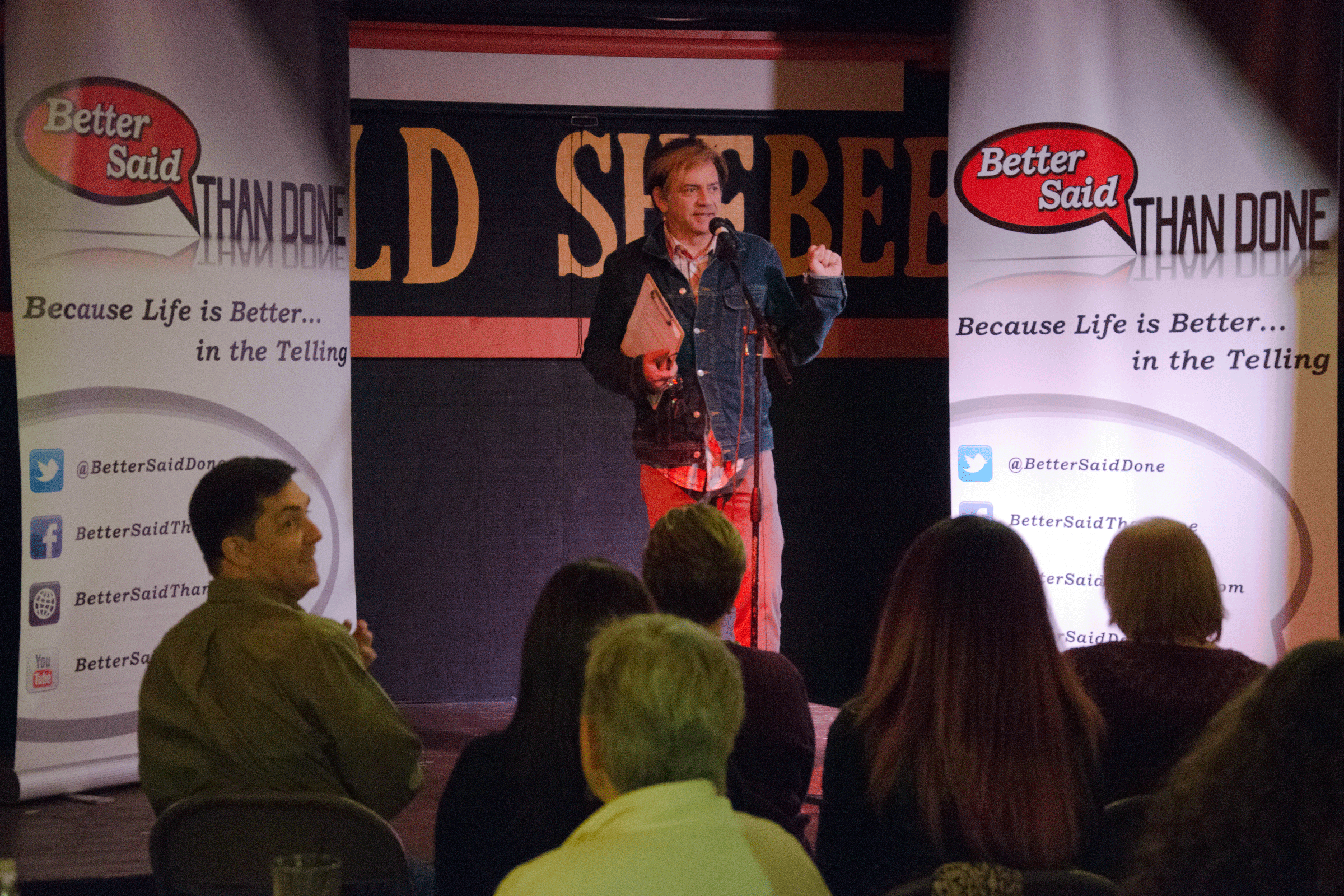
Hosted by Shawn Westfall, our October show featured two improvised scenes guided by suggestions from the audience and starring some of the storytellers and special guest Peter Gorman. After each of the scenes, our storytellers – including Richard Barr, Ann Cavazos, Sandra Hull, Liezel Munson, Jack Scheer, Cathy Smith, Kathy Baird Westfall, Michael Zhuang, and yours truly, Mary Supley Foxworth – had the opportunity to jump on stage and tell a story, off the cuff and on the spot, inspired by the improv scene.
What was that like?! Find out below from some of the performers in this edition of Video Extras.
[When watching the videos, you don’t need to watch them entirely in order, but we do recommend watching the improv set 1 first and then the storytelling videos labeled part 1, before watching the improv set 2 and all the stories inspired by that set. Please note that some of the videos contain language or themes that may be considered NSFW.]
Mary:Did you do anything to prepare for this show? I thought about some memorable trips and incidents that I’d like to include in a story but haven’t yet. On the night of the show, I didn’t feel like any of those story ideas related well to the improv scenes, so I’m saving those to inspire stories for future shows.
Michael: No, I did not prepare specifically for the show.
Jack: I had a blog from 2001 to 2009. I’d been considering mining my old posts for story ideas, and the improv show seemed like a great excuse to start. Working from the beginning, I got through about five years’ worth of posts. While I didn’t end up talking about any of that for the show, I did find half a dozen posts that I’ll eventually work into stories to tell onstage.
Cathy: I looked at a couple videos of past stories.
Sandra: I’m still new at storytelling, so I focused on form over potential content. I’d take something random that happened during my day and make up a quick story about it, trying to pick out what aspects would be relatable to an audience. I ended up telling a story in the show that I had recently written about on Facebook although I added some detail onstage that I’d left out of the Facebook version.
Richard: I imagined what were likely topics and prepared a half dozen or so stories. Fortunately, the audience didn’t want any off-the-wall topics.
Mary:As it turned out, a number of us had stories to tell about toasters.
Liezel: When it comes to performing improvisational comedy, I can’t really prepare, but I did have some stories I thought might be useful if relevant to the words suggested by the audience. I did prepare, however, to have a solid arc and structure to my “in my pocket” stories just in case I were to share them. I definitely kept an open mind as you never know what the audience will suggest!
Mary:Are there any details that you wish you had included in one of your stories but didn’t?
Richard: My story about causing a blackout in a hotel should have ended with the note that a few years after I moved out, the hotel collapsed during renovations.
Cathy: When in the car with the girls, one of them said, “My mom left the newspaper out on the table, but I didn’t look at it.” I forgot that line.
Mary:What was your favorite moment from the show as a performer?
Cathy: When I said the article was about a school in Montgomery County and we lived in Prince George’s. It got a big laugh and I hadn’t known I would say it.
Jack: The second story I told, about buying my wife a vacuum cleaner for her birthday, was particularly fun because she was in the audience. She’d never heard all the details of that incident, so it gave me the chance to tell her in a safe environment!
Sandra: Getting back in touch with my inner improv performer during “Emotional Symphony” was a blast. It had been several years since I’d done improv onstage. When I arrived at The Auld Shebeen for the show, I had no idea the storytellers would also be doing the improv sketches, so that added an extra spur-of-the-moment layer to the evening. Continuing in an improv vein, one of the biggest laughs I got during the show was from doing an improv thing: during my second story, I threw in a callback to Jack’s vacuum cleaner story.
Michael: The best moments were that the audience laughed nearly non-stop as I told my stories.
Liezel: Personally, my favorite moment was participating in the Advice Panel. Since I love performing improvisational comedy, it is one of my favorite games to play. It’s a character-based game, so coming up with a character to perform on stage is fun. (And sometimes nerve-wracking when the creative juices aren’t flowing as fast as you want them to.) With character-based games, you have the freedom to take your character and really “roll with it.” I love that about improv.
Richard: I got to close out the show.
Mary:I was more anxious before the show but really enjoyed it in the moment. And, as someone who typically agonizes about word choices, I had a lot more free time in October leading up to the show! Now that it’s over, did you find this show easier or more difficult than a typical show?
Cathy: More difficult. The poop story was completely made up on the spot and I sure could have thought of a better closer if I’d had time to think of it. I’m not experienced in improv.
Sandra: This was only my second BSTD performance ever. For my first time last summer, I’d worked on crafting my story for a few months, both during the BSTD perfomance class and after. So much editing to get it just so! Since my previous stage experience was purely improv — where there’s no script to learn beforehand — this show was much easier for me as a performer. Just go with it! Definitely a more familiar stage experience for me, too. For now.
Michael: It’s not easier or more difficult. I found it more exciting because of the uncertainty, the suspense, and the spontaneity.
Jack: Doing stories on the fly like that was much easier for me. I spend a lot of time writing, editing, rewriting, and rehearsing when I’m preparing a story. Telling a couple by the seat of my pants was considerably easier.
Richard: It was much easier because Shawn guided the improv to give us time to prepare our stories.
Liezel: I don’t think the improvised show was easier or harder but definitely more interesting. Perhaps my background in improv comedy has prepped me for it when it comes to the improv storytelling portion. I wasn’t nervous about the improv but I was for the storytelling. I didn’t even realize I was going to do improv comedy until a few minutes before we started the show. Ah, gotta love improv. It was definitely a blast. The stories I wanted to tell were to similar to someone who already went up so the next time I do the improv show, I’ll be sure to pop right up on stage and share my story. 🙂
Mary:What was your favorite moment from the show as an audience member?
Richard: Several moments when I saw the improv participants really rise to the occasion.
Michael: The best moment as an audience member was when Cathy Smith admonished her daughter never to _____ first. It was totally unexpected.
Mary:Michael didn’t actually leave a blank in his response, but you’ll have to watch the video to find out what he’s talking about, although Jack’s reply might give you a clue.
Jack: I thought Cathy Smith absolutely knocked it out of the park with her story on talking to her daughters about the Monica Lewinsky scandal.
Sandra: When my favorite moment happened, I was onstage, so, I wasn’t technically an audience member at the time, but you can see it on the video, too. During the set-up for “Emotional Symphony,” Shawn remarked as an aside that it was hard to find a workable suggestion for Michael because English is his second language. Michael answered quietly, “It’s my fourth language.” Go, Michael! Polyglots rule.
Sending out a big Thank You to our storytellers, The Auld Shebeen – our regular venue – and to our audience and supporters for watching and listening to our stories and spreading the word about Better Said Than Done and storytelling in Northern Virginia!
We look forward to seeing you in the new year: our next show, Wasn’t Me: stories of mistaken identity and misdirection, is on January 30, 2016, at 7 PM, at The Auld Shebeen.
Frigid temperatures, snow, ice, and long nights are fast approaching. Find winter’s silver lining by spending that indoor time learning something new. Something like storytelling!
Better Said Than Done’s storytelling workshops teach the art of telling a good story, whether you’re interested in getting on stage, entertaining your friends at a party, honing your writing, or being more comfortable speaking in public.
And they make an out-of-the-box gift for friends and family members. Give them an experience to enjoy, while supporting a small, local business!
Spotlight on You: telling the story of your life
January 9, Reston, 11 AM-3:30 PM
January 23, Arlington, 11 AM-3:30 PM
February 6, Reston, 1-5 PM
March 5, Reston, 1-5 PM
We will teach you structure, character building, and how to win over the audience. For storytellers of all levels. $75
Take the Stage: storytelling for performance
January 6, 13, and 20, Reston 7-9 PM
January 26, February 2 and 9, Reston, 7-9 PM
Three-week series of classes delving into the elements, tools, and skills of storytelling (secondary characters, dialogue, options for story structure, enhanced performance techniques, etc.) critical to developing and performing an engaging true, personal story on stage. Participants are encouraged to pick an upcoming show for which to prepare during this workshop. $199
For more details or to register, visit our Workshops page.
We will make every attempt to accommodate switching workshop dates if that special someone can’t attend the workshop for which you registered them.
Better Said Than Done also offers one-on-one storytelling coaching and onsite storytelling seminars customized for your group. For more details, contact us at jessica@bettersaidthandone.com.
The holiday weekend is fast approaching: gobbling up the Thanksgiving meal, time spent with friends and family, perhaps some holiday shopping or decorating, maybe some time spent working. Whew! Spend Saturday night, kicking back in Fairfax with Better Said Than Done.
Overheard: stories about things we shouldn’t have listened to
Saturday, November 28, 2015
7:00 PM (Doors open at 6:00 PM)
The Auld Shebeen – downstairs
3971 Chain Bridge Road, Fairfax, Virginia 22030
$10 per person (Buy your tickets now or at the door.)
Join host Kathy Baird Westfall, storytellers Mattie Cohan, Allison Hughes, Sandra Hull, Liezel Munson, Jack Scheer, Anna Marie Trester, and first-time teller Ellie Klein as they entertain you with stories about listening when you shouldn’t have.
Full dinner and bar menu are available at The Auld Shebeen. Seating is first come, first served.
This is our last show of the year, but you can mark your new calendars to join us in 2016!
Wasn’t Me: stories of mistaken identity and misdirection
January 30, 2016, 7:00 PM, The Auld Shebeen, 3971 Chain Bridge Road, Fairfax, Virginia (downstairs), $15 per person
Margaritaville: stories about sunshine, drinks, and paradise
February 27, 2016, 7:00 PM, The Auld Shebeen, 3971 Chain Bridge Road, Fairfax, Virginia (downstairs), $15 per person
You Choose the Adventure
March 26, 2016, 7:00 PM, The Auld Shebeen, 3971 Chain Bridge Road, Fairfax, Virginia (downstairs), $15 per person
The audience will vote for the direction the storytellers will take!
Or is 2016 the year you join us on stage to tell one of your true, personal stories? We have storytelling workshops to help you prepare or you can contact us to if you’re ready to sign up to be a first-time teller.
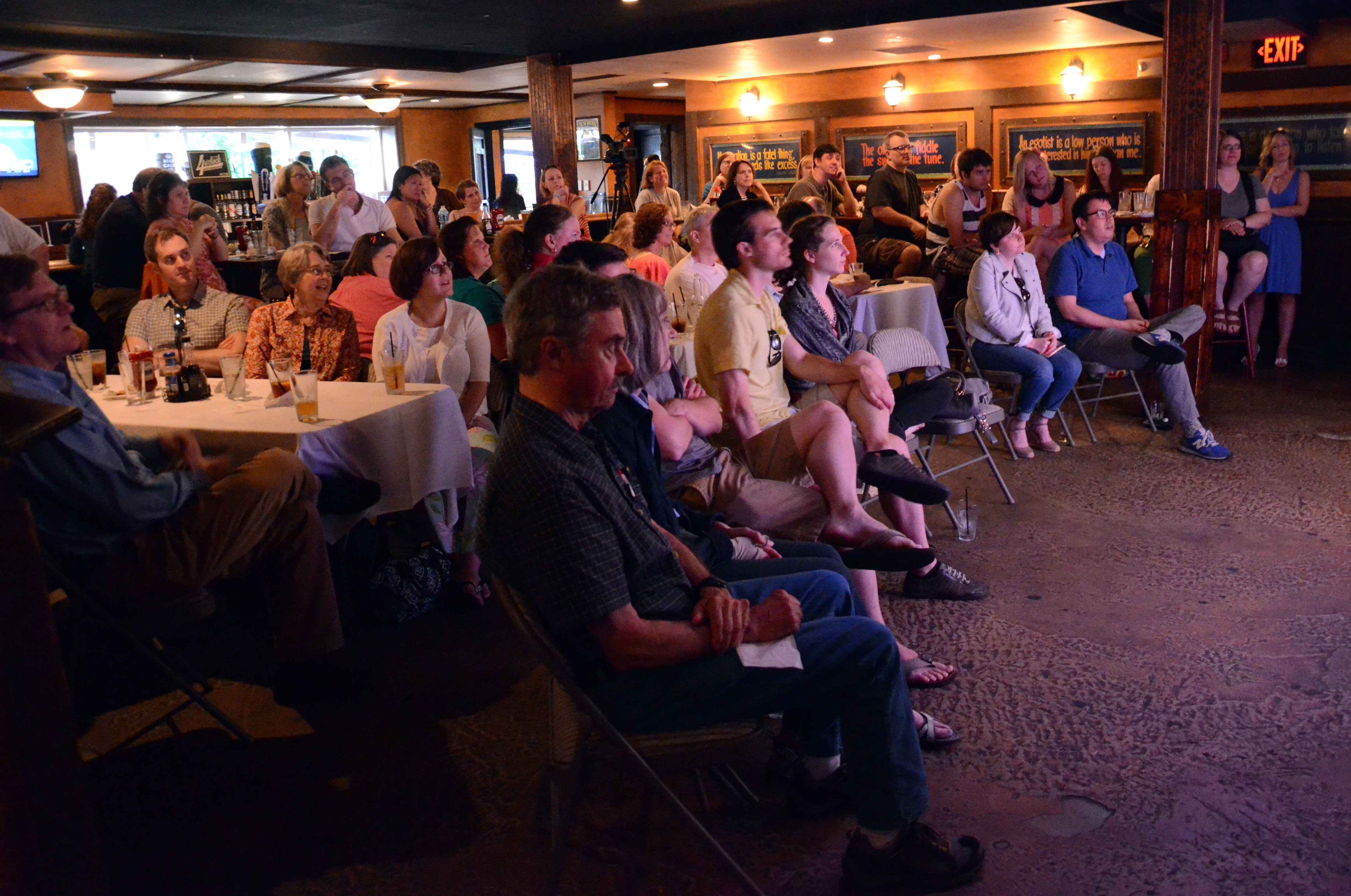
Better Said Than Done’s October storytelling improv show was a ton of fun. As led by improv genius Shawn Westfall, the night started out with an improv game that several of our storytellers participated in. After the improv game, our brave storytellers boldly stepped to the stage to share stories inspired right there, on the spot, by the improv everyone had just watched.
After a short break to have some more beer and great food at The Auld Shebeen, in Fairfax, VA, Shawn once again led an improv game that inspired the storytellers to create a new set of true stories on the spot.
If you missed the show, here’s your chance to see some of how it went down:
When watching the videos, you don’t need to watch entirely in order, but I would recommend watching the improv set 1 first and then the storytelling videos labeled part 1, before watching the improv set 2 and all the stories inspired by that set. Continue reading →
Long title, but I wanted to be specific. I know storytelling groups sometime mix storytelling with improv by having a storyteller tell a prepared story and then an improv troupe improv based off that story. A little over a year ago, Better Said Than Done broke new ground by having our storytellers actually improv true, personal stories on the spot – based on audience suggestions. The 2014 show at The Auld Shebeen in Fairfax, VA was such a great success, we decided to do it again this October – and from what I heard, this year was even better than last!
Improv artists – Peter Gorman, Sandra Hull, Liezel Munson, Kathy Baird Westfall, Michael Zhuang and host Shawn Westfall
We switched things up a bit this time. Some of the storytellers actually performed in two separate short form improv games led by master improv teacher and host Shawn Westfall.
Then, based on audience input and the improv game, our storytellers, unprepared as they were, stepped to the stage and told spur of the moment stories. Continue reading →
Shawn Westfall returned to the Better Said Than Done stage in September for Six Degrees of Kevin Bacon: true stories about or near Kevin Bacon. Watch his story to learn about the path that connects him, via Hawaii, to Kevin Bacon and then read his Video Extras interview for the story behind the story.
Shawn will next be appearing with Better Said Than Done tomorrow, October 24, at The Auld Shebeen in Fairfax, as the host of A Night at the Storytelling Improv, The Sequel. Tickets are available now or at the door.
With his wife Kathy Baird Westfall, Shawn launched the Unified Scene Theater, an improvisational and sketch comedy theater, in DC this summer, offering performances and improvisational comedy classes and workshops. He was the exclusive teacher of improvisational comedy at the DC Improv for more than 12 years. His classes (and the performances they’ve generated) have been featured in the pages of The Washington Post, The Washington Post Express, and Washingtonian magazine, as well on DC 101, WTOP Radio, Mix 107.3’s “The Jack Diamond Morning Show,” and The Food Network’s “Dinner: Impossible!” In addition, Shawn is the CEO and founder of Commedia Partners, which provides on-site corporate events that unleash the fun, power, and tools of improvisational comedy to help foment creativity, build camaraderie, enhance communication skills, create and cement teams, and allow organizations to re-envision themselves and their people.
[This show was not performed in our usual location, so please excuse the challenging lighting and sound in the video and press play to enjoy Shawn’s story.]
Mary:What did you do to prepare to tell this story?
Shawn: It’s funny. I don’t memorize the story per se. As an actor, I was taught to “memorize the beats” of a play, and by “beat” we usually mean “unit of action as defined by a either a momentary or thematic want or need.” Beats can be anything from “I’m thirsty and I want a drink of water” as a way of clarifying the action taken during a series of lines, or “I really want my father to accept me for who I am” as a thematic overall want of a character in a play or structure. Having that training helped me think the same way when it comes to stories. Some storytellers think in terms of “funny lines” that they want to make sure get into their story and are heard by an audience, and that can sometimes trip them up: if they forget their line, they sometimes can forget their place in the story entirely. I’ve found that memorizing instead something like “I want the audience to know how embarrassed I was at this point,” or “I want them to feel my frustration here” certainly helps me when it comes to preparing.
Mary:Were there any details you had to cut – either for time or they just didn’t fit the narrative – that you’d like to share?
Shawn:In my story, I mention how welcoming and extraordinarily nice the Olsen Twins were to me when I acted with them in that movie. And to be sure, they were nice, as nice as two 11-year-olds would know how to be to a paunchy, 30-plus-year-old man acting with them in a children’s movie. But what I also wanted to share in the story, but didn’t really have time (and I was already pushing it, time-wise), was how insufferable many of the adults who were attached to the production were. People who were proud to claim that they were attached or in the employ of two 11-year-olds. “I’m Ashley’s aesthetician,” or “I’m Mary-Kate’s make-up artist,” they would say to anyone on the set, in a weirdly haughty manner, as if trying to let you know your place in the pecking order on set, as well as theirs. At first I found it a little annoying, and then I found it endlessly humorous in a perverse way. I mean, had I ever been in a similar position, there’s no way I could have, with a straight face, told anyone, particularly a family member, that I had somehow “made it” in Hollywood by proudly proclaiming that I was, say, Joe Jonas’ dietician.
Mary:What was the first play you were in, when, and what was your part? For me, it was Hermia in the Shake Hands with Shakespeare version of A Midsummer Night’s Dream in the 5th grade.
Shawn:Midsummer, eh? And in fifth grade? I was obviously going to the wrong schools.
The first play I was in took place in high school, my freshman year. I was dating a girl who was a sophomore, and she was involved in the theater, was in all the high school productions. I certainly didn’t think theater was “cool” at all (despite my youthful ignorance of what was actually “cool,” and despite my own lack of awareness regarding how “cool” I actually was), and it certainly wasn’t on the list of things I was planning to try as a new high school student. But she convinced me to audition, pointing out that going to rehearsals in a large cavernous theater with plenty of unsupervised alone time might be beneficial to our, er, relationship. So I auditioned for the musical, Finian’s Rainbow, with that E. Y. Harburg score that I’ve now come to realize is just plain gorgeous at every turn. With no experience whatsoever, I tried out. And: not only did I get a part, she didn’t (consigned, sadly, to the chorus). We, er, broke up soon after. So while I lost a girlfriend, I gained a love for the theater that’s never left me.
Mary:On the subject of Shakespeare, I’ve read on Facebook that you think it’s important that Shakespeare is taught as a play rather than something that is simply read by students on their own. Do you think this is important for other plays as well, or especially those that aren’t contemporary, where the language can be a stumbling block?
Shawn:Well, what I really prefer is that Shakespeare isn’t necessarily taught as a play, as something that’s handed to you and that you read, but is instead experienced as a play, since, well, that’s what he wrote. I think this is important because, let’s face it, the language of the play can provide challenges for even adults, let alone students. Don’t get me wrong: I know there are phrases and uses I and others are currently peppering our everyday speech with that Shakespeare first coined out of whole cloth (and even “whole cloth” might be one of them), and listing them would require all the space of this blog. And his work in particular does contain arcane usages and references that, on paper, require a gloss. But what I am suggesting is that his lengthy speeches aren’t pieces of poetry in the strictest sense of the word, nor are they “texts” in which we should root around, or analyze, or “close read” for even more evidence of the thematic ideas a particular play is exploring. They are lines of dialogue spoken by characters who resemble some of the most finely drawn nuanced examples of actual human behavior ever placed inside a narrative (Eliot said that “Shakespeare and Dante divide the world between them; there is no other” — meaning that, between them, they provide a comprehensive catalogue of all human behavior and the motivations informing them). That said, why not actually go watch them behave, and have audiences, particularly young audiences, come to understand them not just by what they say, but by what they do and say? Young people have finely tuned antennae for hypocrisy; they’re pretty good at spotting the tremendous gulf that exists between what people say, and what they actually do. Shakespeare’s plays are rife with examples of this stuff, and no one would enjoy it more, I think, than younger audiences. Yet, what do we do? Throw texts at them that we not only expect them to read, but understand, despite the obscurities in them, obscurities that scholars are still arguing about. It’s criminal what we do to Shakespeare, and we should stop.
Mary:Who is your favorite playwright or screenwriter?
Shawn:They are kind of one and the same: Martin McDonagh, Irish playwright, author of The Pillowman, The Lieutenant of Inishmoore, The Cripple of Inishman, and A Behanding in Spokane, as well as the screenwriter and director of In Bruges. What I love about him is how wonderfully he unites the perverse and the ironic, the grotesque and the sublime, the violent and the profane with the comedic. His plays are, literally, violent bloody messes: Act II of The Lieutenant of Inishmoore features a stage and a set that’s completely covered in blood, and finds the actors/characters in them trying to behave in this context as they slip around in all that gore; A Behanding in Spokane features a character who carries around a duffel bag full of severed hands, and yes, per Chekhov’s old theatrical rule about a gun being brought out in Act I (“It had better have been fired by Act III”), it spills out on to the stage; both of those plays are two of the funniest plays I’ve ever seen. And, to add to my Shakespeare comments above, it actually places McDonagh squarely in the grand theatrical tradition ushered in by Shakespeare in that’s its pure spectacle. People often forget that Shakespeare’s plays are incredibly violent, and, what’s more, all the violence takes place on stage (as opposed to Greek tragedy, when the more violent parts take place off it). In King Lear, Gloucester’s eyes are gouged out on stage, not off. I know it’s actually hard for people to contextualize, but Shakespeare was actually the Michael Bay of his generation: sword fights, battles, sexual puns (really bawdy ones, too), bodies littering the stage. Why was he bloody? Because audiences paid for it. In droves. He retired to Stratford a very wealthy man.
Mary:How long did you live in Hawaii? Did you ever enjoy the beaches of Hawaii while you lived there? What was your retail job while in Hawaii?
Shawn:I lived in Hawaii for about 3 years. I didn’t like it. One, because, as the story makes clear, people in Hawaii are really, really in to the outdoors, and I at the time was not because I was extraordinarily out of shape and not at all active. I’m sure I would enjoy Hawaii more now. Another thing I noticed was that it was easy to get intellectually lazy out there. At the time I had ambitions of being a writer (and still do), but, gosh, it does become awfully hard to work on your pretentious, ambitiously lengthy tome on the plight of modern man and the futility of his actions when you look out your window and it’s such a damned nice day. And there are no seasons. One gorgeous day just kind of melts into another gorgeous day, and you become aware of just how much time you’ve wasted just hanging around and enjoying all these gorgeous days. I’ve since discovered that my sensibilities are definitely East Coast, despite my Midwestern upbringing. I tried to make up for it by working in a bookstore. I worked in a Borders. I loved it. Love books, love literary culture, and loved being around people who loved books and the accompanying culture. And not only that, I was good at working in a bookstore, an exceptional “hand-seller,” as we called it. When I placed books in peoples’ hands and recommended them, they usually walked out with them. Had I worked on commission, I would have been driving a Jaguar to work.
Mary:Shawn has a Bacon number of 3. He worked with Mary-Kate and Ashley Olsen in their video series The Adventures of Mary-Kate and Ashley, who were in It Takes Two with Steve Guttenberg, who was in Diner with Kevin Bacon.
We are happy that Kathy, a self-described political junkie, is living full-time on the East Coast again and here in the DC area. She is an executive-savvy, policy-rich business leader, and dynamic change agent as the Principal Consultant at Dialog Research & Communications.
Do you want to be a first-time teller? We are currently casting for shows in 2016. Browse the show themes and then contact us with your idea for a story. Or, if you’d like to learn more about the art of storytelling and get in some extra preparation, sign up for one of our storytelling workshops in Arlington or Reston.
Mary:What motivated you to step on stage to tell a story?
Kathy: From the very first time I went to see a Better Said Than Done storytelling show, I was hooked. I enjoyed it so much, but didn’t think I could have anything interesting enough to make up a formal story of my own. I had done theater in high school and always loved it, and chorus in college, but nothing since.
Mary:What was most helpful from the Better Said Than Done storytelling workshop as you prepared to tell your first story?
Our next show will be a night of unscripted entertainment, as improv and storytelling take the stage together.
A Night at the Storytelling Improv, The Sequel
Saturday, October 24, 2015
7:00 PM (Doors open at 6:00 PM)
The Auld Shebeen – downstairs
3971 Chain Bridge Road, Fairfax, Virginia 22030
$10 per person (Buy your tickets now or at the door.)
Spontaneity will rule as host Shawn Westfall solicits input from you, the audience, to inspire and guide the scenes that improv troupe “Take the Fifth” will create on the stage, on the spot. Our storytellers – Kathy Baird, Richard Barr, Ann Cavazos, Brent Heard, Sandra Hull, Liezel Munson, Jack Scheer, Cathy Smith, Mary Supley Foxworth, Zach Wilks, and Michael Zhuang – will take their cue from these scenes and perform true, personal stories off the top of their heads. It’s a show in which anything could happen!
Full menu is available at The Auld Shebeen. Seating is first come, first served.
Mark your calendar for our other upcoming shows!
Overheard: stories about things we shouldn’t have listened to
November 28, 7:00 PM, The Auld Shebeen, 3971 Chain Bridge Road, Fairfax, Virginia (downstairs), $10 per person
Wasn’t Me: stories of mistaken identity and misdirection
January 30, 2016, 7:00 PM, The Auld Shebeen, 3971 Chain Bridge Road, Fairfax, Virginia (downstairs), $15 per person
Margaritaville: stories about sunshine, drinks, and paradise
February 27, 2016, 7:00 PM, The Auld Shebeen, 3971 Chain Bridge Road, Fairfax, Virginia (downstairs), $15 per person
Interested in joining us on stage to tell a story? Contact us to be a first-time teller.



 Continue reading
 Better Said Than Done’s storytelling workshops teach the art of telling a good story, whether you’re interested in getting on stage, entertaining your friends at a party, honing your writing, or being more comfortable speaking in public.
 The holiday weekend is fast approaching: gobbling up the Thanksgiving meal, time spent with friends and family, perhaps some holiday shopping or decorating, maybe some time spent working. Whew! Spend Saturday night, kicking back in Fairfax with Better Said Than Done.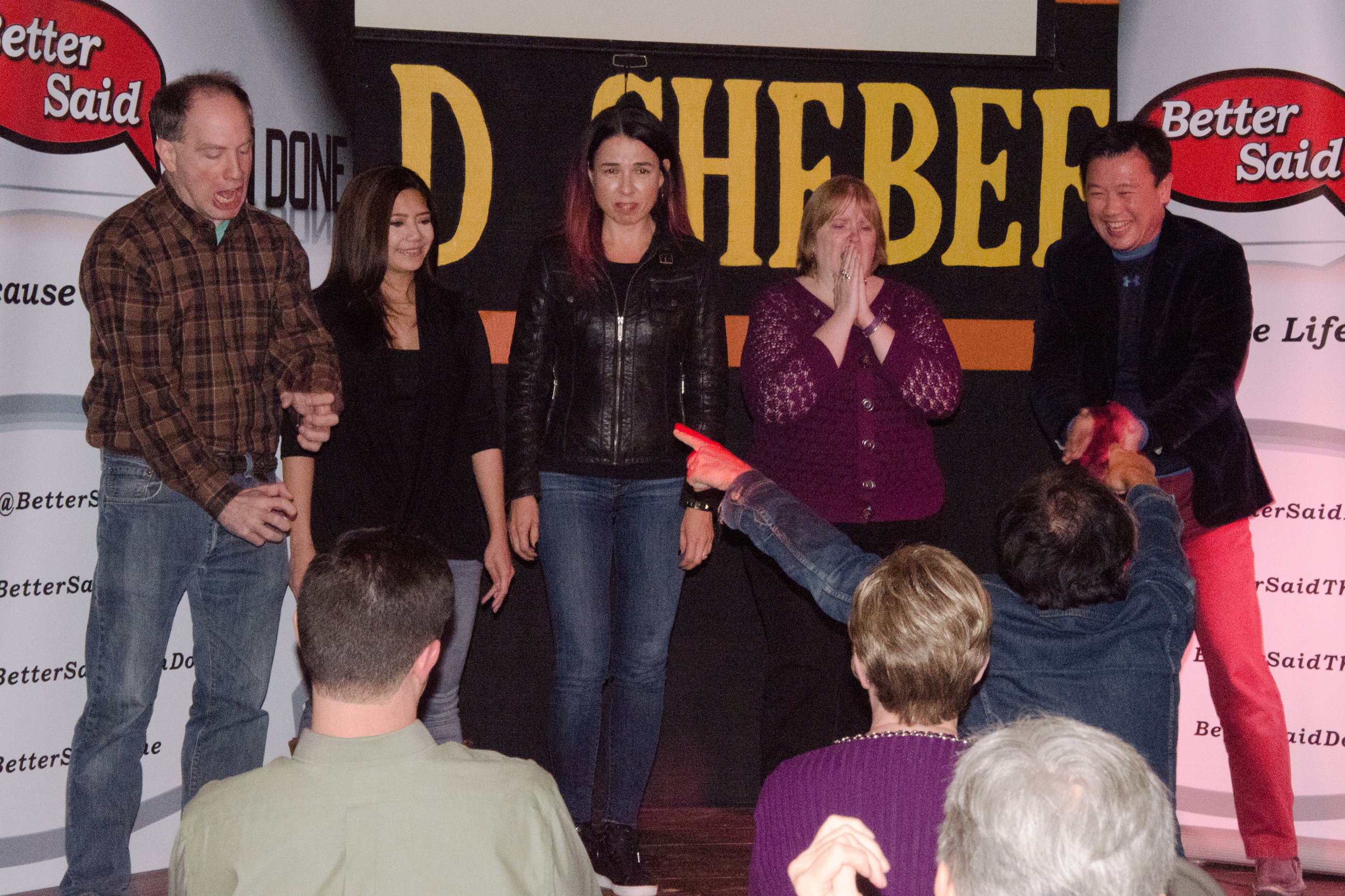
 Full menu is available at


